Algorithmic Reality: Living Inside the Filter

Algorithmic Reality: Living Inside the Filter
I was rereading The Doors of Perception, a classic of literature written by Aldous Huxley, when I came across an idea that, though subtle at first glance, opened up an entire field of inquietude.
Amid the narrative, there emerges the notion that what we call “reality” may be nothing more than a slice, a necessary filter that allows us to exist. It was at this point that the reading ceased to be mere revisitation and became a displacement: a silent fissure that led me to rethink language, perception, and the very limits of everyday life.
In The Doors of Perception, Huxley proposes a hypothesis that still resonates like a philosophical seismograph: the human brain is not a producer of reality, but a reducer. Faced with an almost infinite flow of stimuli, sensations, and perceptual possibilities, it operates as a valve, a mechanism of containment. We do not see everything, we see what is necessary. We do not feel the infinite, we feel what allows us to survive.
This idea radically shifts our understanding of the everyday. What we call “reality” is nothing more than a compressed version of the world: a functional slice, shaped by biological and historical necessities. In this sense, the brain is the first algorithm: it selects, filters, prioritizes. It decides, before any conscious decision, what deserves to exist for us.
But this reduction does not occur in a vacuum. It is traversed by systems of language.
Language is not merely a means of expression, it is a technology for organizing experience. To name something is already to frame it, to give it contours, to strip it of its original ambiguity. When we say “tree,” we do not evoke an infinity of forms, colors, smells, and possible histories, we evoke a stabilized, shareable, useful category. Language, like the brain, also reduces.
It is within this convergence that everyday life is constituted: a silent agreement between biological filters and symbolic structures.
We live within patterns.
These patterns, however, are not fixed. Throughout history, systems of language have transformed, not only at the level of spoken languages, but in the very ways reality is encoded. The invention of writing, the printing press, digital media: each of these technologies reorganizes how we perceive, think, and relate. They do not merely communicate the world: they recreate it.
Today, we enter a new layer of this process: the algorithm.
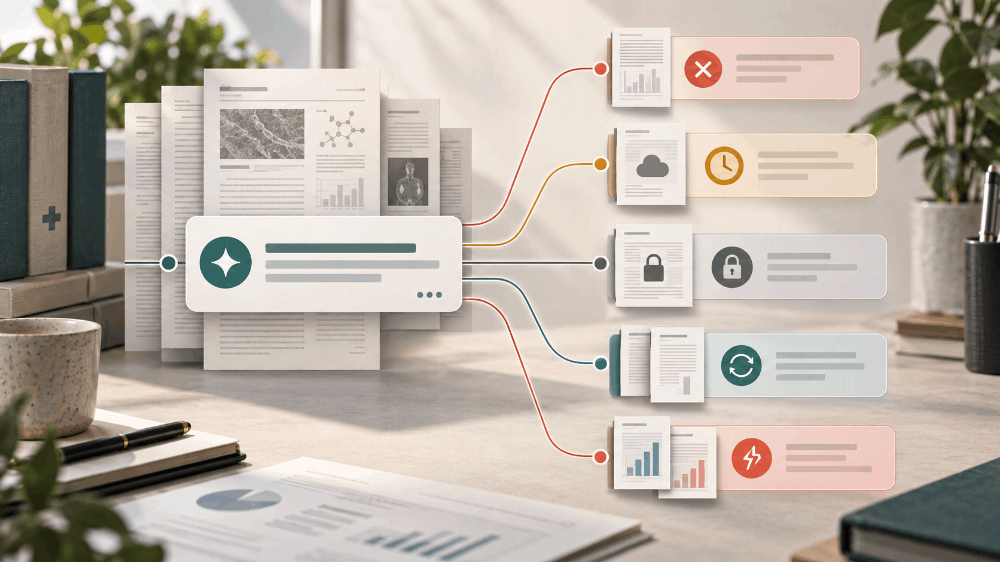
If the brain is a reducing valve and language a system of organization, the algorithm is the technical externalization of these operations. It filters, classifies, hierarchizes, but now on a massive and automated scale. What we see on networks, what we read, what we consume: everything passes through systems that perform invisible reductions, shaping our perception of the world.
The feed is an artificial consciousness.
But there is a crucial difference: while the brain reduces to make life possible, algorithms reduce to optimize engagement, retention, and predictability. They are not necessarily committed to survival or truth, but to metrics.
This produces an unprecedented tension.
If reduction was once an unavoidable biological condition, it now also becomes a programmed construction. Everyday reality comes to be mediated by filters that not only organize, but direct attention. Language, in this context, adapts as well: it becomes faster, more fragmented, more performance-oriented. Emojis, memes, abbreviations, new ways of condensing meaning at high speed.
Life becomes interface.
And yet, Huxley’s question remains: what lies beyond the valve?
If the brain already limits us, and algorithms add a second layer of filtering, what happens to that which escapes? To the unnamed, the uncategorized, the unoptimized?
Perhaps aesthetic experience, dreams, delirium, art, and even certain forms of silence, are attempts to momentarily break through these filters. Not to access an “absolute truth,” but to remind us that the real is always broader than its functional version.
In this sense, the philosophy of language and the critique of algorithms converge: both invite us to distrust what appears self-evident.
The everyday, then, ceases to be something given and becomes something produced by layers of reduction, by systems of language, by invisible codes.
To live, perhaps, is to learn how to navigate these layers.
And, occasionally, to open small cracks in the valve.