Bitcoin Is Moving Again. But What Is Really Driving the Rally?

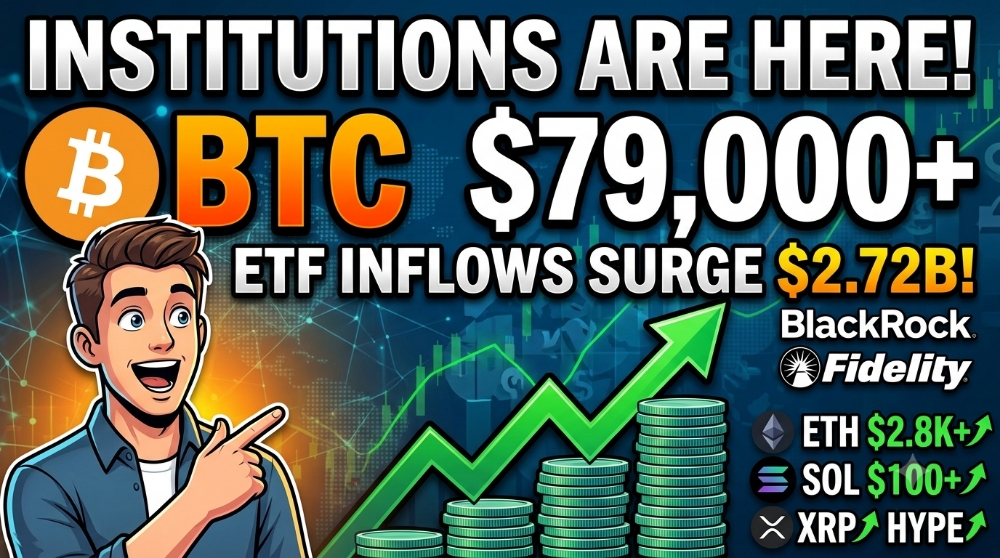
Bitcoin has once again captured the market’s attention, pushing above the $80,000 level in recent trading. The move has come alongside renewed spot Bitcoin ETF inflows, changing liquidity conditions, and stronger investor interest in digital assets.
But price alone doesn't explain a crypto rally.
For traders, the more interesting question is what is happening behind the price movement. Are liquidity conditions changing? Are institutional flows increasing? Is derivatives positioning supporting the move? Is market sentiment shifting?
In a market where several factors can influence price at the same time, understanding those connections can be more valuable than simply watching the chart.
A Bitcoin Rally Is Rarely About One Thing
When Bitcoin suddenly starts moving higher, it is tempting to search for one explanation.
Maybe it was ETF buying.
Maybe it was institutional demand.
Maybe it was a macroeconomic development.
Maybe short positions were being squeezed.
In reality, several factors can contribute to the same market movement.
Recent market coverage has linked Bitcoin's latest momentum with stronger ETF flows and improving liquidity conditions. Spot Bitcoin ETFs recorded significant inflows during August, with recent inflows helping reinforce the renewed market momentum.
This is why crypto market analysis needs to go beyond price action.
The price tells traders what happened.
The surrounding market data can help explain why.
ETF Flows Are Becoming an Important Part of the Picture
The growth of spot Bitcoin ETFs has created another layer of information for crypto traders to monitor.
ETF flows can provide insight into how much capital is moving into or out of Bitcoin investment products. When these flows change significantly, they can become another piece of the broader market narrative.
Recent reports have pointed to strong Bitcoin ETF inflows as one of the factors supporting the latest rally.
However, ETF flows should not be treated as a standalone trading signal.
A trader may see strong inflows and assume that Bitcoin must continue rising.
That is where context becomes important.
What are liquidity conditions doing?
How is leverage positioned?
What is happening with open interest?
Are other crypto assets responding?
Is the broader market supporting the same direction?
The answers to these questions can provide a more complete picture.
Derivatives Add Another Layer of Context
Spot markets are only one part of crypto trading.
The derivatives market can provide additional information about how traders are positioned.
Open interest, funding rates, liquidations, and other derivatives metrics can help traders understand the amount of leverage and positioning surrounding a market move.
For example, a sharp Bitcoin rally accompanied by significant short liquidations can create additional buying pressure.
Likewise, rising open interest can indicate that more leveraged positions are entering the market.
These factors don't predict what Bitcoin will do next.
But they can help traders understand the structure behind the price movement.
This is why combining crypto derivatives data with liquidity analysis, market activity, and price action can provide more context than relying on a single indicator.
The Problem With Looking at Only the Chart
Charts remain one of the most important tools in trading.
But charts are ultimately showing the result of market activity.
They don't always tell you the complete story behind that activity.
Imagine Bitcoin suddenly moves 4% in a short period.
A trader looking only at the chart knows that the price moved.
A trader looking at multiple market layers might also discover that:
- ETF inflows increased
- Liquidity conditions changed
- Short positions were liquidated
- Open interest shifted
- Major crypto news appeared
- Trading volume increased across multiple assets
Now the market movement has more context.
This doesn't guarantee that the trader will predict the next move correctly.
It simply means the trader is making an assessment using more than one piece of information.
More Data Can Create More Noise
Crypto traders already have access to enormous amounts of information.
News feeds.
Charts.
Trading signals.
On-chain data.
Social media.
Derivatives dashboards.
Liquidity maps.
Whale alerts.
ETF data.
Market sentiment.
The problem is that monitoring everything manually can become overwhelming.
This creates an interesting paradox.
The crypto market has more information than ever, but traders don't necessarily have more clarity.
This is where the idea of real-time crypto market intelligence becomes increasingly relevant.
The objective isn't to collect every possible piece of data.
It is to identify the information that actually deserves attention.
From Trading Signals to Trading Intelligence
Trading signals can be useful because they tell traders when something unusual may be happening.
A sudden volume spike can generate an alert.
A price breakout can trigger a signal.
An unusual derivatives movement can attract attention.
But a signal is only the beginning of the investigation.
The next question should be:
What is happening around this signal?
If a breakout is supported by increasing liquidity, stronger volume, positive news, and changing derivatives positioning, the signal has more context.
If the same breakout appears without supporting developments, the trader may want to investigate further before drawing conclusions.
This is the difference between receiving information and understanding information.
Why Context Matters More During Fast Markets
When markets are calm, traders have more time to investigate.
When markets move quickly, that time disappears.
A major announcement can trigger a price reaction within minutes.
A liquidity shift can accelerate volatility.
A derivatives imbalance can amplify a move.
A sudden narrative can spread across the market almost instantly.
This is why real-time market analysis becomes especially valuable during periods of high volatility.
The goal isn't necessarily to predict every move.
It is to reduce the gap between:
Something happened → I noticed it → I understood it → I evaluated its significance.
The shorter that information cycle becomes, the easier it can be to make decisions based on current market conditions rather than outdated information.
The Next Trading Advantage May Be Better Information Processing
Crypto traders have spent years looking for better indicators, better signals, and better charts.
But as the market becomes more sophisticated, another advantage is becoming increasingly important:
How quickly can you turn large amounts of market data into useful context?
This is where AI-powered crypto trading intelligence can become more interesting than simply adding another indicator.
The value isn't necessarily in having more information.
It is in knowing which information matters.
How i5.xyz Fits Into the Changing Trading Environment
This is the type of problem that i5.xyz is designed to address.
i5 is an AI-powered trading intelligence platform focused on helping traders navigate fast-moving crypto markets by bringing different layers of market information together.
Instead of treating market signals, news, liquidity, derivatives, and market activity as completely separate sources, i5 aims to provide a more connected view of what's happening.
The concept is simple:
Don't just see the market move. Understand the information surrounding the move.
This approach can be particularly relevant as crypto markets become increasingly data-heavy and traders have to process more information across more sources.
i5 also uses Telegram as a central hub for trading intelligence, updates, and community interaction, making it easier for traders to stay connected to relevant developments.
What Traders Can Learn From the Current Bitcoin Move
Bitcoin's latest rally provides a useful reminder that price is only one part of the market story.
ETF flows can provide insight into capital movement.
Liquidity can help explain market conditions.
Derivatives can reveal positioning and leverage.
News can identify potential catalysts.
Trading activity can show where participation is increasing.
Sentiment can indicate where attention is moving.
When these elements are viewed together, traders can build a more complete picture of the market.
That doesn't eliminate uncertainty.
It doesn't guarantee profitable trades.
And it certainly doesn't make market prediction easy.
What it can do is make analysis more informed.
Final Thoughts
Bitcoin's latest move is a good example of why modern crypto trading requires more than watching a price chart.
The market is influenced by multiple forces at the same time, from institutional flows and liquidity to derivatives positioning, news, and changing sentiment.
The challenge for traders is no longer simply finding information.
It is filtering that information, connecting the important pieces, and understanding what they mean in context.
That's where crypto market intelligence can become valuable.
And as platforms like i5 continue developing AI-powered tools for real-time trading intelligence, the next generation of crypto trading may focus less on collecting more data and more on understanding the right data at the right time.
Explore the i5 Testnet
The i5 testnet gives early users an opportunity to explore its approach to AI-powered crypto trading intelligence as the platform continues to develop.
Join the i5 Testnet Whitelist:
https://shorturl.at/khXrD
Join the i5 Telegram Channel for updates:
https://t.me/I5Labs