How Can Tokenization Turn Future Property Cash Flows Into Investable Assets?

Real estate is one of the world's largest stores of economic value, but much of that value is locked inside long-term cash flows. Rental payments, lease income, parking revenue, service charges, and eventual property-sale proceeds can generate substantial returns over many years. Traditionally, property owners must wait for these cash flows to arrive or rely on loans, refinancing, or asset sales to access capital today.
Real estate tokenization introduces another approach. By representing defined rights to future property cash flows as blockchain-based digital tokens, asset owners can potentially transform predictable future income into investable financial instruments.
This model connects real estate cash flows with digital capital markets and can support fractional investment, automated distributions, transparent ownership records, and alternative financing structures.
What Are Future Property Cash Flows?
Future property cash flows are the revenues an asset is expected to generate over a defined period.
Depending on the property, these may include:
- Residential rental payments
- Commercial lease income
- Hotel revenue
- Parking income
- Retail rental revenue
- Warehouse leases
- Property management income
- Service charges
- Sale proceeds
- Refinancing proceeds
For example, a commercial building with long-term tenants may have predictable rental contracts extending several years into the future. Although the owner will receive those payments gradually, the contractual expectation of future income can have present economic value. This creates the foundation for cash-flow-based real estate tokenization.
What Is Property Cash Flow Tokenization?
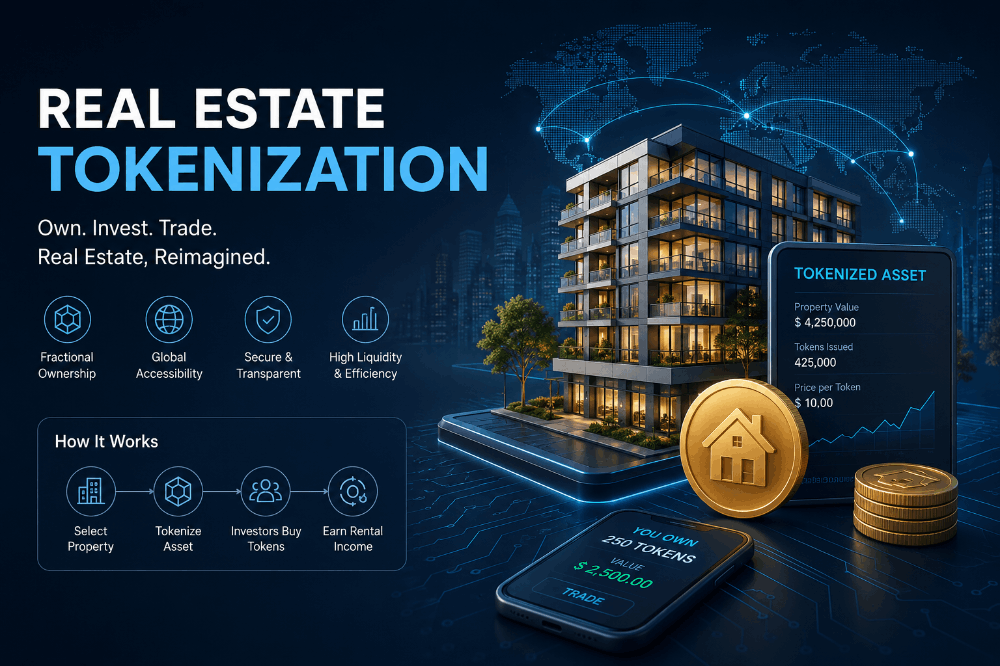
Property cash flow tokenization involves creating blockchain-based tokens that represent defined economic rights connected to future real estate income. Instead of tokenizing the entire property, the structure can focus on a specific income stream.
For example:
Property → Rental contracts → Legal cash-flow rights → Tokenized interests → Investors
Investors purchase tokens representing the economic rights defined in the offering documents. The property owner receives capital upfront, while investors receive distributions based on the underlying cash flows. The exact structure can vary significantly depending on jurisdiction and whether the token represents equity, debt, revenue participation, or another regulated financial interest.
Your structure is strong. I’d refine it slightly to make the flow more industry-focused, precise, and investor-oriented, especially around the distinction between tokenizing cash-flow rights and tokenizing the underlying property.
1. Identify Predictable Property Revenue
The process starts by identifying a property with measurable and reasonably predictable future income. Properties backed by long-term leases, strong occupancy, reliable tenants, established rental histories, and contractual payment obligations may be better suited for cash-flow tokenization. The goal is to determine how much future revenue can realistically support a tokenized investment structure.
2. Analyze the Property Cash Flows
Before issuing tokens, the underlying cash flows need to be carefully assessed. Key considerations include:
- Gross rental income
- Operating expenses
- Vacancy rates
- Tenant quality
- Lease duration
- Maintenance costs
- Property taxes
- Insurance
- Existing debt obligations
- Expected net operating income
This analysis helps establish the amount, timing, and stability of distributable cash flows.
3. Create a Legal Structure
The legal structure connects the blockchain-based token to enforceable economic rights. Depending on the transaction, an issuer may use an SPV, trust, fund, or another legal entity to hold the property or the contractual rights to specific cash flows.
A typical structure could look like:
Property Owner → SPV → Defined Cash-Flow Interest → Token Issuance
Legal agreements should clearly specify what token holders are entitled to receive, how distributions work, and what happens if the underlying cash flows change. Importantly, owning a blockchain token does not automatically establish a legal claim to rental income. The underlying contractual and legal framework must establish those rights.
4. Tokenize the Economic Interest
Once the legal framework is established, the defined economic interest can be represented digitally through tokens. For example, suppose a property is projected to generate $5 million in eligible net cash flows over a specified period. An issuer could structure tokens representing a legally defined portion of those future cash flows. The tokens may then be offered to eligible investors subject to applicable securities, financial, and investor-protection regulations. The key concept is that the token represents a defined economic claim not simply a digital representation of an estimated revenue figure.
5. Raise Capital Upfront
Investors purchase the tokenized interests, providing capital to the property owner or issuing entity today in exchange for exposure to future income.
The upfront capital could potentially support:
- Property acquisition
- Refinancing
- Renovation
- Expansion
- Debt repayment
- Portfolio growth
- Working capital
This creates a financial bridge between future real estate cash flows and present-day capital requirements. Instead of waiting years for revenue to materialize, a property owner can potentially structure eligible future income into an investable instrument and access capital upfront, while investors gain exposure to the underlying cash-flow stream.
A Simple Example
Consider an office building that generates $1 million in annual net rental income.
The owner expects the building to produce approximately $5 million in net income over the next five years. Rather than waiting for those payments to arrive, the owner could potentially create a legally compliant structure around a defined portion of the future income.
That economic interest could then be divided into digital tokens.
For example:
Expected future cash flow → Tokenized income rights → Investor capital → Property operations → Rental collections → Investor distributions
The investors do not necessarily own the building itself. Their rights depend on the specific legal and financial structure. This distinction is essential when evaluating tokenized real estate investments.
Major Types of Property Cash Flows That Can Be Tokenized
Rental Income
Recurring residential and commercial rent is one of the most straightforward potential applications. Tokens can represent defined claims to rental distributions.
Lease Payments
Long-term commercial leases can create predictable contractual cash flows that may potentially support tokenized financing structures.
Hotel Revenue
Hotels generate revenue through rooms, food and beverage, events, and other services.
Tokenization can potentially represent defined participation in eligible hotel revenues.
Parking and Ancillary Income
Large commercial properties may generate additional income from:
- Parking facilities
- Advertising
- Retail kiosks
- Storage
- Service agreements
These revenue streams could potentially be incorporated into structured tokenized products.
Property Sale Proceeds
Tokenization can also potentially represent rights to future sale proceeds. An investor could receive a defined percentage of eligible proceeds when the underlying property is eventually sold.
Benefits of Tokenizing Future Property Cash Flows
1. Upfront Liquidity for Property Owners
Property owners can potentially unlock capital without waiting for future rental payments.
This can improve liquidity and provide funding for additional real estate projects.
2. Alternative to Traditional Financing
Tokenized cash flows can provide another financing option alongside:
- Bank loans
- Mortgage financing
- Private equity
- Mezzanine financing
- Asset sales
This can give property owners greater flexibility when structuring capital.
3. Fractional Investment
Large real estate cash flows can be divided into smaller digital units.
This can potentially reduce minimum investment requirements and make eligible real estate opportunities accessible to a broader investor base.
4. Transparent Distribution Tracking
Blockchain infrastructure can provide an auditable record of token ownership and distribution events.
Investors can potentially track:
- Token balances
- Transfers
- Distribution history
- Redemption activity
5. Automated Income Distribution
Smart contracts can automate predefined distribution rules. For example, once verified rental income is received, the system can calculate each investor's proportional entitlement. Automation can reduce administrative effort and reconciliation.
The Future of Tokenized Property Cash Flows
The development of real-world asset tokenization could lead to increasingly sophisticated real estate financial products.
Future platforms may combine tokenized property cash flows with:
- AI-based rental forecasting
- Automated property valuation
- Digital identity
- Real-time tenant payment data
- On-chain compliance
- Automated distributions
- Regulated secondary markets
This could create a more programmable real estate financing ecosystem.
Instead of treating a property as one indivisible investment, financial markets could increasingly structure different layers of its economic value.
For example:
Property → Rental income → Debt → Equity → Appreciation → Sale proceeds
Each layer could potentially support different investment structures.
This creates opportunities to design real estate products around specific investor objectives rather than requiring investors to purchase an undifferentiated ownership interest.
Conclusion
Tokenization can turn future property cash flows into investable assets by digitally representing defined economic rights linked to rental income, lease payments, property revenues, or future sale proceeds. The model provides property owners with a potential way to access capital today while giving eligible investors exposure to future real estate income.
Its value comes from combining traditional real estate economics with blockchain capabilities such as fractionalization, programmable transactions, transparent ownership records, and automated distribution. But tokenization alone does not guarantee investment performance, liquidity, or legal ownership. Strong asset underwriting, enforceable legal rights, regulatory compliance, accurate valuation, reliable cash-flow verification, and investor protections remain essential.