Hype, Politics, and the Risk of Crypto Scams
Cryptocurrency has revolutionized the financial world by introducing decentralized systems that allow people to transfer value without relying on traditional banks. While this innovation has opened doors for financial freedom, new investment opportunities, and technological progress, it has also created fertile ground for scams and fraudulent projects.
The crypto market is highly volatile and often operates in a regulatory gray area in many parts of the world. Because of this, investors must approach it with caution. Using reputable platforms, avoiding emotional trading, and investing only what you can afford to lose are essential rules for anyone entering the space. There’s also a popular saying in the crypto community that perfectly captures the importance of security: “Not your keys, not your crypto.”
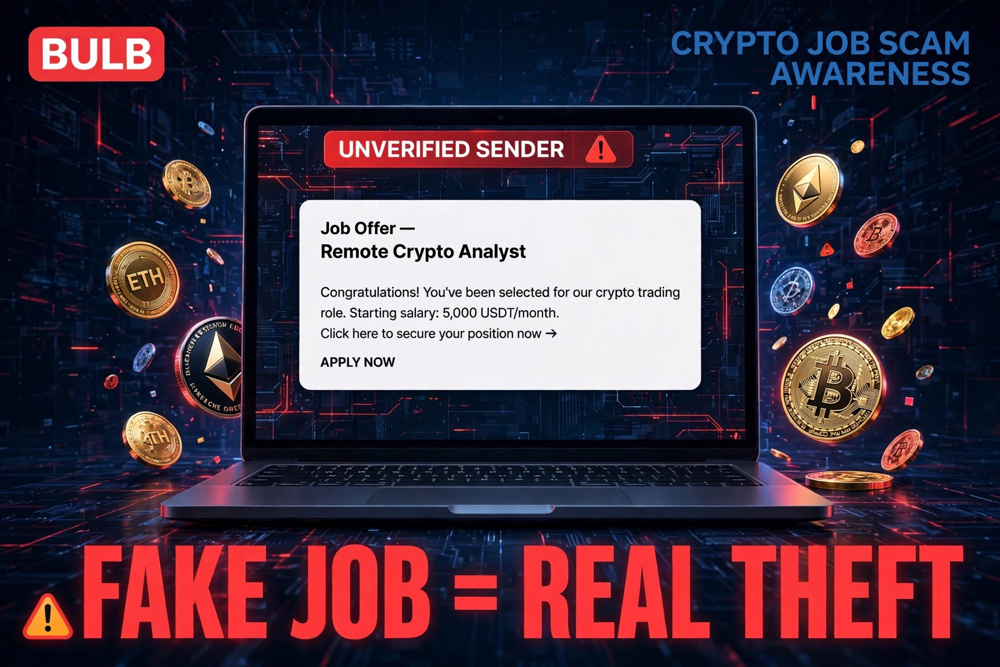
For newcomers, one of the harsh realities of the crypto world is that scams are everywhere. In fact, it usually doesn’t take long for someone involved in crypto to encounter their first fraudulent project. These scams appear in many forms, from fake tokens and phishing attacks to pump-and-dump schemes and rug pulls.
Most scams are designed to appear legitimate. They often come with professional-looking websites, detailed whitepapers, and bold promises about revolutionary technology. Some projects even claim partnerships with major companies or endorsements from influential figures to gain trust. Their goal is simple: attract as much investment as possible before disappearing or collapsing.
However, not every scam is carefully hidden behind sophisticated marketing.
Sometimes the warning signs are obvious. Sometimes the red flags are right in front of everyone. And occasionally, the hype surrounding a project is so strong that people overlook the risks entirely.
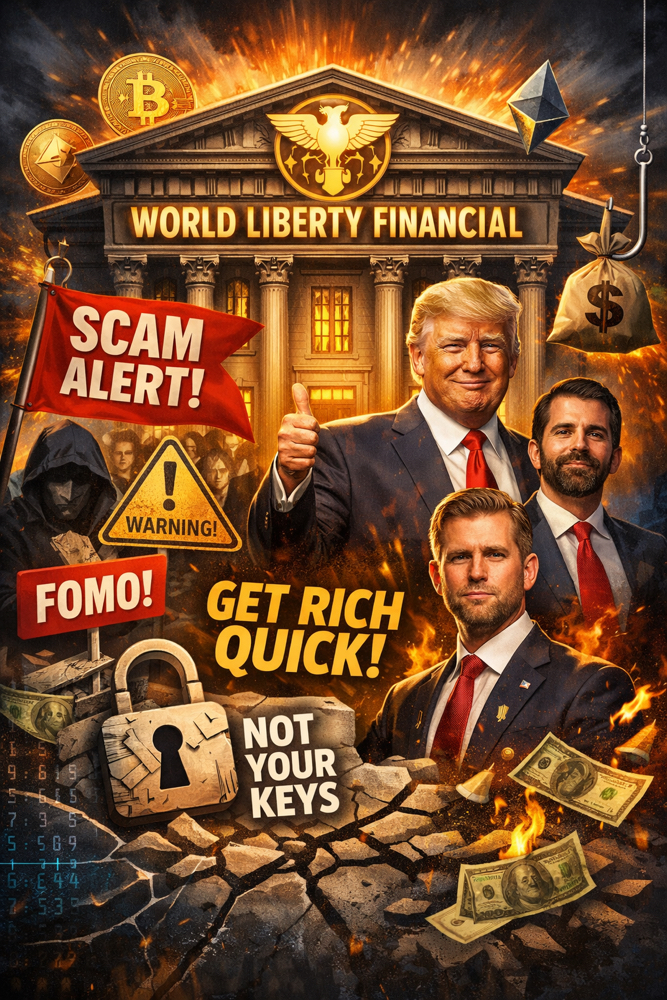
Recently, one project that has sparked conversation and controversy within the crypto community is World Liberty Financial. The project has drawn attention not only because of its promises but also because of its connection to members of the Trump family, including individuals associated with Donald Trump.
While celebrity and political endorsements are not unusual in the world of crypto, they often raise serious questions about credibility, transparency, and investor protection.
The Power of Celebrity Influence in Crypto
The crypto industry has long relied on influencers, celebrities, and public figures to promote projects. Because digital assets are still relatively new to many people, endorsements from famous personalities can quickly attract attention and create a sense of legitimacy.
However, history shows that celebrity-backed crypto projects are not always trustworthy. Over the years, many influencers and public figures have promoted tokens or platforms that later turned out to be poorly designed, misleading, or outright scams.
In some cases, celebrities were simply paid to promote a project without fully understanding it. In others, promoters may have had financial incentives that encouraged them to hype a project regardless of its long-term viability.
For investors, this creates a dangerous situation. When a well-known figure endorses a project, it can trigger a wave of excitement and fear of missing out (FOMO). People rush to invest without doing proper research, believing that the endorsement itself is proof of legitimacy.
But in crypto, reputation alone means very little.
Understanding the Red Flags
Whenever a new crypto project appears—especially one that suddenly gains massive publicity—it’s important to analyze it carefully. Several warning signs often appear in questionable projects.
1. Heavy Marketing Without Clear Technology
Some projects focus more on marketing campaigns and public promotion than on explaining the technology behind their platform. If a project’s messaging revolves mostly around hype and publicity rather than practical solutions, that should raise concerns.
2. Celebrity or Political Promotion
Endorsements from celebrities or politicians can create excitement, but they should never replace proper research. A famous name attached to a project does not guarantee that the project is legitimate or sustainable.
3. Lack of Transparency
Legitimate projects typically provide detailed information about their team members, technology, and roadmap. If the project lacks transparency about who is behind it or how it operates, investors should be cautious.
4. Unrealistic Promises
Crypto scams frequently promise extremely high returns or guaranteed profits. In reality, no legitimate investment can guarantee profit—especially in such a volatile market.
5. Pressure to Invest Quickly
Scammers often create urgency by encouraging people to invest quickly before “missing out.” This psychological pressure prevents potential investors from taking time to research the project properly.
Why Political Connections Make Crypto Even More Complex
The involvement of political figures in cryptocurrency projects introduces another layer of complexity. Political influence can amplify attention around a project almost instantly.
When a project is associated with well-known political families such as the Trump family, media coverage increases dramatically. Supporters may view the project as a groundbreaking financial movement, while critics may question its intentions and transparency.
Regardless of personal political opinions, investors must remain objective. Politics should never replace critical thinking when evaluating a financial opportunity.
In fact, political association can sometimes increase risk, because attention and controversy may overshadow proper analysis of the project itself.
The Psychology Behind Crypto Scams
Crypto scams succeed not only because of technology but also because they exploit human psychology.
Several emotional triggers often play a role:
Fear of Missing Out (FOMO)
When people see others making money or hear about a project gaining popularity, they fear missing the next big opportunity.
Authority Bias
People are more likely to trust something if it is promoted by a famous or powerful individual.
Greed and Overconfidence
Promises of fast profits can cloud judgment and lead investors to ignore warning signs.
Scammers understand these psychological factors and design their schemes to take advantage of them.
How to Protect Yourself in the Crypto Space
While the crypto industry contains risks, there are practical steps investors can take to protect themselves.
Do Your Own Research (DYOR)
Always research a project before investing. Read the whitepaper, examine the development team, and look for independent analysis from trusted sources.
Verify the Team
Check whether the project’s founders and developers are real individuals with credible backgrounds. Anonymous teams are not always a red flag, but they require extra caution.
Analyze the Technology
Ask yourself what problem the project is solving. Does the technology provide real value, or is it simply another token without a clear purpose?
Avoid Emotional Decisions
Crypto markets move quickly, but rushing into investments based on hype can lead to major losses.
Secure Your Assets
Using secure wallets and protecting private keys is essential. Remember the golden rule: if you don’t control the private keys, you don’t truly control the crypto.
The Importance of Healthy Skepticism
Skepticism is one of the most valuable skills in the crypto world. While innovation continues to push the industry forward, the absence of strong global regulation means investors must often rely on their own judgment.
Projects like World Liberty Financial remind us how quickly hype can spread when powerful names become involved. But hype alone does not determine whether a project will succeed or fail.
Instead, investors must evaluate projects based on facts, technology, transparency, and long-term sustainability.
The Future of Crypto and Regulation
As cryptocurrency continues to grow, governments and regulatory bodies around the world are beginning to pay closer attention to the industry. Increased regulation could help reduce scams and protect investors, but it may also introduce new challenges related to privacy and decentralization.
Striking the right balance between innovation and regulation will be crucial for the long-term success of the crypto ecosystem.
Until clearer rules emerge, education and awareness remain the best defense against fraud.
Final Thoughts
Cryptocurrency represents one of the most exciting technological and financial innovations of the modern era. However, with opportunity comes risk. The same decentralized systems that empower users can also make it easier for bad actors to operate.
The story surrounding World Liberty Financial highlights the importance of critical thinking in the crypto space. Whether a project is promoted by celebrities, influencers, or political figures like Donald Trump, investors must always perform their own research.
In the end, successful participation in crypto requires more than excitement—it requires patience, education, and discipline.
Because in the world of cryptocurrency, one simple rule always applies:
If something sounds too good to be true, it probably is.