How Can You Identify an Original Evil Eye?
The answer is not as straightforward as checking one particular color or shape. There is no single physical test that universally proves authenticity. Instead, you can look at the symbol's traditional design, the materials used, craftsmanship, seller information, and the claims made about the product.
Understand What the Evil Eye Symbol Represents
Before deciding whether something is an Original Evil Eye, it helps to understand what the symbol traditionally represents.
The evil eye is an ancient symbol found across different cultures and regions. It is commonly associated with protection from envy, negative intentions, or unwanted influences.
The familiar eye-shaped design, particularly the blue-and-white version, has become widely recognized. However, there are many regional and artistic variations.
So, “original” does not necessarily mean that every authentic evil eye must look exactly the same.
Look at the Traditional Design
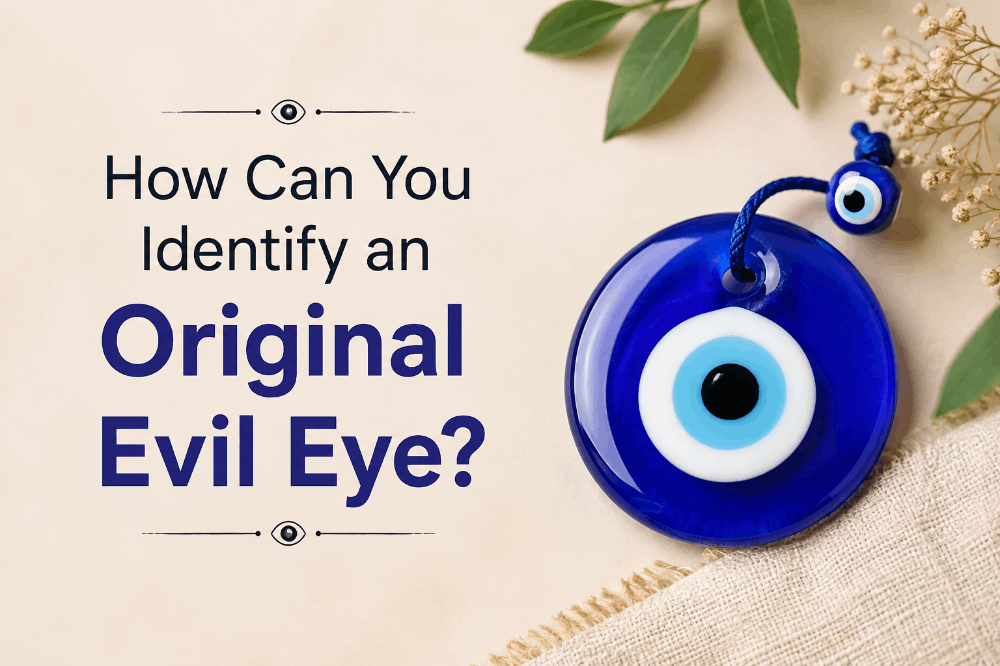
The classic evil eye symbol is often represented as a series of concentric circles resembling an eye. A common version includes a dark central pupil, surrounded by lighter layers such as blue and white.
However, modern jewellery makers may reinterpret the symbol using different shapes, colors, stones, and materials.
If you are specifically looking for an Original Evil Eye, compare the product with established traditional representations and pay attention to whether the seller explains the inspiration or cultural background of the design.
Examine the Materials
The material used can tell you more about the quality of the product, although it does not automatically prove that the symbol itself is “original.”
Evil eye jewellery may be made from glass, enamel, ceramic, silver, gold, stainless steel, beads, or other materials.
Before buying, check the product description carefully. A reliable listing should clearly state what the pendant, bracelet, or charm is made from.
Be wary of vague phrases such as “premium quality” when there are no actual material specifications to support the claim.
Pay Attention to Craftsmanship
A well-made piece should have clean finishing and securely attached components.
If you are buying an evil eye pendant, examine the edges, surface, setting, clasp, and bail. For bracelets, check the threading, links, fastening mechanism, and bead arrangement.
Online shoppers should look for clear photographs from multiple angles rather than relying on a single heavily edited product image.
Good craftsmanship does not prove cultural authenticity, but it can help you judge whether the product has been made carefully.
Be Careful With the Word “Original”
This is where things can get a little tricky.
Terms such as “original,” “authentic,” and “100% genuine” are frequently used in product listings, but these words alone do not establish where the product came from or what it is made of.
If a seller claims that an item is an Original Evil Eye, look for information supporting that statement. This might include details about the design's cultural origin, manufacturing process, materials, or maker.
A bold claim is not the same thing as evidence.
Check the Seller's Reputation
When shopping online, seller transparency matters.
Look for clear product descriptions, business information, customer support details, shipping terms, and return policies. Reviews can also help you understand whether buyers received what was advertised.
Pay attention to repeated comments about poor finishing, incorrect materials, misleading photographs, or products that looked significantly different upon arrival.
One unhappy review may be an isolated experience. Several similar complaints are worth taking seriously.
Look for Consistent Product Information
The photographs, title, description, and specifications should tell the same story.
For example, if the listing says the pendant is made from sterling silver but the detailed specifications mention a different metal, that inconsistency deserves clarification.
Similarly, if the product description promises a particular size or material but the photographs suggest something else, ask questions before purchasing.
A trustworthy listing should not feel like you are solving a mystery one sentence at a time.
Avoid DIY Authenticity Tests
You may come across internet tips suggesting that you scratch, burn, soak, or otherwise manipulate an evil eye product to determine whether it is genuine.
Do not rely on such methods.
They can damage the item without necessarily providing reliable evidence about its cultural origin or material composition.
If material authenticity is important—for example, when purchasing precious-metal jewellery—look for appropriate certification or documentation rather than experimenting with the product yourself.
Do Not Confuse Spiritual Claims With Authenticity
Another important distinction is between authenticity and spiritual claims.
A seller might claim that an evil eye product can guarantee protection, remove negative energy, improve relationships, or produce specific life outcomes. These statements do not prove that the product is traditionally authentic.
If the symbol's cultural or spiritual significance matters to you, focus on understanding its traditional background and the product's actual construction.
A convincing sales pitch can sell a product. It cannot rewrite its history.
Ask Questions Before Buying
If you are uncertain, contact the seller.
Ask where the design comes from, what materials are used, how the product is made, and whether any documentation is available.
You can also ask about care instructions and return or replacement policies.
The quality of the response can tell you quite a bit. A seller who provides clear, specific answers is generally easier to trust than one who avoids straightforward questions.
Final Thoughts
Identifying an Original Evil Eye is not about finding one magical feature that proves authenticity. Instead, consider several factors together: the traditional design, materials, craftsmanship, product information, seller transparency, customer reviews, and supporting documentation.
Remember that evil eye designs can vary across cultures and modern interpretations. A different color or contemporary style does not automatically make a product fake.
Most importantly, do not let labels such as “100% original” do all the convincing. Look for clear evidence, ask questions when something seems unclear, and choose a seller who is transparent about what they are offering.
A little research before buying can help you choose an evil eye product that feels meaningful, well-made, and genuinely suited to what you were looking for.