Tragic story of NASA hacker

Jonathan James and the System That Destroyed Him
In the world of cybersecurity, the name Jonathan James—known online as "comrade"—evokes extreme emotions. To the U.S. government, he was the "most dangerous juvenile cybercriminal in history"; to his neighbors, a quiet boy from Florida; and to himself, a student who treated global networks as free universities. His life ended prematurely under the shadow of suspicion for a scandal he had nothing to do with.
The Birth of a Digital Genius
Jonathan grew up in Pinecrest, Florida. While other children were learning to tie their shoes, he was learning to break digital locks. By the age of 10, he was reading C programming and Unix manuals that challenged university students. At 12, he unilaterally installed Linux on the family computer, deleting Windows because he considered it too "buggy" and insecure. As he later admitted in interviews (including for PBS Frontline), hacking was a form of intellectual competition and a "power trip"—a way to prove his worth in the world of machines.
Striking the Heart of the Government: Pentagon and NASA
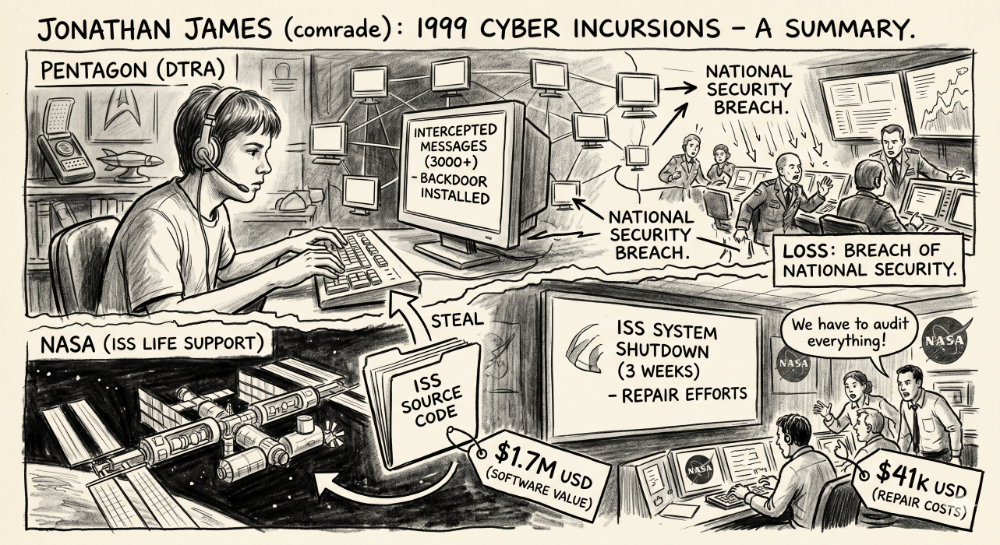
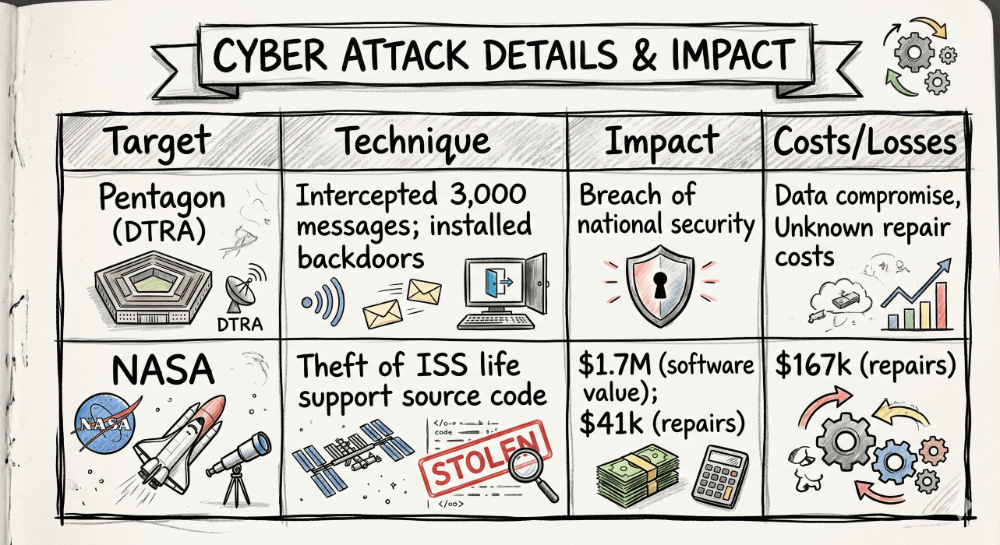
- Pentagon (DTRA): James hacked into the servers of the Defense Threat Reduction Agency. He installed a "sniffer"—software designed to intercept data packets—allowing him to monitor employee communications in real time. He intercepted over 3,000 messages and obtained login credentials for 19 military computers.
- NASA: His greatest feat was seizing the source code for the International Space Station's (ISS) life support system. The theft of software valued at $1.7 million forced NASA to shut down its systems for three weeks for a security audit, costing the agency $41,000.
On January 26, 2000, the FBI surrounded the James household. Jonathan confessed to everything, treating the interrogation almost like a technical briefing. He became the first minor in U.S. history to be convicted of cybercrime. Initially given a suspended sentence, he was later sent to a federal juvenile facility in Alabama after testing positive for marijuana. The brutal prison environment broke the spirit of a boy who communicated better with computers than with people. He emerged withdrawn and traumatized.
A Fatal Mistake: The TJX Scandal and Albert Gonzalez
The most tragic turn of events occurred in 2008 following a massive data breach at TJX (involving 45 million credit cards). Federal authorities, searching for the culprits, came across the initials "JJ" and immediately set their sights on Jonathan.
In reality, the attack was orchestrated by Albert Gonzalez (alias "soupnazi"), who lived a luxury lifestyle on stolen millions while simultaneously serving as a Secret Service informant. While Gonzalez enjoyed protection, Jonathan James—struggling with depression and the stigma of being a "recidivist hacker"—became the ideal scapegoat for prosecutors seeking a high-profile win. James felt the system was not seeking the truth (a phenomenon known as railroading), but rather a convenient conviction.
The Final Manifesto: "I Die Free"
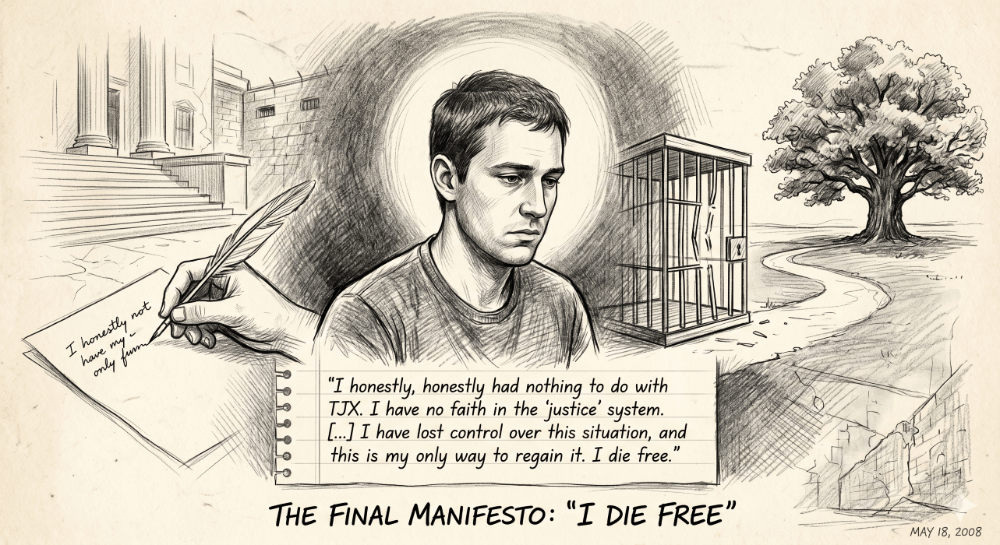
"I honestly, honestly had nothing to do with TJX. I have no faith in the 'justice' system. [...] I have lost control over this situation, and this is my only way to regain it. I die free."
Legacy
Two years after Jonathan’s death, Albert Gonzalez was sentenced to 20 years in prison. This confirmed James's innocence, but justice arrived too late. The story of Jonathan James remains a memento for a system that, instead of harnessing a brilliant mind for the sake of national security, drove it to destruction through a lack of understanding and a blind pursuit of conviction statistics.
Resources:
https://www.pbs.org/wgbh/pages/frontline/shows/hackers/interviews/anon.html
https://csrc.nist.gov/csrc/media/events/ispab-october-2011-meeting/documents/oct27-2011_fcc-cybersecurity-exec-summary_rnaylor.pdf
https://www.semanticscholar.org/topic/Jonathan-James/1169491
https://en.wikipedia.org/wiki/Jonathan_James
https://www.justice.gov/opa/pr/leader-hacking-conspiracy-sentenced-20-years-prison-stealing-more-40-million-credit-and-debit
https://www.youtube.com/watch?v=5IPXcS79_fQ