Ancient Hardware, Digital World

Ancient Hardware, Digital World -
Building communities for the brain we actually have.
I've spent the last few months researching one question: what happens when an ancient biological apparatus collides with a hyper-technological society it was never built for?
Every thread I pull leads back to the same place. Not to AI. Not to algorithms. Not to apps.
To hardware. Specifically, ours.
So let me start with a scene.
A man stands at the edge of a savanna, 50,000 years ago. He hears a rustle in the grass. Before he can even name the sound, his heart rate spikes. Cortisol floods his bloodstream. Every muscle primes for fight or flight.
That reflex saved his life.
That exact same reflex is firing in your body right now — as you read a notification, refresh a feed, or watch a number turn red on a chart.
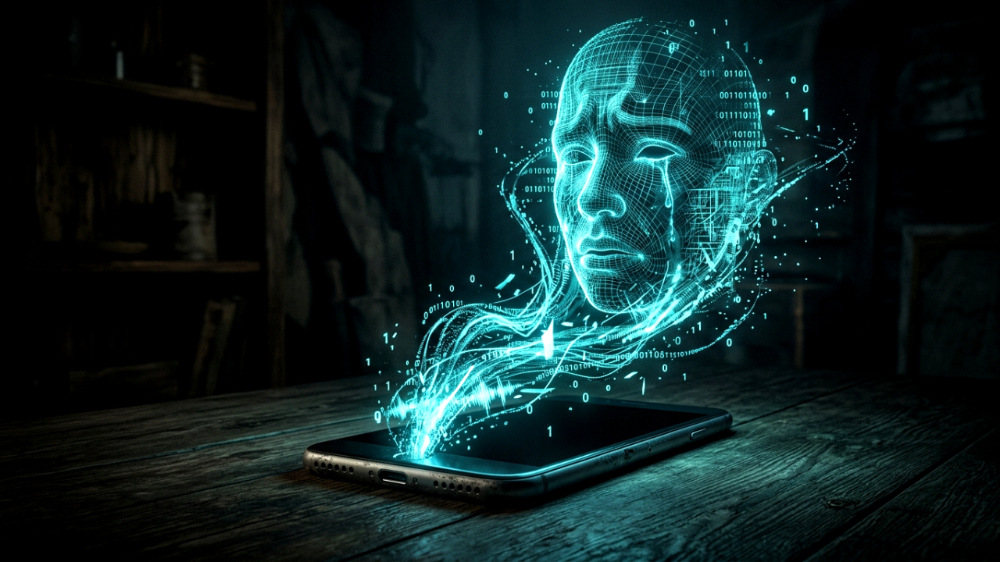
Here's what almost nobody says out loud: you are not running new software on new hardware. You're operating in the most advanced information environment ever built on a brain that finished evolving roughly 300,000 years ago and hasn't been meaningfully updated since.
Let that sink in.
Anatomically modern humans, genetically almost identical to you, have existed for about 300 millennia. For roughly 290,000 of those years, we lived in small bands of hunter-gatherers — groups capped, anthropologists believe, at around 150 people. This is "Dunbar's number," and it's no coincidence that it still predicts the size of stable, real-world social circles today.
In that world, threats were rare and physical. Rewards were slow and earned: a successful hunt, a ripened harvest, a season survived through the cold. Information was scarce. A single piece of gossip could occupy a tribe's attention for days.
The brain that evolved to navigate that world locked in three non-negotiable settings:
• Scan constantly for threat (negativity bias)
• Seek group belonging above almost everything else (tribal identity)
• Release dopamine in unpredictable bursts to keep you searching (variable reward)
These weren't bugs. They were precisely what allowed a fragile, slow, hairless primate to outcompete predators with bigger teeth and faster legs.
Language itself — arguably our first true technology — emerged from this same pressure. It allowed us to compress experience, transmit warnings, build shared myths, and coordinate across time. Language was the original interface between biology and culture, long before any screen existed.
Now fast forward.
The hardware didn't change. The environment did — catastrophically, in evolutionary terms.
We went from one piece of gossip every few days to thousands of social signals every hour, delivered through screens and optimized by people who understand exactly which ancient buttons they're pressing.
Negativity bias, built to detect a leopard in the grass, now fires at a stranger's opinion in a comment section.
Tribal identity, built to bond 150 humans for mutual survival, now gets hijacked by systems that monetize outrage and tribal sorting at planetary scale.
Variable reward, built to keep a forager checking one more bush, now keeps your thumb moving for one more scroll.
Evolutionary psychologists have a name for this: mismatch — a trait that was adaptive in the environment it evolved for but maladaptive in a new one.
Sugar cravings made sense in a world of scarcity, they don't in a world of vending machines.
The same logic applies to a Paleolithic threat detector facing 10,000 manufactured "threats" a day.
The anxiety. The doom-scrolling. The addiction to validation. The speed at which outrage spreads.
None of it is a personal failure.
It's an ancient brain doing exactly what it was built to do inside an environment it was never built for.
This is where the conversation usually stops: at diagnosis.
But the more interesting question is what we do with this knowledge once we have it.
Because the same circuitry that makes us vulnerable to manipulation is the same circuitry that makes real community possible.
Belonging, status, reciprocity, shared narrative — these aren't exploits. They're the actual mechanics of how humans have always cooperated, long before any platform existed.
The problem isn't that digital communities use this biology.
The problem is when they use it the way a slot machine does: stripped of context, optimized purely for attention extraction, with no off-ramp and no real reciprocity behind it.
A sustainable digital community works with the grain of this hardware instead of against it.
It gives people a tribe-sized space where they can actually be known, not just a feed where they can be exposed.
It earns trust the slow way our ancestors did — through consistency and reciprocity — instead of manufacturing urgency through artificial scarcity and engagement bait.
It treats status and recognition as something built collectively, not something dispensed in unpredictable bursts to keep people hooked.
That distinction — between designing for the brain we actually have and exploiting it — is, to me, the real frontier in building anything social right now: products, communities, content, brands.
We didn't outgrow our biology.
We simply built a world that moves much faster than it does.
The builders who understand that gap honestly, instead of merely monetizing it, are the ones who'll build something that lasts.