Can Solar Lights Be Relocated Easily After Installation?
Yes, most solar lights can be relocated relatively easily after installation, especially compared with conventional outdoor lights that require electrical wiring. Since solar lights generate and store their own energy, moving them usually doesn't involve rewiring them to the home's electrical system.
However, how easy a solar light is to relocate depends on its design, installation method, mounting surface, and whether the new location receives adequate sunlight.
Why Are Solar Lights Easy to Relocate?
The main advantage of solar lighting is that it doesn't typically depend on a wired connection to the household electrical supply. A solar light generally consists of a solar panel, rechargeable battery, LED light, and control system.
If the light is mounted using screws, brackets, stakes, or other removable fixtures, it can usually be taken down and installed somewhere else.
For example, a solar garden light installed using a ground stake can often be moved simply by removing it from the soil and placing it in another suitable location.
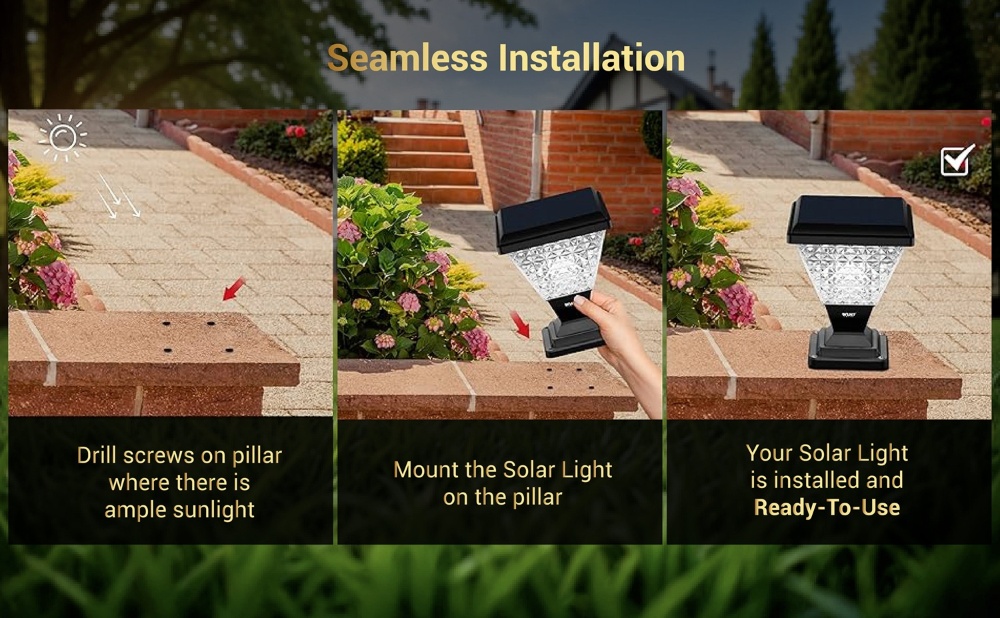
Wall-mounted and pillar-mounted models may require slightly more effort because their mounting brackets are secured with screws.
What Should You Consider Before Moving a Solar Light?
Although physically relocating a solar light may be straightforward, the new location is extremely important.
1. Check Sunlight Exposure
The most important factor is whether the new location receives sufficient sunlight.
A solar panel needs sunlight during the day to recharge the battery. If the new location is heavily shaded by:
- Trees
- Buildings
- Walls
- Roofs
- Other structures
the battery may not receive enough charge, which can reduce nighttime operating time.
Ideally, position the solar panel where it receives good direct sunlight for several hours during the day.
2. Consider the Solar Panel's Position
Some solar lights have an integrated solar panel, while others have a separate panel connected to the light using a cable.
For models with separate panels, relocating the light may provide more flexibility. You can position the light where illumination is needed while placing the panel in a better location for sunlight.
Make sure the cable is routed safely and isn't exposed to unnecessary pulling, sharp edges, or areas where it could be damaged.
3. Check the Mounting Surface
The installation method also affects how easily a solar light can be relocated.
A garden light with a stake is generally very easy to move. A wall-mounted solar light may require you to remove screws and reinstall the mounting bracket at the new location.
When moving a mounted light, ensure the new surface is strong enough to support it securely.
Can Relocating a Solar Light Damage It?
Normally, relocating a solar light shouldn't cause damage if it is handled carefully.
Avoid pulling the light by its cable, forcing mounting brackets, or striking the solar panel. If the light has been installed outdoors for a long period, screws and mounting components may have accumulated dirt or corrosion, so remove them carefully.
It's also a good idea to inspect the light and its components before reinstalling it.
What About Solar Street Lights?
Relocating larger solar street lights is more involved than moving small garden or wall lights.
Street lights are typically mounted on poles or other permanent structures and may require tools and additional installation work. Their position also needs to be selected carefully to ensure adequate solar exposure and appropriate lighting coverage.
Therefore, while they can technically be relocated, it isn't as simple as moving a small garden light.
Will a Relocated Solar Light Work Immediately?
It may, but the battery's charge level matters.
If the light has been operating in its original location, the battery may have some stored energy. After moving it, allow the solar panel to receive adequate sunlight so the battery can recharge properly.
If possible, install the light earlier in the day and allow it to charge before expecting maximum nighttime performance.
How to Relocate a Solar Light Safely
A simple process can help prevent installation problems:
- Switch off the light, if the model has a manual power switch.
- Remove the light carefully from its existing mounting or ground stake.
- Inspect the unit for damaged cables, brackets, or other components.
- Select a new location with good sunlight exposure.
- Secure the light properly using the appropriate mounting method.
- Position the solar panel toward an area with good daylight exposure.
- Allow the battery to charge before evaluating nighttime performance.
Are Solar Lights More Flexible Than Wired Outdoor Lights?
Generally, yes.
Conventional outdoor lights may require electrical wiring to be routed to the installation point. Moving them can therefore involve additional electrical work.
Solar lights operate independently of the household electrical supply, which provides greater flexibility when changing outdoor layouts, landscaping, garden arrangements, or entrance designs.
This makes solar lighting particularly convenient for homeowners who may want to change their outdoor setup over time.
Final Thoughts
Solar lights can generally be relocated after installation, and many smaller models can be moved with relatively little effort. The key consideration isn't just whether the light can physically be moved, but whether the new location provides sufficient sunlight and suitable mounting conditions.
Before relocating a solar light, check the amount of daylight available, the stability of the new mounting surface, and the positioning of the solar panel. With proper planning and careful installation, you can move solar lights to new locations while maintaining reliable nighttime illumination.
For larger installations such as solar street lights or high-mounted flood lights, professional assistance may be appropriate to ensure safe removal and reinstallation.