How Moonstone Became Associated With the Moon in Different Cultures
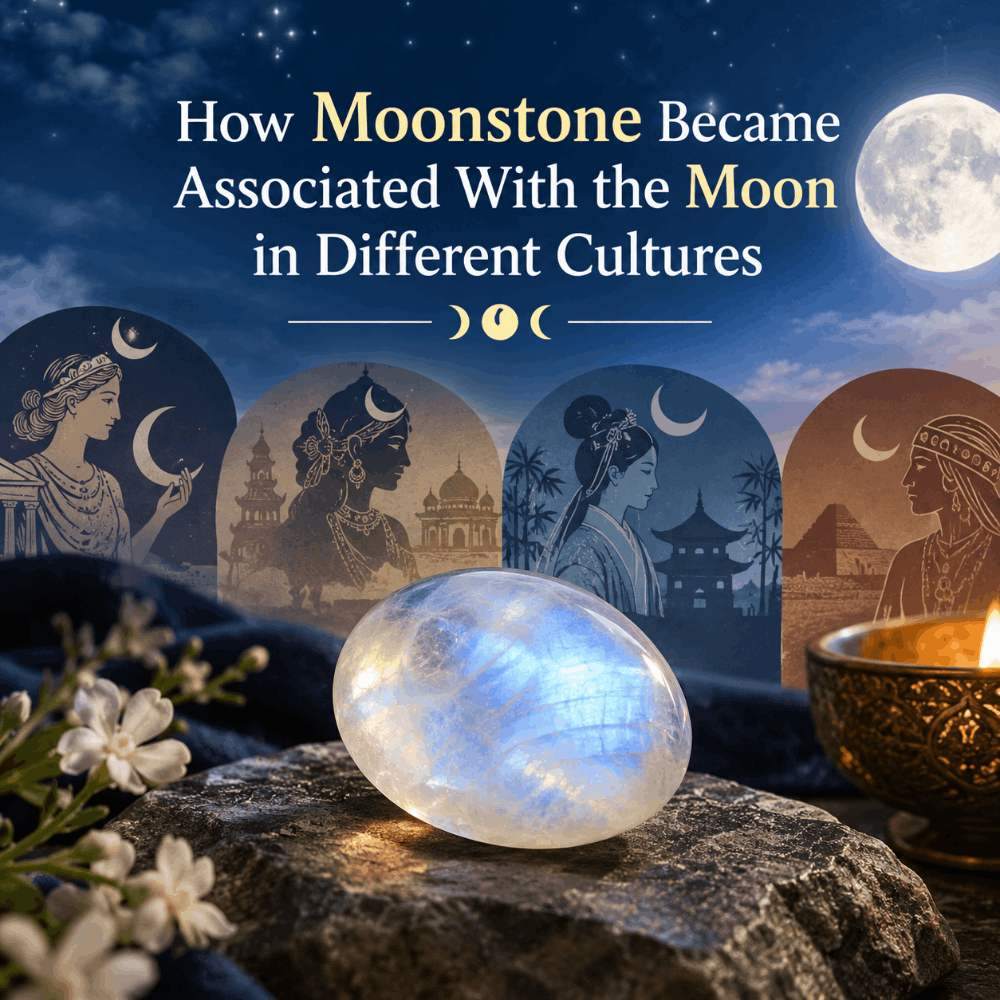
Today, you can find everything from delicate rings to a modern moonstone pendant, but the connection between this gemstone and the moon goes back centuries.
Why Does Moonstone Look Like Moonlight?
The connection starts with the stone itself. Moonstone can display a soft, floating glow across its surface when light hits it from certain angles. This optical effect is known as adularescence.
To people observing the stone before modern mineral science explained this effect, the moving glow could easily seem mysterious. Its pale, luminous appearance reminded observers of moonlight shining through a clear night sky.
That visual resemblance likely played an important role in the stories and symbolism that developed around the gemstone.
The Ancient Roman Connection
One of the best-known historical associations between moonstone and the moon comes from ancient Roman writings. The Roman writer Pliny the Elder described a gemstone whose appearance seemed to change with the phases of the moon.
This idea helped strengthen the connection between the stone and lunar cycles. Rather than viewing its changing appearance simply as an optical feature, people could interpret it through the celestial knowledge and beliefs of their time.
The story is particularly interesting because it shows how natural observations can become part of cultural symbolism.
The Moon and Ideas of Change
The moon appears to change shape throughout its cycle, moving from a thin crescent to a full moon and then gradually becoming smaller again. This repeating pattern has inspired symbolism around change, cycles, and renewal in many cultures.
Moonstone's shifting glow fits neatly into this symbolism. Its appearance can seem different depending on the angle and lighting, making it an easy gemstone to associate with transformation.
This may be one reason its appeal has lasted even as jewellery styles have changed.
Moonstone in Modern Jewellery
Today, the moon connection is still part of the stone's identity, but you do not have to follow its traditional symbolism to appreciate it.
Jewellery designers use moonstone because its subtle appearance works beautifully in contemporary pieces. A polished cabochon can look elegant in a pendant, while smaller stones can be incorporated into bracelets, earrings, or rings.
A moonstone pendant is particularly popular because the stone can sit close to the neckline and become a small focal point without looking overly dramatic.
Why Moonstone Feels Different From Other Gemstones
Unlike gemstones known mainly for intense color or sparkle, moonstone tends to attract attention through softness. Its glow can be understated rather than flashy.
That quality makes it appealing to people who prefer jewellery with a quieter personality. It can complement both traditional Indian outfits and contemporary everyday clothing.
The stone's natural variations also mean that two pieces may not look exactly alike. Differences in transparency, body color, and the intensity of the glow can give each gemstone its own character.
The Role of Lunar Symbolism Today
The moon remains a powerful symbol in modern culture. It is often associated with cycles, reflection, femininity, mystery, and change. These associations are not limited to one religion or tradition, which helps explain why moon-inspired jewellery continues to feel relevant.
Moonstone benefits from this familiar imagery. Even someone unfamiliar with its history can look at its soft glow and understand why the gemstone received its name.
In that sense, its appearance continues to tell part of the story.
Choosing a Moonstone Pendant
If you are considering a moonstone pendant, pay attention to the stone rather than focusing only on the setting. Look for a glow that is visible under suitable lighting and examine the stone from different angles.
The pendant's metal and overall design also matter. A simple setting can allow the moonstone to remain the main attraction, while a more detailed design can give it a traditional or festive appearance.
Think about how you intend to wear it. A smaller pendant may work well for everyday styling, while a larger stone can create a stronger statement.
A Gemstone With a Lasting Story
Moonstone's association with the moon did not come from one single culture or one specific moment. Its unusual optical appearance encouraged people in different places to connect it with the night sky, lunar cycles, and changing light.
From historical accounts to Indian traditions and contemporary jewellery, the gemstone has continued to carry that celestial identity.
Final Thoughts
Moonstone became associated with the moon largely because of the way it looks. Its soft, shifting glow naturally reminded people of moonlight and lunar changes, while different cultures developed their own stories and interpretations around it.
Today, a moonstone pendant can be appreciated simply as a beautiful piece of jewellery or as a modern expression of the gemstone's long lunar symbolism. Either way, its appeal comes from a fascinating combination of natural beauty, history, and imagination.
Also read: 7 Mukhi vs 5 Mukhi Rudraksha: How Are They Different?