7 Mukhi vs 5 Mukhi Rudraksha: How Are They Different?
Rudraksha beads come in different mukhis, or naturally formed faces, and each type has its own traditional significance. Among the many varieties available, 5 Mukhi and 7 Mukhi Rudraksha are commonly discussed by people exploring Rudraksha jewellery and spiritual traditions.
At first glance, the difference may seem simple: one has five faces and the other has seven. But there is more to understand, including their traditional associations, appearance, and how people commonly choose between them. If you are considering a 7 Mukhi Rudraksha Bracelet, knowing how it differs from a 5 Mukhi bead can help you make a more informed choice.
What Does “Mukhi” Mean?
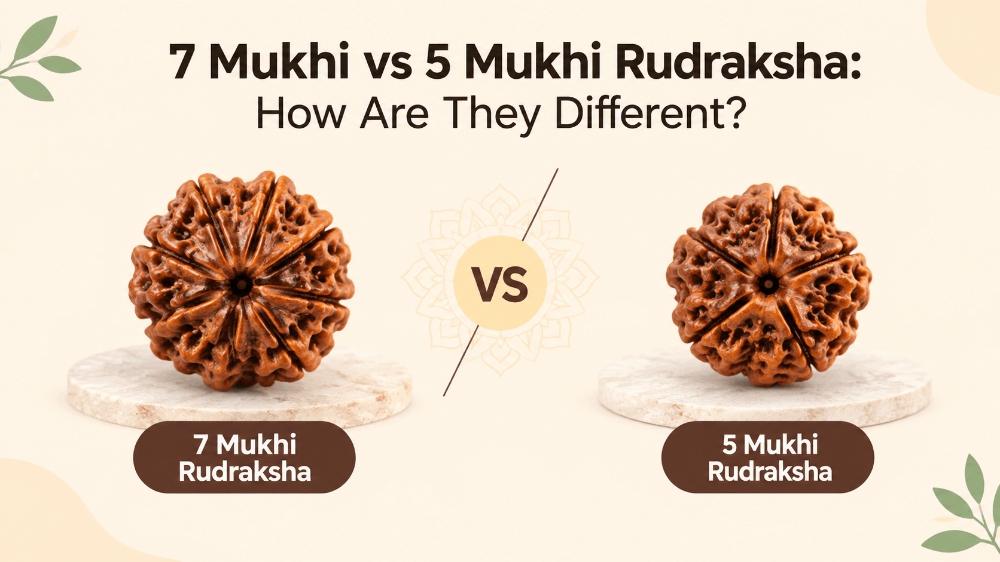
The word “Mukhi” refers to the natural lines or faces visible on a Rudraksha bead. These lines run from the top to the bottom and are used to classify different Rudraksha varieties.
A 5 Mukhi Rudraksha has five natural faces, while a 7 Mukhi Rudraksha has seven. The number of mukhis is traditionally considered important because different varieties are associated with different deities, symbolism, and spiritual purposes.
These associations come from religious and traditional practices, so interpretations can vary between traditions and practitioners.
What Is a 5 Mukhi Rudraksha?
The 5 Mukhi Rudraksha is one of the most commonly encountered varieties. It is traditionally associated with Lord Shiva and is often connected with ideas such as balance, discipline, calmness, and spiritual practice.
Because it is relatively common and versatile, 5 Mukhi Rudraksha is often used in malas, bracelets, and other forms of devotional jewellery.
Its familiar appearance also makes it a common starting point for people who are new to Rudraksha.
What Is a 7 Mukhi Rudraksha?
The 7 Mukhi Rudraksha is traditionally associated with Goddess Lakshmi in many Rudraksha traditions. It is often connected symbolically with prosperity, abundance, stability, and material well-being.
People interested in these traditional associations may choose a 7 Mukhi bead for jewellery or personal spiritual practice.
A 7 Mukhi Rudraksha Bracelet can therefore appeal to someone who appreciates both the traditional symbolism of the bead and the convenience of wearing it as an everyday accessory.
The Main Difference in Traditional Associations
The clearest traditional difference between these two Rudraksha varieties is their associated symbolism.
The 5 Mukhi is commonly connected with Lord Shiva and themes of spiritual awareness and balance. The 7 Mukhi is commonly associated with Goddess Lakshmi and themes of prosperity and abundance.
These meanings should be understood as traditional beliefs rather than scientifically proven effects. People may interpret or use Rudraksha differently depending on their family traditions, spiritual practices, or guidance from a knowledgeable practitioner.
Difference in Appearance
The number of natural faces is the easiest way to distinguish the two varieties. A 5 Mukhi bead should display five clearly identifiable natural lines, while a 7 Mukhi bead should have seven.
However, counting the mukhis can sometimes be difficult when the bead is small, worn, poorly photographed, or covered by a jewellery setting.
If authenticity matters to you, it is worth purchasing from a seller who provides clear product information and follows appropriate quality and authentication practices.
Which One Is More Suitable for Everyday Jewellery?
Both varieties can be incorporated into everyday jewellery. A 5 Mukhi Rudraksha is frequently seen in malas and bracelets because of its traditional popularity.
A 7 Mukhi bead can also work well in a bracelet, especially when combined with other materials or designed in a contemporary style.
The choice can therefore come down to the symbolism you personally connect with, as well as the design, comfort, and quality of the jewellery.
Can You Wear Them Together?
Some people choose to wear different Rudraksha varieties together, depending on their personal spiritual practice or the guidance they follow.
There is no universal rule that says a 5 Mukhi and 7 Mukhi Rudraksha must always be worn separately. However, traditional practices can differ, so anyone following a specific spiritual discipline may prefer to consult a knowledgeable practitioner before combining different beads.
For casual jewellery use, the decision may simply come down to personal preference.
Choosing a 7 Mukhi Rudraksha Bracelet
If you are specifically looking for a 7 Mukhi Rudraksha Bracelet, examine both the bead and the bracelet construction. Check that the natural faces are clearly visible and that the bead appears properly finished.
Also consider the thread, metal components, clasp, bead size, and overall fit. A bracelet should be comfortable enough for your intended use rather than chosen only for its symbolic meaning.
If the bracelet includes additional stones or charms, understand what each component represents before buying.
Final Thoughts
The difference between 5 Mukhi and 7 Mukhi Rudraksha goes beyond the number of natural faces. Traditionally, the 5 Mukhi is associated with Lord Shiva and themes of balance and spiritual practice, while the 7 Mukhi is commonly linked with Goddess Lakshmi and symbolism around prosperity and abundance.
Neither variety needs to be viewed as universally “better.” The right choice depends on the tradition you follow, the symbolism that resonates with you, and the type of jewellery you want to wear. If prosperity-inspired symbolism interests you, a 7 Mukhi Rudraksha Bracelet can be a meaningful way to incorporate this traditional bead into everyday jewellery.