WHAT I LEARNED ABOUT FINTECH
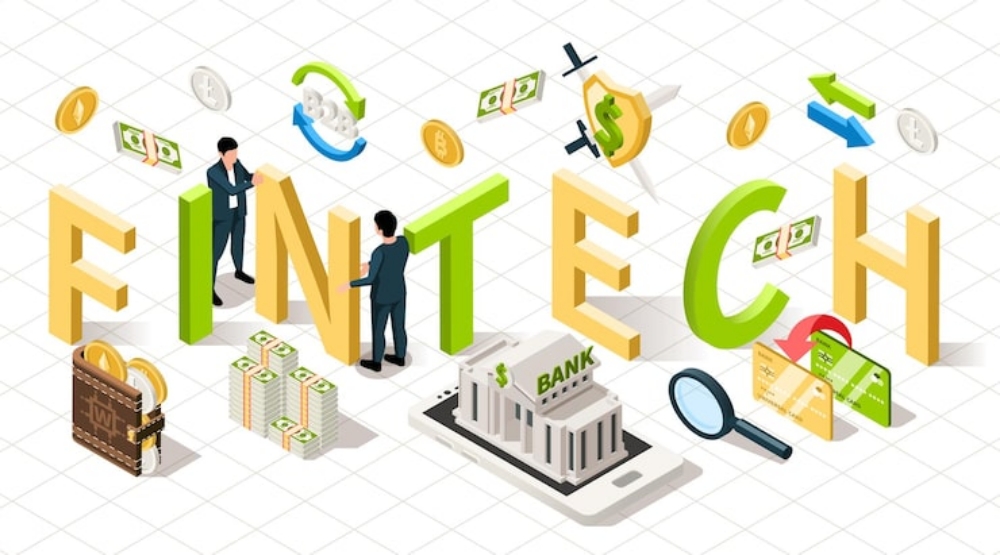
In this article, I'd cover exactly what I learned about Fintech in a simple, beginner-friendly way.
THE 2008 GLOBAL FINANCIAL CRISIS
Just like most people, I had no idea of the 2008 global financial crisis until I decided to read about Fintech.
The 2008 global financial crisis gave birth to the rise of Fintech.
Before the crisis, banks in the US started giving out too many risky mortgage loans to people with bad credit scores, unstable sources of income and people who realistically cannot afford the loans, with the belief that house prices will skyrocket even if they couldn't pay back their loans.
Banks packaged this mortgage into products and called them MBS (Mortgage Backed Securities) and CDOs (Collateralized Debt Obligations) and sold it to investors all around the world.
The main problem emerged when they mixed the safe and risky loans together, so nobody knew which one would fail.
Rating agencies labelled these risky products as safe, so this made investors believe they were buying solid, low-risk assets but the ratings were wrong.
Then the real problem began, which led to the fall of the economy. House prices started to rise like they intended but people who could not afford the loans started defaulting.
Once people stopped paying, the values of those mortgage backed investments collapsed.
Major financial institutions took a big hit, and some had to file for bankruptcy.
After this event, credit (money) stopped coming in. Banks became afraid to lend money to people and businesses. And once there is no credit, there is no business. People lost their jobs, businesses failed, investments and economies crashed.
The government had to intervene to prevent total collapse, acting like superheroes to some.
And this event spun worldwide, leading to the crash of stock markets. Since every world's economy is interwoven like a spiderweb, it affected other countries as well.
They intervened with lower bailouts, lower transaction rates, and new financial regulations. This stabilized the system to a point but the damage was too severe.
This, people saw and lost their trust in traditional banks. The crisis revealed a deep flaw in traditional banking and the need for technology driven solutions emerged, giving birth to the rise of Financial Technology (Fintech).
WHAT IS FINTECH?
As we know, FINTECH is coined from 2 words fused together. “Fin” and “Tech.
“Fin” represents “Financial,” which is from the word Finances. According to corporatefinanceinstitute.com, finance is defined as “as the management of money and includes activities such as investing, borrowing, lending, budgeting, saving, and forecasting.”
While “Tech” representing “Technology” stands for “the use of scientific knowledge (either softwares or hardwares) for practical purposes, and for solving problems, which can improve human life.”
So, FinTech means: “the development of software applications, either mobile applications or other technologies, to automate traditional forms of finances for both individuals and corporate firms. It deals with a wide range of products, from simple mobile payment applications to hosting encrypted transactions on the blockchain."
OPPORTUNITIES IN FINTECH
While there are still many startups coming up with fresh and innovative ideas for the market, these currently seem to be the leading areas of fintech.
- Mobile Payment Applications
- Budgeting Applications
- Web3 services- Blockchain/Crypto
- Crowdfunding platforms
- InsurTech
- Stock Trading/RoboAdvising
MAJOR BENEFIT OF FINTECH
Ever since Fintech came into existence, its major benefit particularly for a country like Nigeria, where most of the country's population is unbanked is that:
- It opens up opportunities for financial inclusion as it makes financial services more accessible to Nigerians.
- It also provides a wide range of financial stability not just to individuals but also to organisations.
While there are a range of benefits of Fintech, these seem to be the highlighted benefits.
SOLUTION FINTECH IS ADDRESSING
Allowing a large population of the unbanked to be financially included.
Low transaction fees.
Allowing people to be able to manage their finances themselves.
Easy to operate.
CHALLENGES FINTECH STARTUPS FACE
- Limited Data Access.
- Cybersecurity Issues.
- Access to initial funding when starting out.
- Market confidence is at its lowest.
CONCLUSION
Now the question everyone is asking: “Is Fintech going to replace traditional banking?”
For me, I'd say that traditional banks will always still have the upper edge. Regardless of the 2008 crisis revealing the flawed system of the banks, some people still have their trust in traditional banks rather than Fintech apps.
Rather, I'd say that Fintech apps can and should compliment traditional banking. They can partner one another and roll out more affordable and effective service delivery.
If you are interested in learning more about emerging technologies like Fintech, Startups, SaaS, Web3 and Artificial Intelligence, then you are in the right place.
Thank you for reading.