Inside Terafab: Elon Musk’s $25 Billion Masterplan to Rewire the AI Industry.

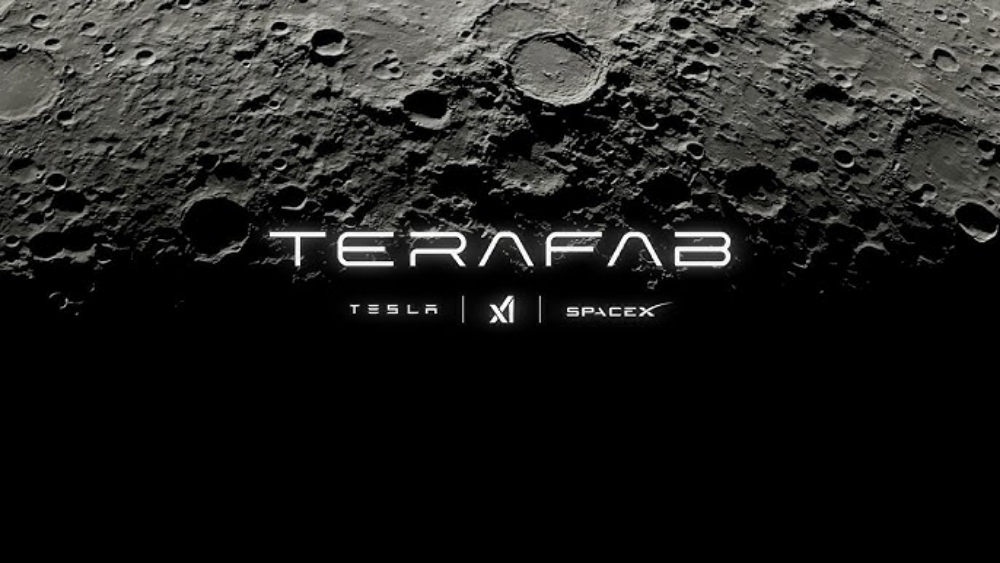
If there is one thing we’ve come to expect from Elon Musk, it’s that he doesn’t do things by halves. When the global supply chain for artificial intelligence chips couldn't keep pace with the ravenous compute demands of Tesla, SpaceX, and xAI, Musk’s solution wasn't just to order more chips. His solution was Terafab—an audacious, vertically integrated "Advanced Technology Fabrication" mega-facility currently rising from the ground at the North Campus of Tesla’s Giga Texas in Austin.
Aiming for an astronomical production capacity of 1 terawatt (1TW) of AI compute per year, Terafab isn't just another factory. It is a fundamental reimagining of how silicon is designed, manufactured, and deployed. Armed with a powerhouse new partnership with Intel, Terafab is officially the most ambitious semiconductor project in history.
Here is a deep dive into what Terafab is, how it works, and why it matters.
•The 1-Terawatt Vision: Why Build Terafab?
To understand Terafab, you have to understand the bottleneck it is designed to shatter.
Currently, the world relies heavily on a fragmented global supply chain—dominated by companies like TSMC and Samsung—to produce AI chips. But the combined annual output of the traditional semiconductor heavyweights equates to roughly 20 gigawatts of compute power. Musk’s ecosystem demands infinitely more.
Between Tesla’s Full Self-Driving (FSD) fleets, the Cybercab, and the staggering projection of 1 billion to 10 billion Optimus humanoid robots in the future, the sheer volume of low-power edge inference required is unprecedented. Add in SpaceX and xAI's plans for massive orbital data centers, and the compute requirements go completely off the charts.
Terafab was born from this necessity. By targeting a mind-bending "1 TW of annual AI computing power" (roughly 50 times the current global AI chip output), Musk is ensuring that his companies won't be choked by silicon shortages in the critical years ahead.
•Shattering the Supply Chain: Everything Under One Roof
The traditional semiconductor lifecycle is famously complex and geographically scattered. A chip might be designed in California, rely on masks printed in Japan, be fabricated in Taiwan, and then shipped to Malaysia for packaging and testing. This scattered approach adds massive lead times and limits rapid iteration.
Terafab is throwing that playbook out the window. Valued at an estimated $20–$25 billion, the facility will execute the ultimate vertical integration play. By bringing every single stage of the process together under one massive roof in Austin, Terafab will handle:
•Chip Design
•Lithography Mask Production
•Logic Fabrication
•Memory Production
•Advanced Packaging and Testing
For engineers at Tesla, xAI, and SpaceX, this means they can design a processor, test it, revise it, and prototype it with virtually no delays. It transforms chipmaking from a slow, methodical global logistics puzzle into an agile, highly iterative loop.
•The Game-Changing Partnership: Intel Enters the Chat
Building a next-generation semiconductor fab from scratch is notoriously difficult, capital-intensive, and fraught with yield-rate risks. That is exactly why Terafab’s newly announced partnership with "Intel" is the linchpin of this entire operation.
In April 2026, Intel CEO Lip-Bu Tan shook hands with Musk, officially bringing Intel's formidable "IDM 2.0" foundry capabilities and state-of-the-art process tech into the Terafab fold.
What Intel brings to the table:
While Tesla excels at chip architecture and SpaceX handles the orbital logistics and solar power generation, neither company has the decades of hands-on experience required for bleeding-edge logic fabrication. Intel is stepping in to provide the critical **2-nanometer process technology** and manufacturing expertise.
By licensing their advanced process design kits (PDKs) and collaborating across the entire value chain—from front-end processing to ultra-high-performance advanced packaging—Intel significantly de-risks the Terafab project. For Intel, this partnership is a massive strategic victory, positioning them right at the beating heart of the next generation of AI and robotics hardware.
What Exactly Are They Building?
Terafab won't be building general-purpose consumer chips. The facility is heavily specialized to produce two distinct categories of custom silicon:
1. Edge-Inference Masters (AI5 & AI6)
The bulk of Terafab’s output will focus on ultra-efficient, low-power inference chips. Specifically, the highly anticipated "AI5 processors" (and eventually AI6). These are the "brains" optimized specifically to run neural networks locally on Tesla’s autonomous vehicles and the Optimus humanoid robots.
2. Orbital Compute Pioneers
The second stream of silicon is designed for the harshest environments imaginable: outer space. Terafab will produce high-power, radiation-hardened variants meant to survive and thrive in orbital data centers managed by xAI and deployed by SpaceX. These chips will run significantly hotter and require entirely different packaging to withstand the vacuum and radiation of space.
Massive Scale and an Aggressive Timeline
The numbers attached to Terafab are staggering. The facility's ultimate goal is an astonishing "1 million wafer starts per month". To put that into perspective, they are looking to churn out between "100 billion and 200 billion custom chips annually".
But how soon will we see Terafab silicon in the real world?
•2026: The Pilot Phase. Driven by an initial $20+ billion investment, the facility will spin up to 100,000 wafer starts per month. Small-batch production of custom silicon will begin rolling off the line before the end of the year, likely focusing on iterative prototyping and testing for the upcoming generation of Tesla vehicles.
•2027: Volume Production. The true test of the Intel and Musk alliance will hit next year. Volume manufacturing is slated for 2027, marking the point where Terafab chips begin actively powering the millions of devices in Musk’s ecosystem.
The Bottom Line
Terafab is far more than just a new factory in Texas; it is a declaration of independence from the fragile global semiconductor supply chain. By merging Tesla's architectural genius, SpaceX's off-world ambitions, xAI's cluster management, and Intel's foundational manufacturing brilliance, Elon Musk has assembled the ultimate dream team of silicon production.
If successful, Terafab won't just hit that elusive 1-terawatt goal. It will completely rewrite the rules of semiconductor manufacturing, ensuring that the AI and robotics revolution isn't slowed down by a lack of silicon, but rather accelerated by the most chip-building exercise in history.
Thank You For Reading