Solana or Base: Where Should a Beginner Start in Web3?

Listen, when I was just starting to dig into crypto, the biggest pain was choosing a starting platform. Every chain had its own fees, confusing settings, and you could easily spend half your capital just on Ethereum "gas" fees during peak hours. Now, everything has become more accessible, and if you want to get started without "draining" your budget on fees, I advise you to take a closer look at two giants that are truly changing the rules of the game: Solana and Base.
I have gone through their interfaces, learned the hard way, and am ready to tell you why they are currently the best for beginners.

Solana: A "Bullet" for Those Who Value Speed
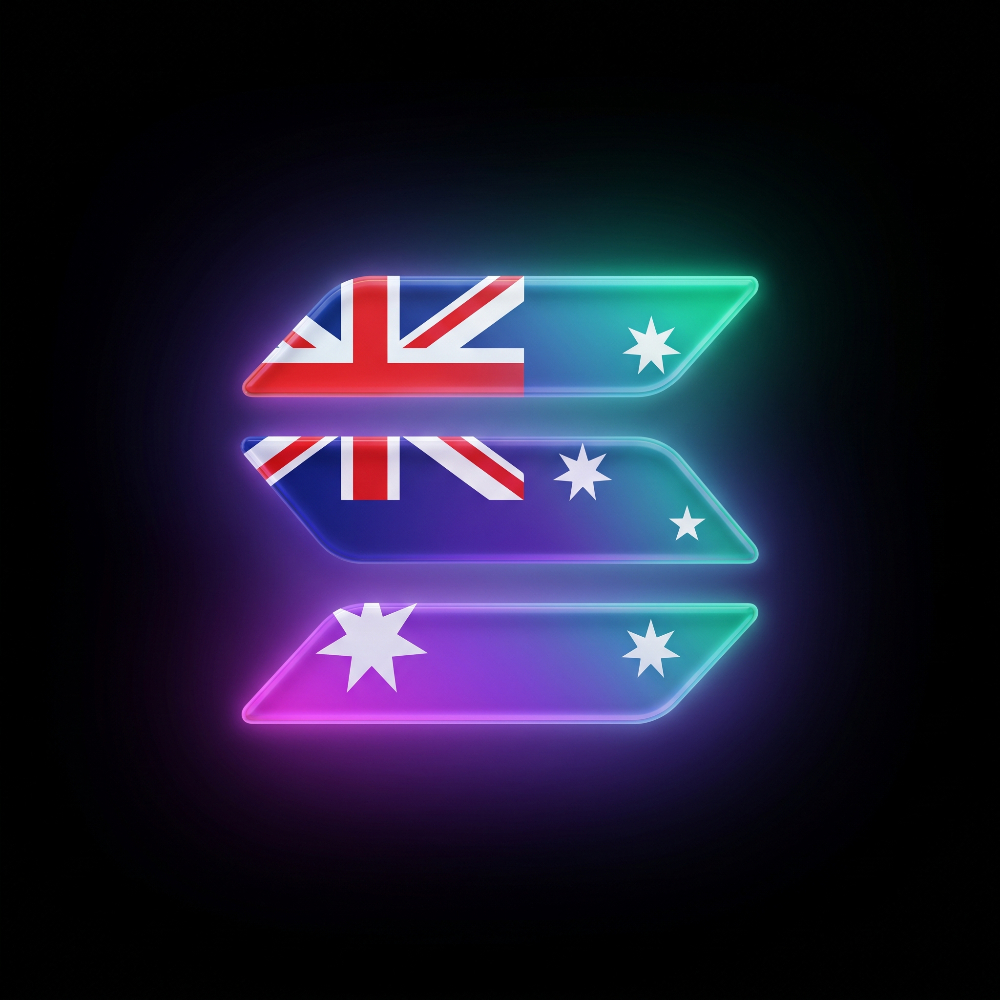
I call Solana the sprinter blockchain. Everything here flies. In other networks, I sometimes had time to brew a coffee while waiting for a transaction, but here — a couple of seconds, and it’s done. It is an L1 blockchain where the architecture is designed as a single mechanism: from execution to data storage.
Why do I hang out there? Fees here are mostly less than a cent. This frees up your hands: you don't have to be afraid to try new DeFi protocols, staking, or just moving crypto around. But there is a nuance: everything works differently here. If you are used to MetaMask and Ethereum-based networks, Solana might annoy you at first. You have to master the Phantom wallet — it’s convenient, but it's a different "world" with a different logic for addresses. There are no smart contracts familiar to everyone in the form Ethereum users are used to, so all interaction goes through specific Program Derived Addresses (PDA).

Base: Good Old Ethereum, but "On Steroids"
Base is an L2 solution from the guys at Coinbase. In essence, it is an add-on over the main Ethereum network, using optimistic rollup technology. For me, it became a salvation because I didn't have to learn everything from scratch.
The main thrill here is full EVM compatibility. If you’ve ever used MetaMask or Rabby, you’ll feel right at home here. It’s still the same "Ether," just upgraded and fast. Fees here are slightly higher than in Solana, but you feel the reliability and security of the main Ethereum network. It’s calmer: in Solana, you sometimes feel like you're in the "Wild West," but in Base, it feels like a well-oiled office where everything is predictable.

Behind the Scenes: How "Bridges" and Liquidity Work
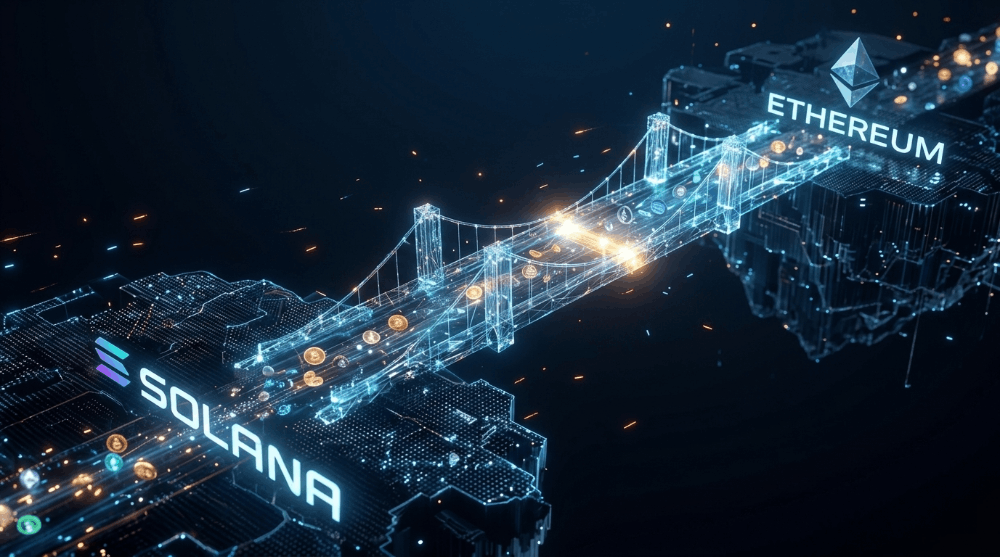
When you enter these networks, you will inevitably encounter the concept of "bridges." These are services that transfer your assets from one blockchain to another. In Base, this works through the official Ethereum bridge, and in Solana, through third-party protocols (for example, Wormhole or Pyth).
Here, a rule is important: don't transfer everything at once. Do a test transaction with a small amount. This is the best way to develop the habit of checking addresses. You see, in crypto, a "bridge" isn't a physical thing, but a protocol that freezes tokens in one network and mints a "wrapped" version in another. If the bridge protocol gets hacked, you could lose everything you are transferring. That is why I always look at the Total Value Locked (TVL) in a bridge before using it.
Security: How Not to Lose Everything in the First Week
You can spot a crypto beginner by how they store their keys. Both Solana and Base give you full control, but that control is your greatest enemy if you are careless.
My approach: I use a separate wallet for DeFi activities ("burner wallet") on which I never keep large sums of money in "custody." And God forbid you click on suspicious links from Discord or Telegram where they promise to "double your coins." Both in Solana and in Base, scammers are very active, especially in the memecoin section. Remember: in Web3, you are your own bank, but also your own security service. If a transaction seems suspicious — it is suspicious. Check contracts via block explorers (Solscan for Solana and Basescan for Base) before every "approve" action in your wallet.
The Philosophy of Choice: What Do You Need This For?
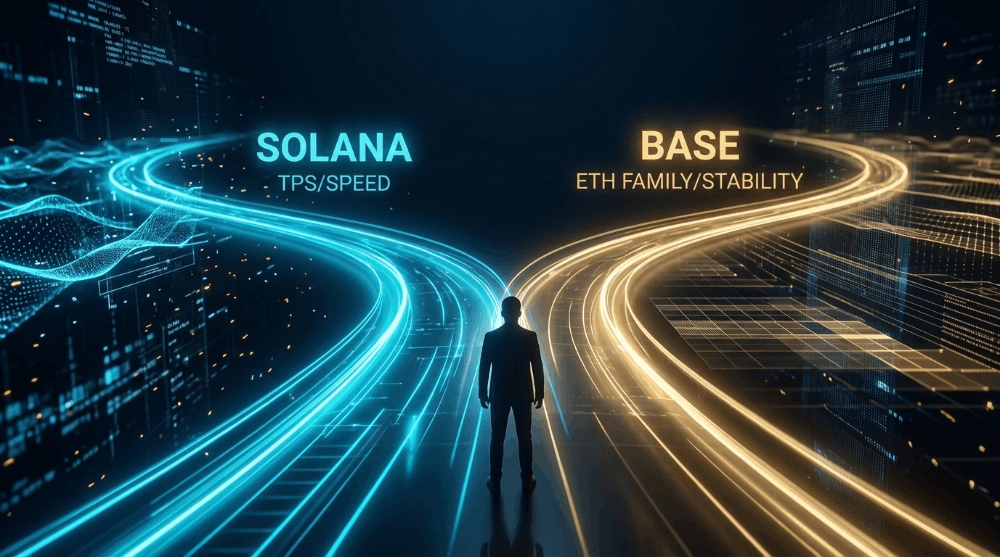
The difference between them is deeper than it seems at first glance. Solana is about mass adoption and transaction speed (TPS). It is built to serve millions of people simultaneously. Base is about scaling Ethereum and preserving value within a single large, decentralized family.
Do you want adrenaline? Go to Solana. That's where all the action is right now with memecoins, low-cost NFTs, and aggressive marketing. It's the perfect place to "get your hand in" on fast trades.
Do you want stability? Head into Base. It’s a foundation for understanding high-quality DeFi, lending, and yield farming without worrying that everything will "collapse" tomorrow due to a technical glitch.
My advice to you: don't read kilometers of theory. Just install the wallets, deposit a couple of dollars, and try to make your first swap. Only then, through your own mistakes and the buttons you press, will you understand which architecture is closer to you. Crypto is practice. Someone who is afraid to press the "Swap" button will remain a theorist forever. Start small, feel the network from the inside, and you will see for yourself which of these tools becomes your workhorse for the years to come. And although my journey in Web3 has been diverse, I always watch with interest how the Solana ecosystem sets new standards for speed.
Disclaimer: The information provided in this article is for educational purposes only and does not constitute financial, investment, or legal advice. Cryptocurrency investments involve high risk, including the potential loss of all capital. Always conduct your own research (DYOR) and exercise caution when interacting with decentralized applications and bridges.