🤖 Can We Really Trust Code More Than Humans?

👀 Introduction
One of the core ideas behind Web3 is simple:
👉 “Don’t trust humans… trust code.”
Instead of relying on institutions, banks, or companies, Web3 promotes systems powered by:
- blockchain technology
- smart contracts
- automated protocols
These systems are designed to run exactly as programmed, without human interference.
This sounds powerful.
But it also raises a fundamental question:
💭 Can we really trust code more than humans?
Is code truly more reliable…
or does it simply shift trust into a different form?
Let’s explore both sides of this debate 👇
🔗 Why Web3 Trusts Code
Traditional systems depend heavily on human trust.
We trust:
- banks to protect our money
- companies to manage our data
- institutions to enforce rules
But humans can make mistakes.
They can also act with bias, corruption, or hidden intentions.
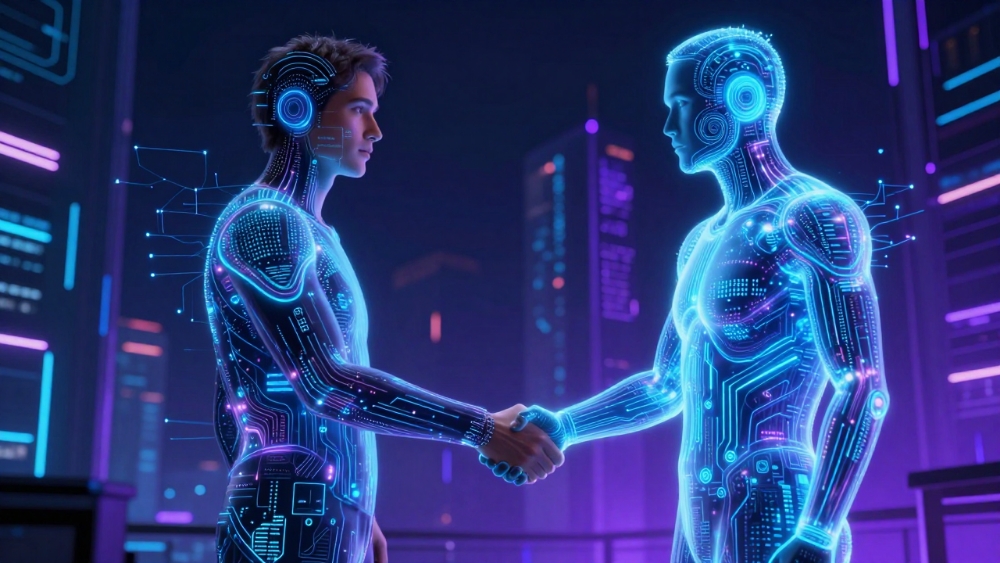
Web3 tries to reduce this problem by replacing human decision-making with automated code.
Smart contracts execute rules exactly as written.
No emotions.
No favoritism.
No manipulation.
In theory, this creates a system that is:
- predictable
- transparent
- consistent
That’s why many people say:
👉 “Code is more trustworthy than humans.”
🔐 The Strength of Automation
One of the biggest advantages of code is automation.
Once deployed on a blockchain, a smart contract will:
- execute transactions automatically
- enforce rules consistently
- operate without needing approval
For example, in decentralized finance (DeFi), users can:
- lend assets
- borrow funds
- earn interest
All without interacting with a bank.
Everything is handled by code.
This reduces reliance on intermediaries and can make systems more efficient.
⚠️ Code Is Written by Humans
However, there is an important reality that cannot be ignored:
👉 Code is created by humans.
And humans are not perfect.
If a developer makes a mistake, that mistake becomes part of the system.
Smart contracts can contain:
- bugs
- vulnerabilities
- unintended logic flaws
Once deployed, these issues can be difficult — or even impossible — to fix.
This means that trusting code is, in some ways, still trusting the people who wrote it.
The difference is that errors become permanent.
💥 When Code Fails
There have been many cases where code has failed in Web3 systems.
Smart contract vulnerabilities have led to:
- loss of funds
- protocol exploits
- system manipulation
Unlike traditional systems, there is often no easy way to reverse these events.
If a transaction is executed incorrectly by code, it still follows the rules of the system.
This creates a paradox:
👉 Code does exactly what it is programmed to do — even when that outcome is harmful.
In this sense, code is reliable… but not always safe.
🧠 Humans vs Code: Different Types of Trust
Trusting humans and trusting code are fundamentally different.
Humans can:
- adapt to unexpected situations
- use judgment and context
- correct mistakes
But they can also:
- act dishonestly
- make biased decisions
- fail under pressure
Code, on the other hand:
- follows rules strictly
- does not adapt
- cannot interpret context
- cannot correct itself
So the question becomes:
👉 Do we prefer flexible systems with human judgment…
or rigid systems with automated certainty?
⚖️ The Balance Between Code and Human Oversight
In reality, most Web3 systems are not fully autonomous.
They often combine:
- automated smart contracts
- human governance
- community decision-making
For example:
- developers update protocols
- communities vote on changes
- auditors review code
This shows that Web3 does not completely remove human involvement.
Instead, it redefines the role of humans within the system.
The goal is not to eliminate trust —
but to distribute it differently.
🚀 Toward More Reliable Systems
The Web3 ecosystem is constantly improving.
Developers are working on:
- better smart contract testing
- security audits
- bug bounty programs
- safer coding practices
These efforts aim to reduce the risks associated with code.
At the same time, governance systems are evolving to ensure that humans can intervene when necessary.
The future may not be about choosing between code and humans —
but about combining both effectively.
✨ Final Thoughts
So, can we really trust code more than humans?
👉 Code is consistent and predictable
👉 It reduces the need for intermediaries
👉 It can increase transparency
But…
👉 It is still created by humans
👉 It can contain critical flaws
👉 It cannot adapt or correct itself
Web3 does not eliminate trust.
It shifts trust from institutions to technology — and to the people who build it.
The real challenge is not deciding whether to trust code or humans.
It’s learning how to design systems where both work together safely.
💬 What Do You Think?
Do you trust code more than humans?
Or do you believe human judgment is still essential?
Share your thoughts 👇