The Messy Ethics of Scrubbing Our Brains
We’ve all had those moments we’d pay good money to delete. Maybe it’s the cringey thing you said on a first date in 2014, or something far heavier, like a traumatic accident that replays on a loop every time you close your eyes. For decades, the idea of memory erasure was relegated to the trippy visuals of Eternal Sunshine of the Spotless Mind or the flashy neuralyzers in Men in Black. Both amazing movies by the way. But lately, the science has started catching up to the cinema, and in my view, it’s sparking one of the most significant, high-stakes debates in both medical and tech circles.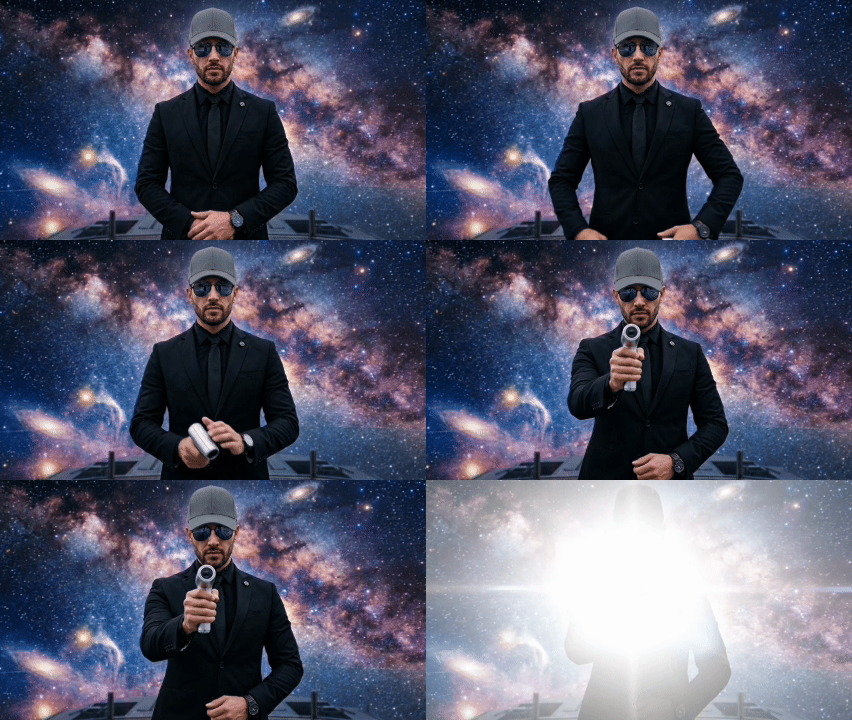
The question is no longer just can we do this? but should we be allowed to? As neuro-technology moves from the lab into clinical discussions, we’re staring down a future where the right to forget might become a medical procedure. It sounds like a dream for anyone suffering from PTSD, but as you can imagine, opening up the brain’s hard drive for a quick edit comes with some terrifying fine print.
The Science of the Delete Key

To understand how we might erase a memory, you first have to realize that memories aren’t static files sitting in a folder. They are active biological processes. Every time you recall something, your brain physically reconstructs it, a process scientists call reconsolidation. Think of it like opening a Word document. While the file is open, it’s vulnerable to being edited before you hit save again.
Researchers have explored whether certain drugs, like propranolol, which is traditionally a beta-blocker for heart conditions, might dampen the emotional sting of a memory if administered while the person is remembering the trauma. Early studies showed real promise, though more recent clinical research suggests the evidence is still mixed and not yet ready for routine use. By blocking the stress hormones associated with the memory, the brain saves a calmer version of the event. Beyond pills, more advanced techniques like Optogenetics use light to turn specific neurons on and off. While we aren’t exactly sticking fiber-optic cables into human brains just for a breakup yet, the proof of concept in animal models is startlingly effective.
The Trauma Dilemma

The strongest argument for memory editing is, of course, the clinical treatment of PTSD and severe phobias. For someone whose life is paralyzed by a single horrific event, the ability to dull or detach the fear response from that memory isn’t just a luxury, it’s a potential cure. Organizations like the National Center for PTSD constantly look for ways to help veterans and survivors move past flashbacks that feel as real as the day they happened.
In this context, memory erasure isn’t about forgetting that the event happened, it’s about removing the biological panic button attached to it. However, critics argue that even this light version of erasure is a slippery slope. If we start editing out the bad parts of life, do we lose the resilience that comes from processing pain? There’s a certain human muscle memory that comes from overcoming hardship, and some bioethicists worry that we might be accidentally erasing our wisdom along with our pain or as I’d put it, lobotomizing the very experiences that shape us.
The Identity Crisis
If you take away my memories, am I still me? This is where the philosophers start pacing the room. Our identity is essentially a patchwork quilt of everything we’ve ever experienced. If you start pulling out the dark threads, the whole pattern changes. If a person chooses to erase a memory of a failed business venture or a painful divorce, they might also be erasing the very lessons that prevent them from making the same mistakes again.
There’s also the legal and social nightmare to consider. Imagine a world where a witness to a crime can simply opt-out of the memory because it was too stressful to hold onto. The President’s Council on Bioethics has previously explored how pharmacological amnesia could undermine our sense of justice and shared reality. If we can’t agree on what happened because the participants have edited their own histories, the very concept of objective truth starts to look a lot like a 404 Error.
Who Holds the Eraser?
The tech-savvy creator in me immediately looks at the privacy implications, and they are, frankly, spooky. We already live in an era where data brokers know our shopping habits better than our spouses do. If neuro-tech becomes mainstream, what happens when that data is stored in a cloud? The potential for memory hacking or unauthorized editing by third parties might sound (in my opinion) like something out of a paranoid cyberpunk novel, but it’s a very real conversation neuro-rights advocates are having right now.
They are pushing for new human rights laws to protect mental privacy. The fear is that if we normalize the medical editing of memories, we open the door for employers, insurance companies, or governments to suggest (or even mandate) certain adjustments to our mental state. It’s one thing to want to forget a car crash, it’s another thing entirely if a corporation wants you to forget the burnout caused by a 100-hour work week.
A Future with Selective Amnesia

We are standing at a weird crossroads where our biology is becoming as programmable as our computers. Memory erasure offers a glimmer of hope for those trapped in the prison of their own trauma, but it also threatens the very foundation of what makes us human. Our messy, painful, and unedited history.
As we move forward, the memory erasure debate will likely shift from the pages of science journals to the ballot box. We’ll have to decide if our scars are something to be healed or something to be deleted. For now, maybe hold onto that embarrassing 2014 date story, it might be more important to who you are than you think.
Thanks for reading everyone! Visit my site to learn more about me and explore what I’m building at Learn With Hatty. I hope everyone has a great day and as I always say, stay curious and keep learning.