💭 Freedom vs Convenience in the Digital Age

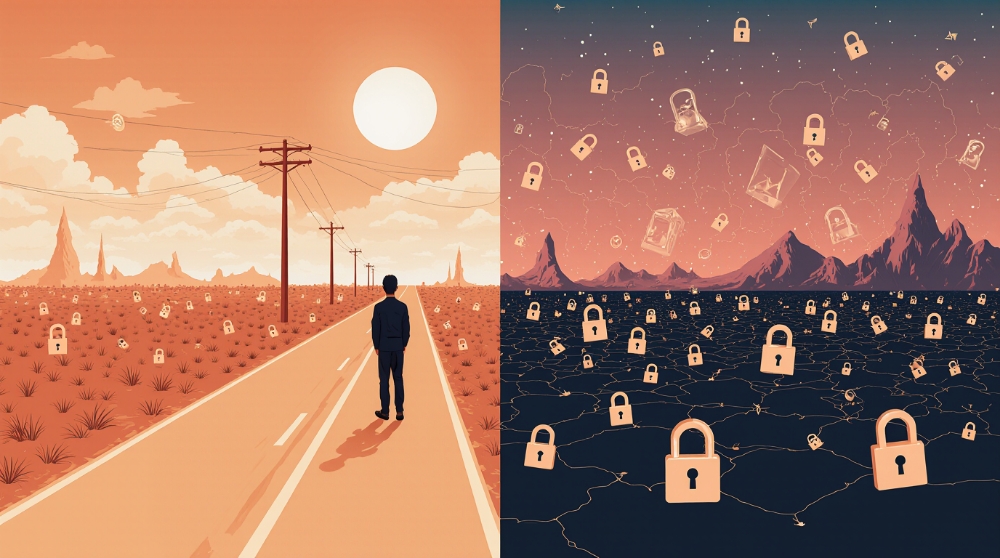
Every day, we make a silent trade.
We click “Accept” instead of reading.
We choose speed over control.
We exchange ownership for comfort.
And slowly, without noticing, convenience becomes the price we pay for freedom.
In the digital age, this trade-off feels harmless — even smart.
But is it?
Let’s take a deeper look at the quiet tension shaping our online lives. 👇
⚡ Why Convenience Feels So Good
Convenience solves friction.
With a few taps, we can:
- send money
- store files
- communicate globally
- build businesses
- access endless information
Platforms make life smooth, fast, and intuitive.
They remove complexity so we don’t have to think.
And that’s the danger.
When systems become too convenient, we stop asking questions.
We stop owning.
We stop choosing.
Convenience feels neutral — but it’s never free.
🔐 What Freedom Actually Costs
Freedom in the digital world is not comfortable.
It means:
- managing your own passwords
- securing your own data
- controlling your own keys
- accepting full responsibility
There’s no “reset password” button for freedom.
When you own your digital assets — crypto, identity, content — you also own the risk.
And that responsibility scares people.
But responsibility is the foundation of freedom.
🧠 Why We Keep Choosing Convenience
Humans are wired for ease.
We choose:
- saved logins over privacy
- centralized platforms over open systems
- trusted brands over transparent code
Not because we’re lazy —
but because convenience hides consequences.
The cost of convenience is delayed.
The cost of freedom is immediate.
One feels invisible.
The other feels heavy.
🌐 The Digital Age Didn’t Steal Our Freedom — We Traded It
No one forced us to give up control.
We did it willingly:
- for better interfaces
- for free services
- for faster experiences
And slowly, control moved away from individuals into platforms.
Freedom didn’t disappear.
It was outsourced.
And once outsourced, it became hard to reclaim.
🔁 Web3 and the Return of Digital Responsibility
Web3 doesn’t promise comfort.
It offers choice.
It asks:
- Do you want to own your identity?
- Do you want to control your money?
- Do you want your voice to exist without permission?
But ownership comes with effort.
Web3 tools feel harder because they put power back into your hands.
And power is never convenient.
⚖️ Finding Balance: Freedom Doesn’t Mean Rejecting Convenience
This isn’t about extremes.
You don’t need to abandon all platforms.
You don’t need to become paranoid.
The real question is:
👉 Where does convenience serve you — and where does it control you?
True digital maturity is knowing when to trade convenience
and when to demand freedom.
🌱 The Choice Is Quiet — But Permanent
Every login, every click, every wallet choice is a vote.
Not for a product —
but for a future.
A future where:
- users own their data
- creators own their work
- individuals own their identity
Or one where everything is easy — but nothing is truly yours.
🌟 Final Thought
Convenience makes life easier. Freedom makes life meaningful.
In the digital age, which one are you choosing — and why?