Hardware Review: The Nano-VNA

Get your own Nano-VNA thanks to Open Source SDR Lab.
Modern cybersecurity and pentesting have a literal arsenal of cool tools that are used for learning, real-world pentesting and information gathering. This is even more true when we consider wireless security research and some of the off-the-shelf tools that are available for educational purposes.
While the HackRF, Flipper Zero and Ubertooth can all provide broad utility when in the right hands, the reality is that wireless security researchers can also benefit from a wide range of test equipment and tools as well.
Far less glamorous than their hardware counterparts, if you’re intending to build antennas or analyse hardware, they are still an essential part of any lab. And in terms of its utility, it’s hard to go past the Nano-VNA.
Democratising access to cheap, yet detailed test equipment, it can be purchased for well under $100.00 and can carry out all manner of tests that are useful for lab purposes.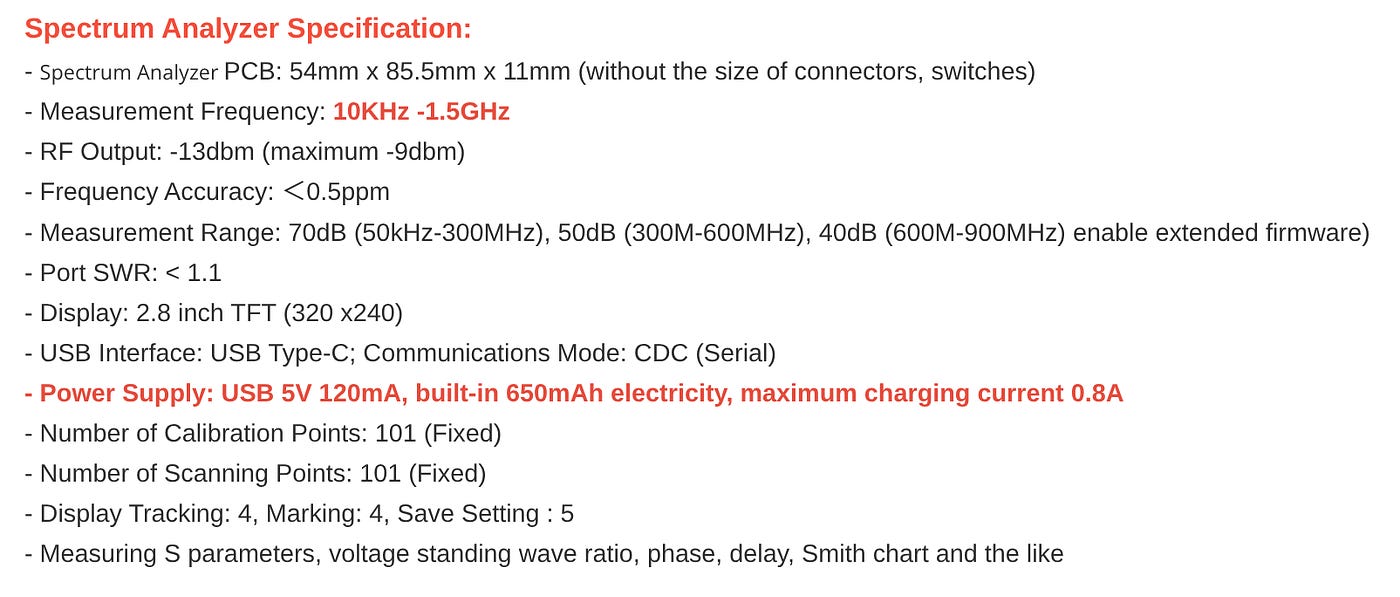
Specifications
A broadband spectrum analyser with a frequency range from 10KHz through to 1.5GHz, the Nano-NVA is useful for testing antennas, filters, cables and connectors.
It’s then able to present this data in a wide range of useful formats, including Smith and SWR charts, just to name a few.
While it can present this information on the 4.3in TFT display, it’s also able to communicate via the onboard USB-C port and logs a wide range of measurement points that are to be saved and exported to your computer for later review.
While it’s reasonable to question the quality of test equipment that costs less than a steak dinner, it might surprise you to learn that, despite this, the Nano-VNA is capable of turning out reasonably accurate measurements, considering its price point.
With frequency variance of less than .5ppm and a -13dbm power output allowing for detailed measurement, the Nano-VNA turns out performance that’s more than accurate for home lab use.
The addition of onboard memory, a battery and a charging system, plus a stylus, also gives the unit the means to be used in the field right out of the box.
If you decide to add one to your toolkit, consider looking at the expanded firmware options and software availability for exporting to a computer to make the most of the unit’s functionality.
Note: The Nano-VNA is available with a larger screen and broader frequency range than this test unit, but it adds these capabilities at a far higher cost.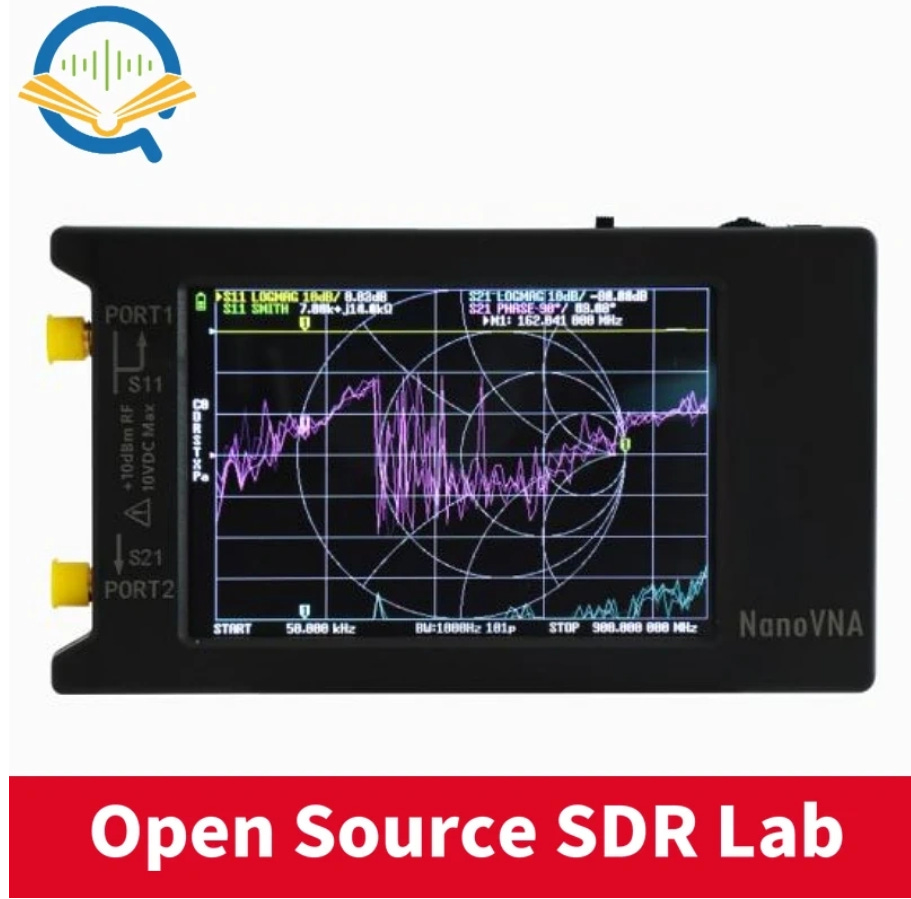
Build Quality & What’s In The Box
Some cheap hardware can be extremely underwhelming, and we’re happy to report that for the Nano-VNA, this is not the case.
The shell for the unit is of reasonable quality, while the touch screen is resilient without compromising the overall functionality of the analyser.
To make the most out of the system, you’ll need a few additional things, all of which are helpfully included.
As well as the unit and its stylus, you’ll also receive:
RF Coaxial Jumpers (2x): Two, short SMA male-to-male cables used to connect your device under test (DUT) or for “Thru” calibration.
SB Data/Charging Cable: A USB-C cable for charging the internal battery and connecting to a PC for software control, and
Three Calibration Cables: These include:
Open: An SMA male connector with no internal connection
Short: An SMA male connector with an internal short circuit.
Load (50Ω): An SMA male termination with a precise 50-ohm resistance.
Get comfortable with calibrating the unit prior to use to ensure your test results are as accurate as possible.
One downside for heavy users is the usage of SMA connectors that are used on both the input and the output. If you’re testing out in the field, you’ll need to be cautious when using strain relief to minimise the risk of breakages or problems.
All things considered, though, this is a comparatively minor complaint.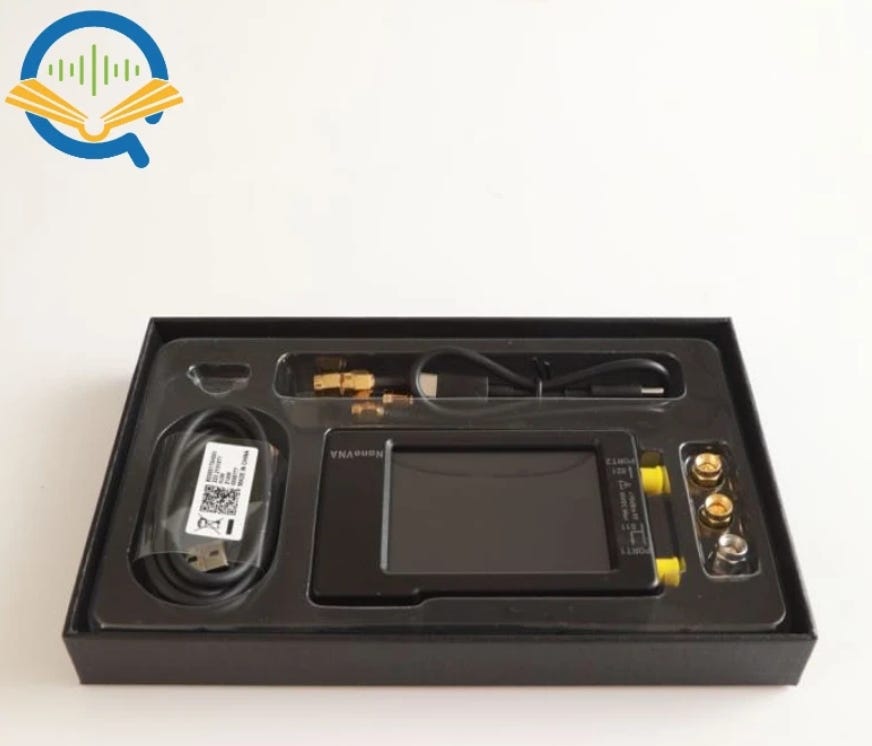
Final Thoughts
There’s no denying that for beginners, the Nano-VNA can be a complex piece of equipment. To make the most out of it, you’ll need to be comfortable properly calibrating the unit as well as interpreting the data that it collects.
So if you’re intending to purchase one, be prepared to spend some time buried in the documents so you can learn how to make the most of the unit.
While this might be a slightly daunting task for a learner, if you’re able to do this successfully, you’ll end up with an incredibly useful learning tool that can teach you plenty about your SDR station.
One thing it does particularly well is analyse antenna radiation and SWR patterns. If you’re interested in exploring how receiving systems work and the role that different antennas play in these types of systems, it’s hard to go past it as a test device for antenna construction.
As always, the journey is what you make of it.
Note: The Nano-VNA used for this review was acquired at our own expense. This ensures an entirely unbiased review.
Investigator515 explores the RF spectrum, cybersecurity, and the hidden tech behind modern espionage.
Follow for new content weekly
Bluesky • X • Substack
You might also like,
- OSINT Investigators Guide to Self Care & Resilience
- Spies In The Mud: The RF-111 Aardvark
- What The Tech?! Space Shuttles