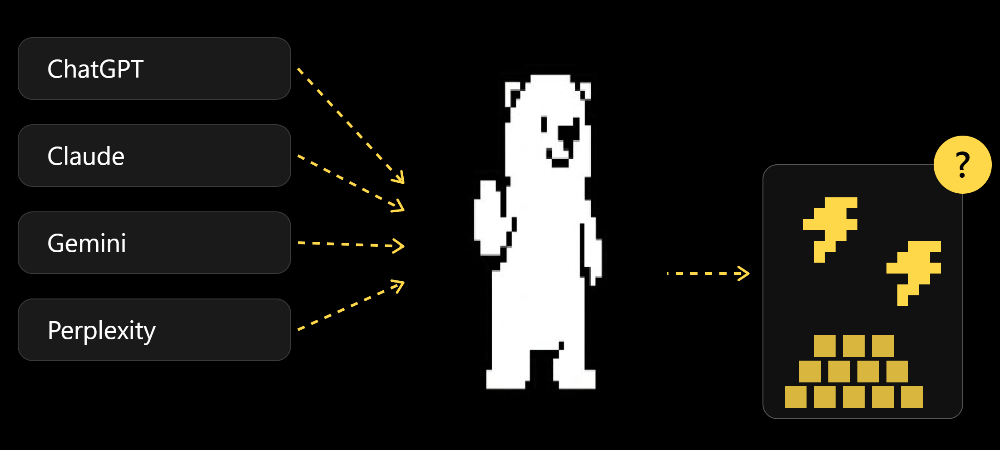
Profit Isn’t Real Until You Can Exit — Everything Else Is Inventory Marking
Mark-to-market is not the same as getting paid
In on-chain markets, balances update continuously, creating the illusion of realized performance.
But mark-to-market accounting is conditional — it assumes you can transact at those levels.
Until you actually exit, your PnL is theoretical, not final.
Every unrealized gain embeds an exit assumption
A displayed return silently assumes depth, counterparties, and stable execution conditions.
Remove any of these, and the path from paper profit to cash becomes uncertain.
What you see is not just a number — it’s a scenario that may not hold.
Liquidity is the bridge between price and reality
Price is where trades happened. Liquidity is whether your trade can happen.
In stressed conditions, spreads widen, slippage increases, and size becomes a constraint.
That’s when two investors with identical “PnL” discover very different outcomes.
Time converts hidden risk into explicit loss
Strategies that defer risk often look smooth — until they don’t.
Carry trades, yield loops, and liquidity provision can accumulate exposure that only resolves under pressure.
Time is not neutral; it is the mechanism that forces reconciliation.
Frequent checking increases the odds of bad execution
The tighter you track your PnL, the more likely you are to act on noise.
This typically results in buying strength and selling weakness — the exact opposite of compounding.
Real performance is path + execution, not just endpoints
Two portfolios with the same peak value can end with very different realized returns.
The difference is path dependency: drawdowns, liquidity windows, and execution quality.
Ignoring this is how “profitable” strategies fail to pay.
Vaults are about realizability, not just yield
A well-constructed vault doesn’t only target returns — it engineers the path to realization.
Diversification, sizing, and rebalancing reduce the risk that gains exist only on paper.
Concrete optimizes for conversion, not illusion
Concrete’s design focuses on turning yield into outcomes.
The Allocator distributes exposure to avoid single-point dependency, the Strategy Manager constrains fragile structures, and the Hook Manager enforces disciplined execution.
The objective is simple: increase the probability that returns can actually be taken.
Stability is a function of exitability
The ~8.5% USDT yield is not about maximizing headline APY.
It reflects a system where returns are more consistently convertible, not just observable.
If you can’t exit, you don’t have profit — you have exposure
In DeFi, the only PnL that matters is realized PnL.
Everything else is inventory marked under assumptions.
And assumptions are exactly what break under stress.
Explore Concrete at https://app.concrete.xyz
Keywords: DeFi PnL, unrealized gains, liquidity risk, managed DeFi, Concrete vaults, capital realization, execution risk, onchain strategies