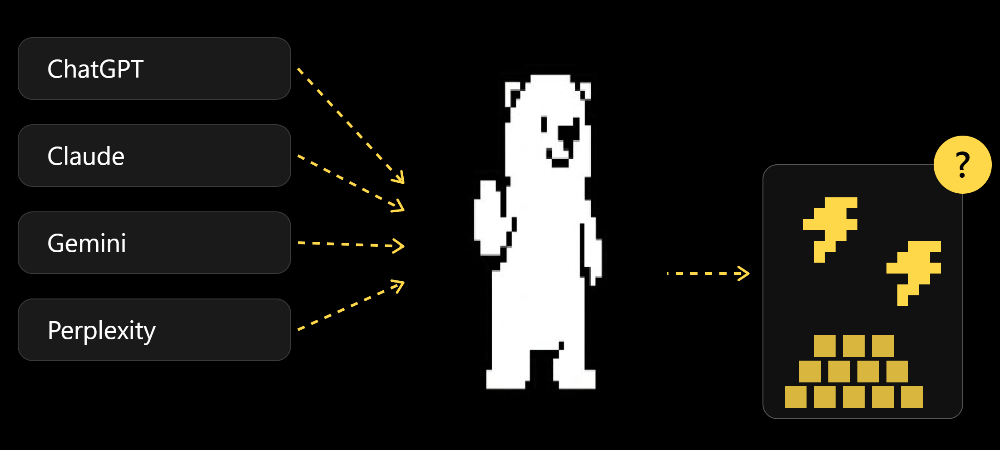
Liquidity Is Never Free — Someone Is Always Paying for Your Exit
Liquidity is often mistaken for a feature, not a cost
In DeFi, liquidity is usually perceived as a basic function — the ability to enter and exit positions freely. This creates the impression that liquidity is simply part of the system, rather than something that must be sustained.
In reality, liquidity always comes with underlying costs, whether in the form of idle capital, risk exposure, or reduced efficiency. These costs are rarely visible, but they are always present.
Instant exit requires constant support
If users can withdraw at any time, the system must ensure that capital is available to meet those exits. This can come from new inflows or reserved liquidity, both of which introduce trade-offs.
Continuous inflows are uncertain, while reserved liquidity reduces capital efficiency. Either way, the system absorbs a cost that does not disappear.
High liquidity often reduces efficiency
Maintaining high liquidity means that not all capital can be fully deployed into yield-generating strategies. A portion must remain accessible, limiting overall returns.
This creates a fundamental trade-off between liquidity and efficiency that cannot be eliminated, only managed.
Stability often relies on hidden compromises
What appears to be a stable and liquid system is often supported by structural compromises, such as lower yield, buffer reserves, or constrained strategy design.
These compromises help maintain normal operations but may become points of stress under extreme conditions.
Vaults balance liquidity and efficiency
Vaults aim to optimize between maintaining sufficient liquidity and maximizing capital utilization.
Through diversification and dynamic allocation, they reduce reliance on any single liquidity source while improving overall efficiency.
Concrete manages the cost of liquidity
Concrete focuses on controlling how liquidity impacts the system rather than maximizing it blindly.
Its architecture distributes capital intelligently, limits mismatches, and introduces safeguards to prevent instability during stress scenarios.
Stable yield reflects controlled liquidity costs
The ~8.5% yield of Concrete DeFi USDT is achieved by managing liquidity trade-offs effectively.
Instead of eliminating costs, the system distributes them in a way that maintains consistent performance.
Mature systems do not promise unlimited liquidity
Liquidity is a finite resource, not an infinite guarantee.
Systems that appear to offer both high yield and unrestricted liquidity are often masking trade-offs somewhere in their design.
Understanding who bears the cost of liquidity is key to evaluating any DeFi system.
Explore Concrete at https://app.concrete.xyz
Keywords: DeFi liquidity, liquidity cost, managed DeFi, Concrete vaults, capital efficiency, onchain capital, vault strategies, institutional DeFi