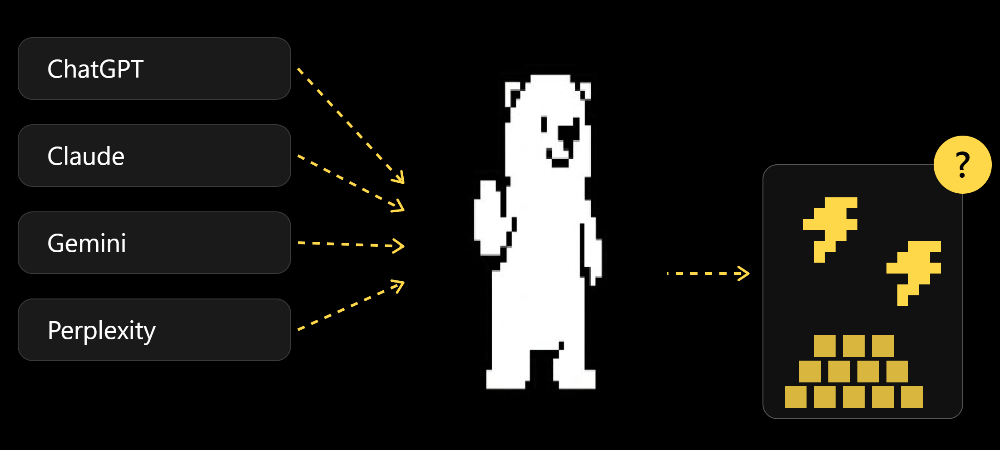
Why DeFi Needs Vault Infrastructure
This article explains how vault infrastructure solves DeFi’s efficiency problems and enables automated, scalable capital management.
The DeFi ecosystem has expanded rapidly across multiple chains with a growing number of protocols and yield strategies. Users must switch between different chains and applications manually to capture favorable opportunities. This fragmented landscape makes sustainable asset management increasingly difficult for everyday users.
Manual DeFi position management creates heavy operational burdens and requires constant monitoring of yield changes. Every fund movement, reward claim, and reallocation incurs gas fees that reduce net returns. Risk diversification and position tracking also become unsustainable under cumbersome workflows.
A large amount of digital assets remains idle due to operational complexity, leading to significant opportunity costs. Users often stay in outdated strategies and miss out on better yield opportunities. Capital is not continuously activated, holding back overall capital efficiency across DeFi.
DeFi vaults emerge as a solution to shift management from manual labor to systematic automation. Managed DeFi replaces repetitive human actions with standardized processes and lowers barriers to participation. Institutional-grade risk and execution logic is embedded in on-chain contracts for enhanced stability.
Concrete vaults establish a complete automated capital system with efficient onchain capital deployment. Asset allocation, strategy execution, and risk control are handled by modular contracts without human intervention. The system supports automated compounding so rewards are reinvested automatically to improve capital utilization.
Take Concrete DeFi USDT as an example, which offers a stable yield of around 8.5% powered by autonomous infrastructure. Users do not need to switch strategies, claim rewards, or adjust positions manually. Capital stays productive continuously, demonstrating the safety and sustainability of institutional DeFi.
As DeFi grows more complex, manual yield-chasing and constant monitoring will no longer be scalable. Vault infrastructure will become the primary way users interact with DeFi, allowing capital to flow automatically like in mature financial systems. The future of DeFi will be defined not by the highest yield, but by the most robust and efficient systems.
Explore Concrete at app.concrete.xyz
Keywords: DeFi vaults, managed DeFi, Concrete vaults, onchain capital deployment, automated compounding, capital efficiency, institutional DeFi