Weekly Crypto and Web3 Safety Digest – CW49 2025

This week’s digest summarizes the week’s highest-impact scams, drainers, phishing attacks, and user-layer mistakes — so you see what actually caused losses, not just headlines.
The essential crypto safety briefing — what actually mattered this week.
A fast, evidence-based 5-minute read. This week’s digest turns dozens of OSINT alerts, victim reports, and research threads into a map of where people really lost money:
· industrialized wallet-drainer malware and permission exploits,
· fake exchanges and long-running romance “investment” cons,
· exchange and hardware-wallet impersonation pushing victims to crypto ATMs, and
· quiet but brutal operational failures around accounts, inheritance, addresses, and taxes.
If you hold crypto, use DeFi, or even just browse with browser extensions installed, these are the traps you need to spot before they touch your wallet.
We sift through 70+ public incidents so you don’t have to.
Below are the 9 highest-signal threats from CW49 — including a $27M malware loss and a $1.1M address-poisoning mistake that could hit any rushed user.
Would YOU have caught the $1.1M address-poisoning trap before clicking “send”?
This Week’s Most Important Crypto & Web3 Threats (CW49)
Across CW49, users lost far more to drainers, fake platforms, impersonation, and tax/ops mistakes than to protocol hacks.
As you read the 9 threats below, quietly ask yourself:
⚠️ Would I have spotted this in time?
1. Full-Stack Wallet Drainers & $27M Malware Losses
Pattern: wallet drainers aren’t just shady websites; they’re now full attack stacks: malware → front-end tricks → permission abuse.
⭐ Flagship Case: “Babur” — ~$27M Private-Key Malware Theft
A victim nicknamed “Babur” clicked a malicious link, installed malware, and watched $27M+ vanish across multiple chains as the executable scanned local storage for private keys and wallet data, then drained every exposed wallet.
➡️ Source:
https://www.cryptopolitan.com/victim-lose-crypto-private-key-malware/
Other CW49 signals reinforce the same trend:
- ShadyPanda browser-extension campaign – millions of browsers quietly exposed to spyware that can grab credentials, 2FA codes, and wallet data.
➡️ Source (Koi Security’s investigation):
https://www.koi.ai/blog/4-million-browsers-infected-inside-shadypanda-7-year-malware-campaign#heading-5
- Fake “smart wallet” apps – wallet-lookalikes in app stores that steal seeds and disappear after draining funds.
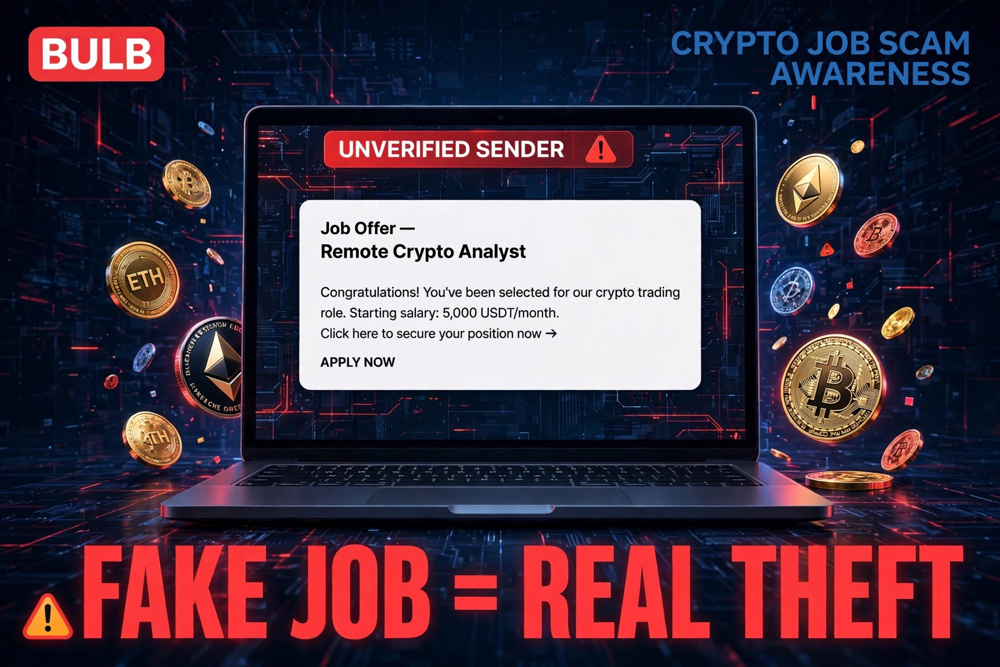
- LinkedIn “assessment test” malware – job applicants infected via fake tests, with stolen funds routed through known drainer infrastructure.
Lesson:
Once your device is compromised, no wallet model can save you. Endpoint hygiene is crypto security.
Ask yourself:
If a recruiter or contact sent you an “assessment tool” or “wallet upgrade” to install, would you politely refuse — or run it on the same device that holds your keys?
2. Permit Signatures & Hidden Permission Exploits
Drainers are moving beyond simple approvals to permit-style signatures and hidden ownership changes.
· A Solana user lost >$3M after signing a deceptive transaction that reassigned their wallet’s Owner permission — total remote control for the attacker.
· Multiple Ethereum cases (~$200–260K each) involved victims signing “permit” transactions that silently handed drainer contracts broad spending rights, then multicall drains.
Lesson:
“View-only” or “balance-update” prompts can hide spend authority. A permit is not harmless just because no transfer amount is shown.
Ask yourself:
When a dApp asks for a “permit” or “Owner permission” you don’t fully understand, do you stop and research — or sign because “this platform is popular”?
3. Front-End Compromises & Fake Support Drainers
Even real brands can be turned into drainer traps when their front-ends or communities get hijacked.
- The official PEPE website was compromised and redirected users to a wallet-drainer using Inferno-style code; any connected wallet risked malicious approvals.
➡️ Source 1 (CoinMarketCap security write-up):
https://coinmarketcap.com/academy/article/pepe-website-exploited-redirects-users-to-wallet-drainer
- Investigators found 81+ Telegram “support” chats impersonating DeFi projects, all funneling victims into Inferno-style drainers.
Lesson:
“Official website” or “official support chat” means little if the front-end is compromised. Treat every new connection as hostile until you’ve verified URLs and signatures.
Ask yourself:
Would you connect your main wallet to a site just because it’s linked in a Telegram “support” channel or search result?
4. Romance, Mentorship & Fake-Platform Scams Hit Seven Figures
CW49’s largest single-victim losses came from slow-burn pig-butchering and fake “mentorship” schemes:
· Bumble romance-investor scam – $648K drained from a victim groomed over months.
➡️ Source:
https://www.dailyherald.com/20251204/crime/batavia-resident-swindled-out-of-648k-in-romance-crypto-investor-scam/
· San Jose widow – nearly $1M wired to a fake trading platform after emotional grooming; she only realized after asking an AI assistant to check the “investment.”
➡️ Source:
https://abc7news.com/post/pig-butchering-bay-area-widow-loses-1m-crypto-scheme-chatgpt-alerts-scam/18247111/
· Orillia couple – about $1.3M lost through a fake “Newton Crypto Currency” website after tech-support and “advisor” handoffs.
➡️ Source:
https://www.orilliamatters.com/police-beat/orillia-couple-scammed-out-of-13m-in-elaborate-cyber-crime-1153688
Same script every time: relationship first → fake dashboard with growing profits → blocked withdrawals → endless “taxes/fees/bonds.”
Lesson:
If accessing “your own money” requires paying extra fees, you’re not paying taxes — you’re feeding the scam.
Ask yourself:
If a platform shows you a six-figure balance but demands a 20% “tax” or “bond” first, do you start borrowing to unlock it… or accept that the balance is fiction?
5. Job/Task Platforms, VIP Apps & Presales That Demand Deposits
Beyond romance cons, CW49 is full of smaller but identical fake-platform patterns:
· “VIP task” and job sites like Kneenat[.]com, Telegram/WhatsApp task groups, and fake CEX clones (CapricornXpro, Ovaro, mexcbitin, dsjex/dsj960, trustonchainc, acmebase) all push users to deposit repeatedly for “upgrades” or “bonds.”
· A fake CoinMarketCap presale and other presale dashboards show fabricated profits, then block withdrawals behind KYC resets or extra payments.
· Overpayment token scams and “sugar daddy” gas-fee tricks send worthless tokens while demanding real gas fees or refunds.
Lesson:
New or obscure platforms that appear only in DM groups and require escalating deposits are not “opportunities” — they’re structured funnels.
Ask yourself:
When a Telegram group or “mentor” points you to a brand-new domain and insists you move funds there, is there any reason to trust it more than your current exchange?
6. Exchange & Ledger Impersonation + Crypto ATM Coercion
Scammers leaned hard on phone, SMS, email, and even postal mail this week:
· Fake Binance/KuCoin/Crypto.com “fraud departments” call users, knowing real details (name, partial card numbers), and push them into emergency actions.
· Ledger customers get phishing letters by post and phone calls directing them to fake “Transaction Check®” or support sites to “resecure” wallets.
· U.S. and Iowa authorities report massive losses where victims — often elderly — are bullied into feeding savings into Bitcoin ATMs “for protection.”
Lesson:
No legitimate exchange, bank, hardware-wallet vendor, or police department will ever protect you by moving you to a crypto ATM or asking for seed phrases or 2FA codes.
Ask yourself:
If someone on the phone says “go to a Bitcoin ATM right now or your account is gone,” would you hang up instantly—or follow instructions because they sound official?
7. Account Takeovers via Infostealers & Session Hijacking
Several CW49 incidents show how device and email compromise quietly bypass 2FA:
· Microsoft and Reddit accounts hijacked even after password and 2FA resets, likely via stolen session tokens and infostealer malware.
· A Binance user drained through a flurry of withdrawals; investigation points to both email and authenticator compromise from the same infected device.
· A Yahoo → Coinbase recovery loop leaves a victim locked out of both.
Lesson:
2FA is only as strong as the device and email behind it. If malware owns your machine, it can own your sessions.
Ask yourself:
When was the last time you audited your devices and email security — not just your exchange password?
8. Inheritance, Unsupported Networks & Address Poisoning
CW49 highlights the quiet failure modes that don’t look like crimes, but still destroy wealth:
· Families find seed phrases but have no idea which wallets or chains they belong to, or how to check balances safely.
· Users send funds to unsupported networks (e.g., USDT from one exchange to a Coinbase address on an unlisted chain) and effectively strand assets.
· Address-poisoning dust attacks cause a $1.1M USDT loss when a victim copies a lookalike address from history instead of a verified source.
➡️ Source:
https://x.com/web3_antivirus/status/1995901985158053965
Lesson:
Self-custody without documentation is brittle. And modern wallets are polluted with dust and lookalike addresses — your process has to be robust, not your memory.
Ask yourself:
Could your family locate and safely access your crypto if you vanished tomorrow? And do you ever copy addresses from wallet history instead of an address book?
9. Airdrop & Tax Traps That Outlive the Bear Market
Finally, CW49 shows tax and reporting as a long-tail risk surface:
· Unsolicited or hyped airdrops can create taxable income at peak price, even if the token later crashes.
· Users discover tax bills larger than their actual profits because every swap, airdrop, and staking reward is a separate taxable event — with messy CSVs and no notes.
Lesson:
Tax rules don’t care that it was “just DeFi.” If you can’t reconstruct your year, you’re gambling with more than token prices.
Ask yourself:
Right now, could you explain last year’s on-chain activity — bridges, swaps, mints, airdrops — in a way a tax professional would understand?
Final Takeaway (CW49)
This week’s real damage didn’t come from smart-contract zero-days. It came from:
· malware and permissions that turned one click into total wallet loss,
· fake platforms and long-con grooming that made imaginary dashboards feel real,
· impersonation and crypto ATMs weaponized as “fraud prevention,” and
· operational gaps in devices, documentation, inheritance, addresses, and tax hygiene.
Crypto and Web3 security isn’t defined by which wallet you buy — it’s defined by:
· the software you install,
· the prompts you sign,
· the voices you trust, and
· the records you keep.
If this digest helped you see even one new blind spot, treat it as a weekly practice: adjust one habit now — not after you read about someone else’s loss that looks exactly like your setup.
Read the full CW49 report
👉 Full Weekly Intelligence Briefing:
https://cryptosafetyfirst.com/crypto-and-web3-safety-digest-cw49-2025/
Disclaimer
This Weekly Crypto and Web3 Safety Digest CW49 2025 is based on curated open-source intelligence (OSINT), including public posts, news articles, and user reports. Details may be incomplete or change over time. This digest is not financial, investment, legal, or tax advice.
Do not make trading, investment, custody, or reporting decisions based solely on this summary. Always do your own research and consult qualified professionals where appropriate.
References to platforms, tools, wallets, or services do not imply endorsement. Scam URLs, domains, or addresses are mentioned purely for user awareness and may change or disappear.
If you believe you are currently the victim of a scam or account compromise, do not send more money. Capture evidence (screenshots, transaction hashes, URLs, chat logs) and contact relevant authorities or your platform’s official support channels using contact details from their legitimate website or app.