🚀 Is Web3 Too Complicated for Mass Adoption?

👀 Introduction
Web3 has been described as the next evolution of the internet.
Supporters believe it will transform how we interact online by giving users control over their data, assets, and digital identities.
Instead of relying on centralized companies, Web3 promises a decentralized ecosystem powered by blockchain technology.
But despite all the excitement, a critical question continues to emerge:
💭 Is Web3 simply too complicated for mass adoption?
While millions of people are interested in cryptocurrencies, NFTs, and decentralized applications, many still struggle to understand how Web3 actually works.
If Web3 is meant to become the future of the internet, it must eventually be accessible to everyone — not just developers and crypto enthusiasts.
Let’s explore whether complexity is slowing down the Web3 revolution.
🌐 The Learning Curve of Web3
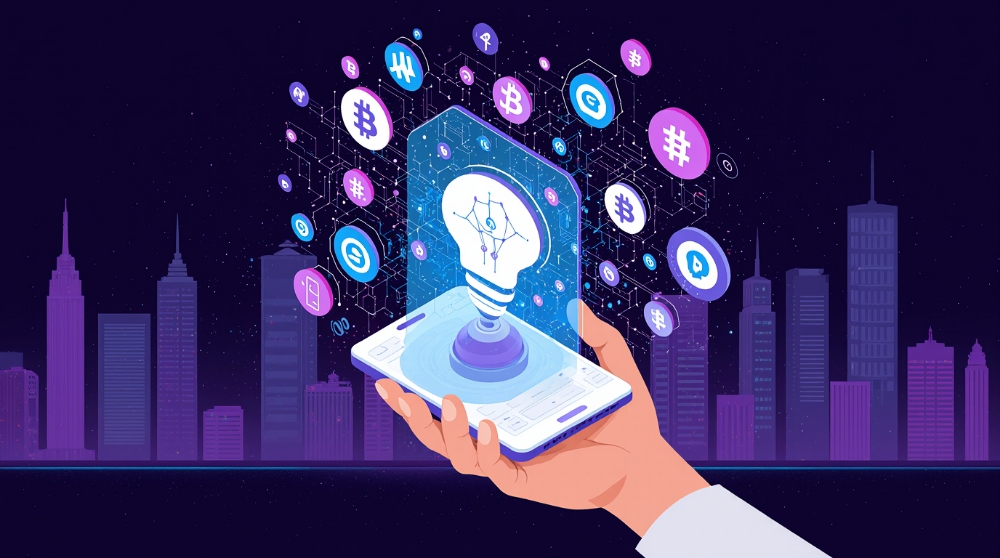
One of the biggest challenges of Web3 is its steep learning curve.
For someone new to the space, the first steps can feel overwhelming.
Users must often learn about concepts such as:
- Crypto wallets
- Private keys
- Blockchain networks
- Gas fees
- Token swaps
- Decentralized applications (dApps)
Even creating a wallet requires understanding security practices that many internet users have never encountered before.
Unlike Web2 platforms where you simply create an account with an email and password, Web3 requires users to take full responsibility for their digital assets.
While this offers more freedom, it also increases complexity.
🔐 The Responsibility Problem
In Web2 systems, companies handle many technical details behind the scenes.
If you forget your password, you can reset it.
If something goes wrong, customer support can help.
Web3 works differently.
The principle of self-custody means users control their own assets through private keys.
But this freedom comes with a major responsibility.
If someone loses their private keys, their assets may be permanently lost.
There is often no central authority that can restore access.
For experienced crypto users, this system offers independence.
For beginners, however, it can feel intimidating.
📱 User Experience Still Needs Improvement
Another major barrier to adoption is user experience.
Many Web3 platforms still feel complicated compared to traditional apps.
Common challenges include:
- confusing wallet interfaces
- complex transaction confirmations
- unclear gas fees
- slow onboarding processes
In contrast, Web2 applications have spent decades optimizing usability.
Apps like social media platforms or payment services are designed to be simple and intuitive.
For Web3 to reach billions of users, its interfaces must become just as easy to use.
🌍 Education and Awareness
Part of the complexity problem comes from limited public understanding.
Web3 introduces entirely new concepts that many people have never encountered before.
Terms like:
- smart contracts
- decentralized finance
- staking
- token governance
can sound extremely technical to the average user.
Without accessible education, these concepts may discourage newcomers from exploring further.
However, as more educational content becomes available, this barrier may gradually disappear.
The early internet also seemed confusing to many people in the 1990s.
Over time, user-friendly tools simplified the experience.
Web3 may follow a similar path.
🏗️ Developers Are Building Simpler Tools
The good news is that developers are actively working to reduce complexity.
Many new Web3 tools aim to make blockchain technology invisible to users.
Instead of forcing people to understand every technical detail, future platforms may operate just like regular apps.
Some emerging solutions include:
- simplified wallet integrations
- gasless transactions
- social login options for wallets
- improved mobile interfaces
These innovations could make Web3 significantly easier to use.
In fact, some users may interact with blockchain technology in the future without even realizing it.
⚖️ The Balance Between Simplicity and Control
One challenge for Web3 developers is finding the right balance between simplicity and decentralization.
Simplifying the user experience sometimes requires adding layers of infrastructure or intermediaries.
However, too much simplification could reintroduce the centralized systems that Web3 originally aimed to eliminate.
This creates a delicate balance.
Web3 must become easy enough for everyday users while still preserving its core principles of decentralization and user control.
Achieving this balance will be one of the most important challenges for the industry.
🚀 Mass Adoption Takes Time
It’s important to remember that revolutionary technologies rarely become mainstream overnight.
The early internet was also complicated.
In the beginning, people needed technical knowledge to:
- connect to networks
- configure software
- understand protocols
Over time, companies developed simpler tools that made the internet accessible to everyone.
Today, billions of people use the internet daily without understanding how it works.
Web3 may follow a similar trajectory.
What feels complex today may become invisible tomorrow.
🔮 The Future of Web3 Accessibility
If Web3 is going to reach global adoption, the ecosystem must continue improving in several areas:
- simpler interfaces
- better education
- improved security tools
- faster and cheaper transactions
As technology evolves, these improvements may gradually reduce the barriers that currently exist.
Mass adoption does not require every user to understand blockchain technology.
It only requires that using Web3 becomes as simple as using any other app.
When that happens, the Web3 ecosystem could expand dramatically.
✨ Final Thoughts
So, is Web3 too complicated for mass adoption?
At the moment, it can certainly feel that way.
The technology introduces new responsibilities, unfamiliar concepts, and complex interfaces that may discourage beginners.
However, complexity is often part of the early stages of innovation.
As developers continue improving tools and user experiences, Web3 may become much easier to navigate.
The real challenge is not whether Web3 can become simpler.
The challenge is how quickly the ecosystem can evolve to meet the needs of everyday users.
If Web3 succeeds in simplifying its technology while preserving decentralization, it could transform the internet for billions of people.
💬 What Do You Think?
Do you believe Web3 is currently too complicated for mainstream users?
Or will better technology and education make it accessible to everyone?
Share your thoughts 👇