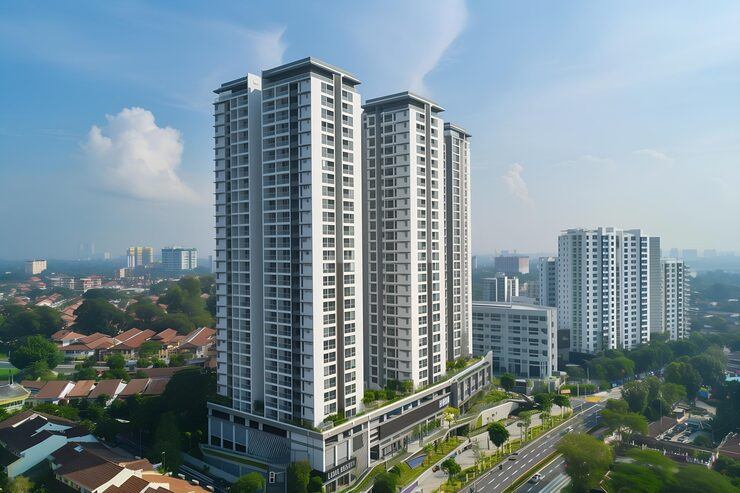
Why New Projects in Devanahalli Are Attracting the Smartest Real Estate Money in Bangalore
There is a term urban planners use for cities that grow outward from an airport rather than inward from a city centre. They call it an aerotropolis — and if you want to see one taking shape in real time in India, you need only look north of Bangalore. Devanahalli is not simply growing. It is being architected. And the distinction matters enormously for anyone looking at new residential projects in Devanahalli today. Most real estate stories follow a familiar arc: a neighbourhood gets popular, prices rise, developers arrive, and eventually the early buyers congratulate themselves on their foresight while latecomers scramble for what remains. Devanahalli is not following that arc. It is doing something rarer and more interesting — it is building its own demand from scratch, through a deliberate assembly of economic and infrastructure engines that did not exist a decade ago and will define the city's northern geography for the next fifty years. The Jobs Story Nobody Is Telling Loudly Enough When people talk about Devanahalli, they lead with the airport. That is fair — Kempegowda International Airport processes over 50 million passengers annually and anchors the entire corridor's identity. But the airport is only the beginning of the employment story. The Bangalore Aerospace Park, sprawling across nearly 980 acres, already hosts aerospace giants including Boeing and Airbus. Foxconn's iPhone manufacturing facility in the BIAL IT Investment Region has put Devanahalli on the global supply chain map. Amazon India has relocated its headquarters to Sattva Horizon Business Park, just minutes from the airport, bringing over 7,000 employees directly into the North Bangalore ecosystem. The Devanahalli Business Park, spanning over 400 acres, is home to names like GSK, Thales India, and Wistron. This is not a residential corridor waiting for employment to arrive. The employment is already here, and it is scaling fast. When a real estate market has genuine, diverse job creation underpinning housing demand, it behaves very differently from a speculative corridor. Rental yields stay healthy. Resale liquidity improves. And the buyer profile upgrades continuously — from investors and flippers to end-users who need homes near where they work. What the Numbers Are Saying Property prices in Devanahalli have appreciated 15 to 20 percent annually over the past two years — outperforming virtually every other micromarket in Bangalore. Plot rates that were trading at around ₹2,800 to ₹3,000 per sq ft in 2023-24 have moved to ₹6,000 to ₹10,000 per sq ft today. Premium villas are crossing ₹10,000 per sq ft. And with the Namma Metro Blue Line extension to the airport expected to be operational by late 2026, this trajectory is far from over. North Bangalore now accounts for nearly 34 percent of all residential launches in the city — a remarkable statistic for a zone that was considered a peripheral bet barely five years ago. The Infrastructure Stack What gives Devanahalli its durability as an investment address is the sheer depth of its infrastructure pipeline. It is not riding one project — it is riding seven simultaneously. The 280-kilometre Satellite Town Ring Road. The Bangalore Suburban Railway covering 148 kilometres across four corridors. The Peripheral Ring Road linking Devanahalli to Bangalore's eastern and southern tech corridors. The four-laning of the Devanahalli-Kolar highway. A proposed ₹4,100 crore airport rail spur. The Namma Metro Phase 2B. And the BIAL IT Investment Region — a 10,500-acre Special Economic Zone designed to host IT firms, biotech companies, and global R&D centres. Each of these projects, individually, would be enough to move a real estate market. Together, they are compressing Devanahalli's future into the present at an extraordinary pace. The New Projects Arriving to Meet This Moment Developers have read the signals clearly. Godrej, Brigade, Prestige, Birla Estates, Embassy, Tata Housing, and Purva are all active in Devanahalli simultaneously — a concentration of Grade A developer capital that simply does not happen by accident. They are delivering across every product category: township-scale apartment complexes, gated villa communities, plotted developments with full infrastructure, and integrated mixed-use projects that blur the line between living and working. For buyers, this diversity of product is itself a signal. When developers of this calibre compete for the same customer in the same geography, it forces quality upward and gives buyers genuine choice — something that is far from guaranteed in most emerging corridors. The Window Is Open — But Not Indefinitely Markets like Devanahalli have a compressed window of optimal entry. Once the metro arrives, once the SEZ reaches critical employment mass, once the suburban railway becomes part of daily life — prices will reflect those realities completely. Today, they only partially do. That gap between current pricing and future value is where wealth is made in real estate. Devanahalli's gap, in early 2026, still exists. But it is closing with every passing quarter.