Anatomy of a Crypto Illusion: the 2$ Billion Hyperverse fraud
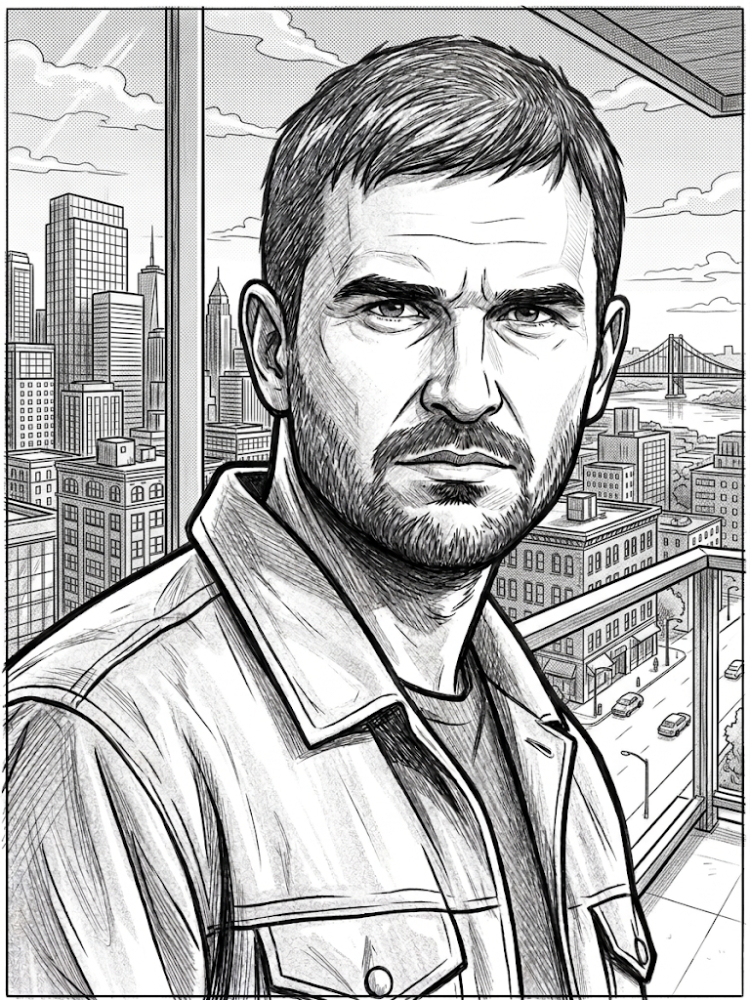
A vision of a digital utopia, promises of steady passive income, and celebrities hired on demand.
This is how HyperVerse was born-a global financial machine that, according to official findings by U.S. law enforcement agencies, defrauded investors of an astronomical $1.89 billion. Although U.S. prosecutors and the Securities and Exchange Commission (SEC) have filed charges against key players, hundreds of thousands of victims worldwide are left with crushing debt, ruined relationships, and one burning question: where did their money go?
During the COVID-19 pandemic and its accompanying strict lockdowns, millions of people worldwide trembled for their financial stability. In an environment of forced isolation and anxiety about tomorrow, computer screens became the only window to the world for many. It was at this perfect psychological moment that HyperVerse stepped onto the stage.
The project promised something more than mere profit-it offered entry into a "parallel system of existence" within the budding metaverse. For those seeking a safe haven, the creators' promises sounded like the opportunity of a lifetime. An Australian hairdresser, forced to close her salon during lockdown, invested $40,000 of her own savings along with another $20,000 she had set aside for her son’s house deposit. Another investor from the UK, lured by the vision of rapidly multiplying his capital, transferred nearly £1 million obtained from selling his house. Both believed they were participating in a technological revolution. The truth, however, proved brutal.
The Mechanism of Manipulation: Mathematics in Service of a Ponzi Scheme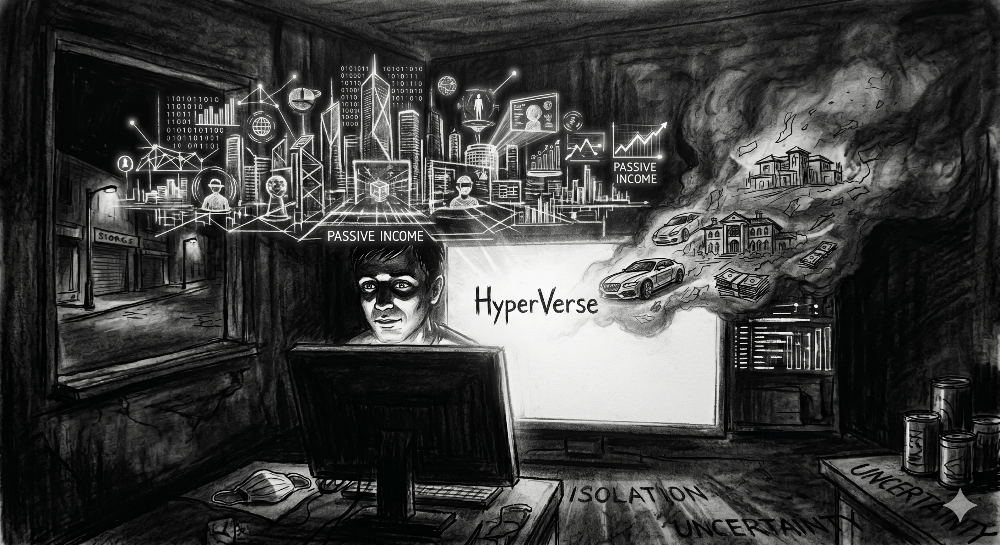
· Membership Purchase: The barrier to entry appeared low-the minimum package cost $300.
· Guaranteed Rate of Return: The creators promised a steady return of at least 0.5% daily, which was supposed to yield a 300% return over 600 days-effectively tripling the initial investment.
· The "Reinvestment Magic" Trap: Profits were not paid out in traditional currencies or even well-known Bitcoin, but in the platform's internal units-so-called HyperUnits (HU). Structure leaders conducted intense coaching sessions, persuading victims not to withdraw funds but to immediately reinvest them. This was allegedly designed to trigger a compound interest mechanism and drastically accelerate the path to wealth.
· 20 Levels of Recruitment: The project was a textbook example of aggressive multi-level marketing (MLM). Investors earned commissions not only from people they directly introduced to the system but also from subsequent recruits down to 20 levels deep. The most effective recruiters climbed the hierarchy, earning prestigious, authority-building titles, the highest of which was the "VIP 5-star" status.
The official narrative claimed that these incredible profits were generated by powerful cryptocurrency mining farms and the operations of a global blockchain alliance. Gurbir S. Grewal, Director of the SEC’s Division of Enforcement, later summarized it succinctly:
"HyperFund held out the prospect of profits from cryptocurrency mining operations, but the only thing it was actually mining was its investors’ pockets."
All payouts came exclusively from the deposits of new members.
A CEO from a Job Ad and Celebrities for Hire
However, a journalistic investigation conducted by The Guardian led to shocking conclusions: the universities and companies mentioned had never heard of such a man, and his impressive resume was entirely fabricated. The "CEO" himself turned out to be a British English teacher living in Thailand and an occasional TV presenter.
He had simply been recruited by a talent agency to play the role of a businessman. For nine months of "work," which consisted of reading prepared scripts in front of a camera, he received a salary of just 20,000 Thai baht per month (approximately $550), a suit, a pair of shoes, and a tie. The man had no idea about the actual scale of the operation, nor that his face would be used to legitimize a massive fraud.
The platform's image was also bolstered by video recordings featuring global pop culture and tech icons. Marketing materials featured the likes of Apple co-founder Steve Wozniak and legendary actor Chuck Norris, who spoke enthusiastically about the HyperVerse revolution. The investigation revealed that these stars had no connection to the project-their brief remarks were simply legally paid for and ordered by promoters via the Cameo platform, which is used to buy personalized celebrity greetings.
The Forward Escape Syndrome: Perpetual Migration and the Illusion of Rescue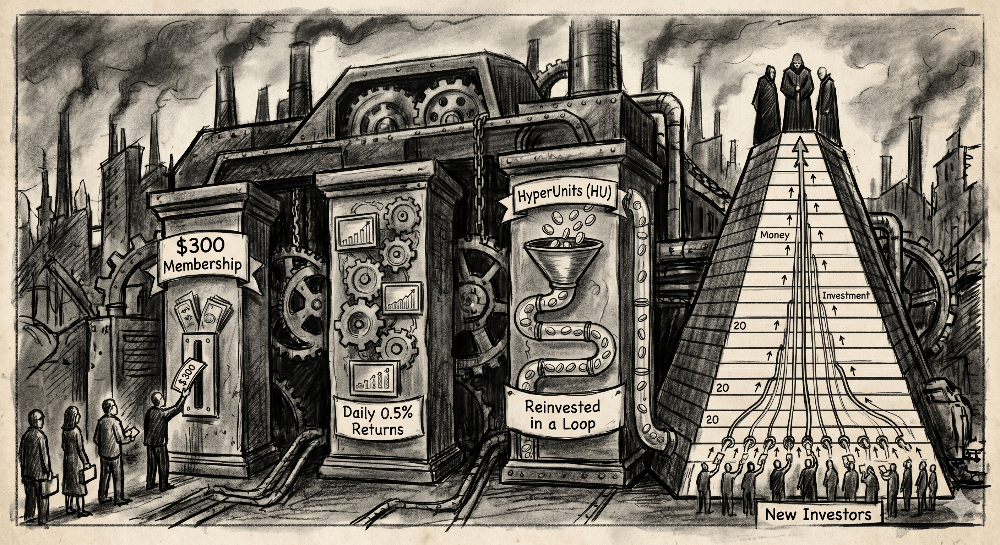
As panic began to mount, the creators deployed a time-tested psychological trick-they proposed "evacuating" capital to a new, supposedly improved platform called HyperNation. The launch event for the new brand resembled a surreal spectacle: a man in a golden mask and a woman in a black veil appeared on stage, holding philosophical discourses about a "systemic utopia" and NFT trading instead of discussing concrete financials.
When HyperNation also stopped paying out funds, the mechanism was repeated, forcing desperate people to migrate to subsequent mutations of the project, such as VAV or We Are All Satoshi. One defrauded investor later admitted with relief that he was saved from putting more money into the latest platform by sheer coincidence. The system required identity verification (KYC) using an ID card or driver's license, and because his document had expired, he could not complete the registration, shielding him from further losses.
The Architects of the Collapse and Regulator Helplessness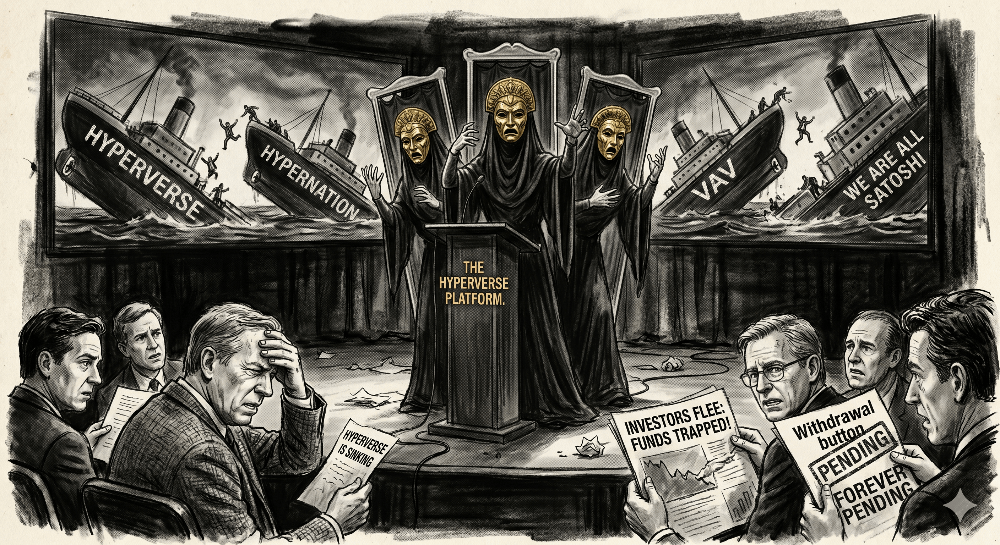
Many investors attempted basic due diligence before depositing their savings. Seeing that the parent companies were officially registered with the Australian Securities and Investments Commission (ASIC), they deemed the project a fully legitimate business. Furthermore, the pyramid's clever lawyers drafted the terms of service to formally avoid financial market terminology-instead of "investments," they wrote about "purchasing memberships that entitle the holder to rewards," creating the illusion that the platform was not subject to restrictive securities laws.
Despite official warnings against HyperFund being issued by the governments of the UK, New Zealand, and Germany as early as 2021, the Australian regulator ASIC did not publish a direct warning dedicated to HyperVerse until February 2024-long after the platform had completely vanished from the internet.
The Finale in Federal Court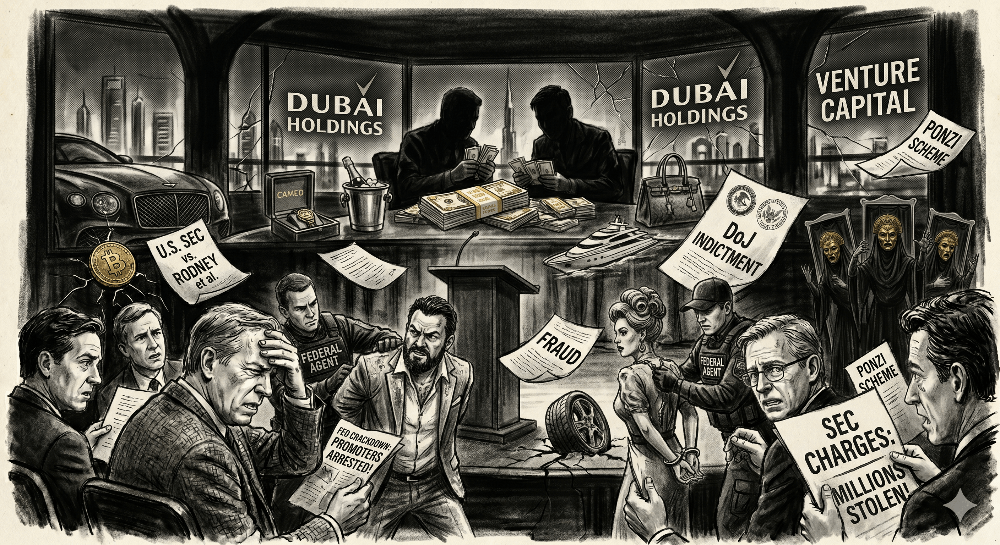
At the same time, U.S. agents arrested key promoters of the project in the United States: Rodney Burton (known as "Bitcoin Rodney," who flaunted a luxurious lifestyle on social media) and Brenda Chunga ("Bitcoin Beauty"), who was the official face of HyperVerse marketing in the U.S. While Chunga chose to cooperate with law enforcement, Sam Lee rejects the accusations from abroad, calling the U.S. prosecution's actions an "embarrassment." The second founder, Ryan Xu, has vanished without a trace and has not been named in the U.S. lawsuits to date.
The Social Cost of a Crypto-Utopia
The tragedy of HyperVerse goes far beyond dry statistical data about lost billions. Because the system forced the recruitment of friends and family to maximize profits, its collapse triggered a wave of social tragedies. People who trusted those closest to them lost their life savings, resulting in the irreparable severance of family ties and lifelong friendships. One Australian recruiter admitted that after the platform collapsed, he lost contact with sixteen close friends who had entered the game on his recommendation.
The HyperVerse case starkly exposes the vulnerability of the modern legal system. Global digital Ponzi schemes operate on the internet without customs barriers, while national regulatory bodies attempt to combat them using thirty-year-old legal frameworks completely unsuited to the era of cryptocurrencies and decentralized finance. As American investigators secure more evidence, the crucial question remains unanswered: into whose private bank accounts did nearly two billion dollars taken from manipulated people ultimately flow?
Resources:
https://www.justice.gov/usao-md/pr/three-individuals-charged-189-billion-cryptocurrency-fraud-scheme
https://www.justice.gov/criminal/case/hyperfund-and-associated-cases
https://www.sec.gov/newsroom/press-releases/2024-11
https://www.theguardian.com/technology/hyperverse
https://www.theguardian.com/technology/2024/jan/04/chief-executive-of-collapsed-crypto-fund-hyperverse-does-not-appear-to-exist
https://www.theguardian.com/australia-news/2023/dec/14/crypto-currency-schemes-investors-losing-millions-regulation-hyperverse-warning-ntwnfb
https://en.wikipedia.org/wiki/HyperVerse