The Stripe Moment Web3 Has Been Waiting For
And why Moove.xyz is the infrastructure that makes it real
Made it possible to accept payments on the internet without a computer science degree or a bank relationship.
Stripe didn't invent online payments. Card rails existed. Banks existed. Payment processors existed. What didn't exist was a layer that abstracted all of it so a 19-year-old building a side project could go from "I have a product" to "I can get paid" in an afternoon.
The result wasn't just Stripe's success. It was the entire architecture of the internet economy as we know it. Shopify. Substack. Airbnb. Millions of businesses that exist because payments stopped being a barrier and became invisible infrastructure.
Web3 is sitting at that exact moment right now.
The assets exist. The chains exist. The liquidity exists. What doesn't exist is the layer that makes using any of it feel like sending a message.
That layer is being built. And it looks like Moove.xyz.
Why Web3 Payments Still Feel Like 2009
Ask anyone who's tried to pay someone in crypto for the first time and they'll describe the same experience.
First, you have to figure out which blockchain they're on. Then which wallet. Then whether your wallet supports that chain. Then you copy a 42-character address carefully, because one wrong character and the money is gone forever then deal with gas fees denominated in a token you may not own, on a chain you may not have bridged to, through a bridge interface that looks like it was designed to frighten people.
This is not a UX preference. It is a structural barrier that has kept crypto payments from reaching the people who need them most the ones for whom a 6% Western Union fee isn't a minor inconvenience, it's a real cost on every dollar sent home.
The technical infrastructure underneath has become remarkable. The user layer above it remains hostile.
Stripe's insight was that no one should have to understand card rails to get paid. Moove.xyz's insight is the same thing applied to blockchain: no one should have to understand which chain someone is on to send them money.
What Moove Actually Built
Moove.xyz launched on January 17, 2026. Within six weeks, it had 7,000+ users not from a token airdrop, not from points farming incentives, but from a product that actually works.
The architecture is worth understanding, because it's where the Stripe comparison stops being a metaphor and becomes structural.
The Handle System
Every user gets a @handle. Not a wallet address. Not a chain-specific identifier. A human-readable name that works like a username except behind it sits a complete cross-chain routing layer.
You share `moove.xyz/@yourname`. That's it. That's your payment page.
The Cross-Chain Abstraction
Here's where it gets technically significant. When someone pays you through your Moove handle, they can send anything any token, any chain, any wallet. Moove automatically routes, bridges, and swaps. You receive exactly what you specified say, USDC on Base regardless of what they sent.
The sender doesn't need to know what chain you're on. You don't need to know what chain they're on. The infrastructure handles the translation silently.
This is precisely what Stripe did with card networks. You didn't need to know whether a customer was paying with Visa or Mastercard, from a US bank or a European one. The abstraction layer handled it. You just got paid.
The Fee Structure
Same-chain, same-token transfers: 0% fee.
All other transfers: 0.02%.
The industry standard for cross-border crypto payments sits above 0.85%. Traditional remittance averages closer to 6%. Moove's pricing isn't a promotional offer it's what becomes possible when the infrastructure is built correctly from the start.
The Full Stack
Beyond payments, Moove supports staking, swapping, and transacting across 16,000+ cryptocurrencies on 30+ blockchains. There's an embeddable widget live now. APIs and an SDK are in development. A mobile app is coming.
The pattern mirrors Stripe exactly: launch with the core payment primitive, then build the developer tools that let the infrastructure become invisible inside other products.
The Stripe Comparison, Precisely
The analogy gets used loosely in crypto. Here it's exact.
Stripe unified multiple card networks behind a single integration Visa, Mastercard, regional rails so merchants never had to think about which one a customer was using. Moove unifies multiple blockchains behind a single handle, so the person getting paid never has to think about which chain the sender is on.
Stripe gave merchants no-code payment links shareable URLs that turned any business into an online storefront in minutes. Moove gives every user a Profile: share your handle link, get paid in whatever you want, from whoever's sending.
Stripe built developer APIs and a checkout widget that let its infrastructure embed invisibly inside other products. Moove's embeddable widget is live. The APIs and SDK are in development same sequencing, same intent.
Stripe solved merchant identity: a payment page that looked legitimate and professional, not a bank account number on a napkin. Moove's @handle does the same for Web3 a discoverable, branded identity that doubles as a payment destination.
The parallels hold all the way down. But there's one place Moove goes beyond the comparison.
Stripe operates inside traditional financial infrastructure. It requires KYC. It has geographic restrictions. It can and does freeze accounts. Moove is permissionless and non-custodial zero KYC, no custodian holding your funds, no compliance layer deciding whether you're allowed to transact.
That's not just a Stripe equivalent. In the one dimension that matters most for the people legacy finance was never designed to serve, it's structurally better.
Who This Actually Serves
The Stripe story is often told as a developer story. Two brothers, Hacker News, Y Combinator, Silicon Valley scale.
The Moove story has a different geography.
1.4 billion people are unbanked globally. A significant portion of them own smartphones. A growing portion of them are already using stablecoins for savings, for remittances, for commerce not because they're crypto enthusiasts, but because their local financial infrastructure failed them and USDC didn't.
What they've lacked is the layer that makes crypto payments as simple as sending a WhatsApp message.
A freelancer in Lagos invoicing a client in Toronto shouldn't need to manage bridge interfaces and gas denominations. A creator in Buenos Aires accepting tips from a global audience shouldn't need to explain to their audience which chain to use. A merchant anywhere in the world shouldn't need a developer to embed crypto checkout.
Moove's stated mission is infrastructure for the next billion Web3 users. That number isn't marketing it's the actual addressable population that has the need and the mobile connectivity, but not the current infrastructure to act on it.
The Network Effect Stripe Never Had
Stripe is a payments infrastructure company. It processes transactions. It doesn't connect users to each other.
Moove has something Stripe structurally cannot: a decentralized social financial network built into the same layer as the payments infrastructure.
Handles are discoverable. Contacts are native. Rewards compound with activity and referrals. The more people on Moove, the more useful every individual handle becomes not because of artificial incentives, but because the network of people you can pay or get paid by grows.
This is a different growth model than Stripe. And potentially a more durable one.
What Comes Next
The roadmap is phased in a way that mirrors Stripe's own expansion exactly.
Phase one was the payment primitive: handles, profiles, cross-chain routing. That's live.
Phase two is developer infrastructure: APIs, SDK, mobile app. That unlocks the Moove equivalent of Stripe's checkout.js the moment when the infrastructure can be embedded inside any product invisibly.
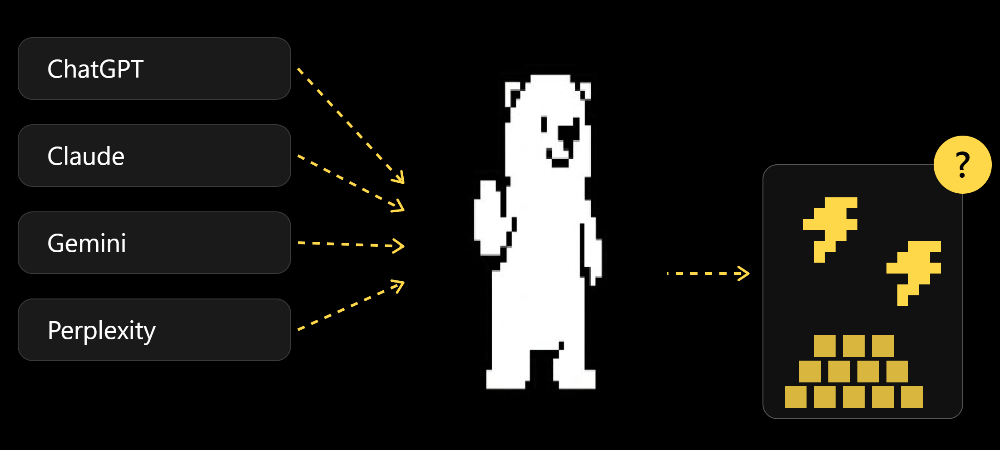
Phase three is the layer that's genuinely new: agentic commerce. AI agents that can transact autonomously, execute payments without human intervention, operate across chains without managing bridge complexity. Moove has already announced this direction in its BULB partnership.
When Stripe launched, nobody predicted that its real impact would be enabling the creator economy, the gig economy, and subscription SaaS at global scale. The payment primitive enabled business models that didn't exist yet.
The same dynamic is in motion here. Permissionless, cross-chain payment infrastructure at near-zero cost available to anyone with a handle will enable business models and financial behaviors that don't exist yet. We can see the direction. We can't fully see the destination.
That's what a genuine infrastructure moment looks like.
The Verdict
Web3 has had wallets for years. It has had bridges and swaps and DEXs and stablecoin rails. What it has not had is the abstraction layer that makes all of it invisible to the person who just wants to get paid.
Stripe didn't win because it had the best technology. It won because it had the right layer of abstraction at the right moment and it built developer tools that let that abstraction spread into every corner of the internet economy.
Moove.xyz has the abstraction layer. It has the timing. It has the fee structure that makes it viable at global scale. And it has something Stripe never needed to build: a permissionless foundation that works for the people legacy finance was never designed to reach.
The Stripe of Web3 doesn't need to look exactly like Stripe. It needs to do what Stripe did remove the barrier between having something to offer and getting paid for it, anywhere, by anyone.
That's what's being built at m
oove.xyz.
Follow @moove.xyz . The infrastructure moment is already in motion.
Written by @Arslan_onchain on X
Tags: @moove.xyz @Bulbappio