RWA Tokenization Hits $28.9 Billion: Why Wall Street Is Racing On-Chain

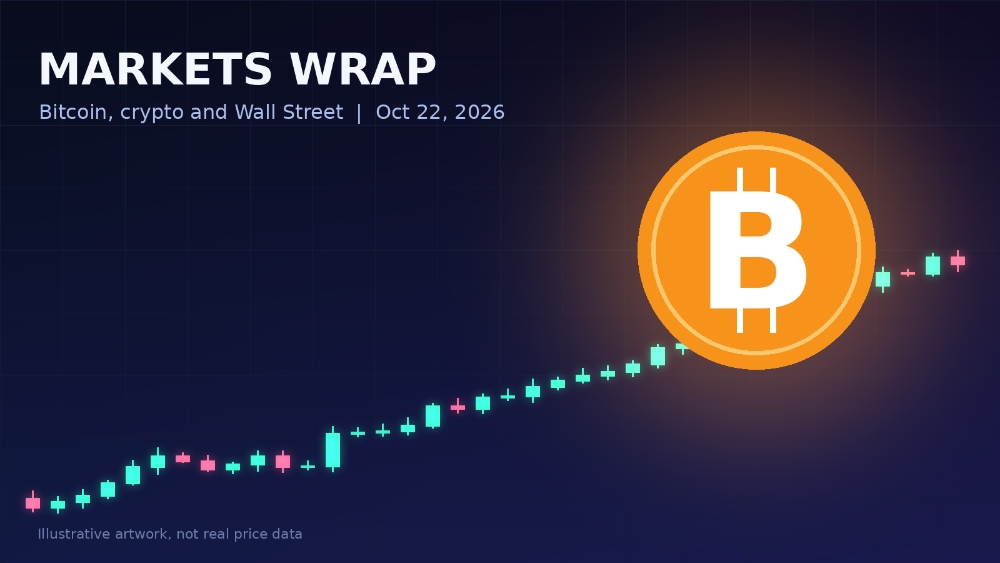
While Bitcoin price swings and ETF flows dominate crypto headlines, a far more consequential story is unfolding quietly beneath the surface — the rapid rise of Real-World Asset (RWA) tokenization. In May 2026, the RWA tokenization market reached $28.9 billion, marking its 10th consecutive monthly all-time high — achieved without hype cycles, meme frenzies, or celebrity endorsements. Just steady, accelerating institutional adoption.
The market has expanded 589% since early 2025, with tokenized U.S. Treasuries leading at $16.2 billion, stablecoins surpassing $320 billion, and tokenized equities exceeding $2.41 billion. Just a few years ago, the entire tokenized asset market barely crossed $2 billion. Today, blockchain-based financial infrastructure is being treated as a strategic priority by the world's largest institutions.
Why Institutions Are Moving On-Chain
The economic case for tokenization is compelling. Key benefits driving adoption include faster settlement, lower transaction costs, increased transparency, fractional ownership, global market access, and 24/7 trading capabilities. Regulatory frameworks are also improving, institutional-grade custody solutions have matured, and compliance concerns that once blocked participation are being addressed — most notably through legislation like the proposed GENIUS Act, which is bringing clarity to stablecoin reserve requirements.
BlackRock Leads the Charge
BlackRock filed two significant regulatory submissions centered around a Stablecoin Reserve Vehicle and a blockchain-enabled share class structure known as BSTBL — signaling that the world's largest asset manager is not merely experimenting. It is building core infrastructure for a tokenized future. Even a small migration of its trillions in iShares assets on-chain would dramatically reshape the market.
A Competitive Race Taking Shape
BlackRock is far from alone. Franklin Templeton, Securitize, Apollo, WisdomTree, Hamilton Lane, and Ondo Finance are all competing for leadership in tokenized finance — each pursuing different strategies across tokenized funds, Treasuries, and infrastructure layers. Notably, Ondo Finance recently recruited senior ETF architecture talent from traditional finance, signaling an ambition to build tokenized products that can directly compete with conventional financial instruments.
Stablecoins: The Engine Room
Stablecoins serve as the settlement backbone for the entire RWA ecosystem. Every tokenized Treasury purchase and equity trade ultimately relies on stablecoin infrastructure. Their $320 billion market size makes them one of the earliest and most successful examples of real-world asset tokenization already at scale.
Challenges That Remain
Despite the momentum, three key hurdles remain: institutional-grade custody and regulatory compliance, thin secondary market liquidity for many tokenized assets, and cross-chain interoperability across fragmented blockchain ecosystems. Until these are resolved, growth may be slower than the most optimistic projections suggest.
The $30 Trillion Horizon
Analyst forecasts range from $2 trillion (conservative) to $30 trillion (aggressive), depending on how deeply tokenization penetrates global finance. What's happening now is the gradual migration of traditional finance onto blockchain rails — and 2026 may be the year tokenization stopped being an experiment and became the foundation of a new financial system.
Top 3 Hashtags:
#RWATokenization#BlockchainFinance#InstitutionalCrypto