New South Korean Crypto Bill Targets Stablecoins, ICOs and Exchanges

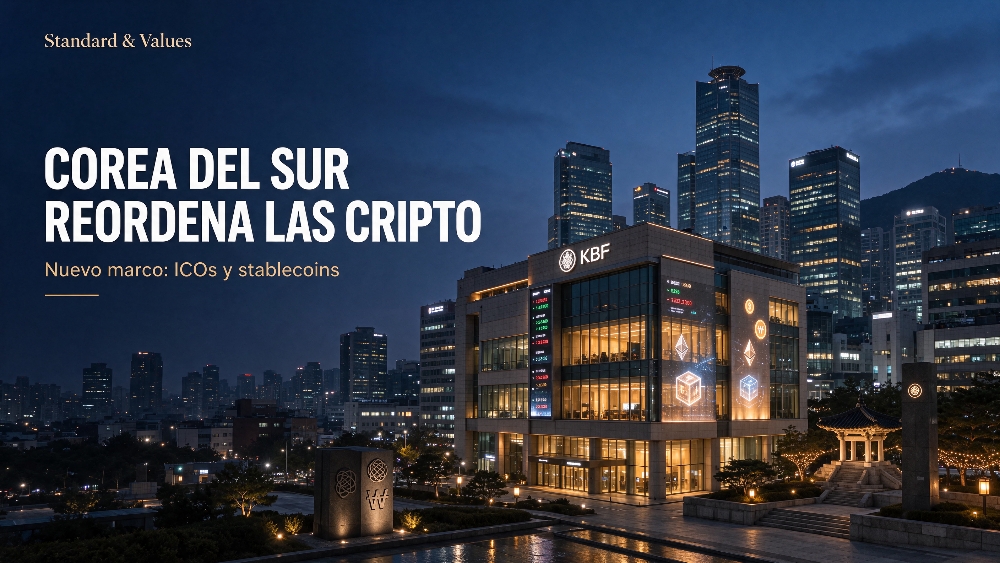
South Korea is taking another major step towards establishing a comprehensive regulatory framework for the cryptocurrency industry. The country's latest digital asset legislative proposal focuses on stablecoin issuance, initial coin offerings (ICOs), cryptocurrency exchanges and stronger investor protection measures.
On November 24, 2026, South Korea's Financial Services Commission (FSC) introduced a draft proposal titled the Act on the Innovation of the Digital Asset Industry and Protection of Users. The proposed legislation aims to create a more structured environment for digital asset businesses while encouraging innovation and improving market transparency.
Stablecoins Could Receive a Clear Regulatory Framework
One of the most important aspects of the proposed legislation is the introduction of specific requirements for stablecoin issuers.
The proposal focuses on digital payment tokens pegged to a single currency, including potential South Korean won-backed stablecoins. Issuers would need regulatory approval and must maintain reserves equivalent to 100% of their outstanding token supply.
During the initial phase, banks would collectively need to hold more than 50% ownership in stablecoin-issuing consortiums. The proposal also establishes redemption requirements to ensure holders can exchange their tokens for the equivalent value in currency.
These measures could encourage greater participation from financial institutions and technology companies in the country's digital payment ecosystem.
South Korea Considers Reopening Domestic ICOs
South Korea has maintained restrictions on domestic ICO fundraising since 2017. However, the proposed legislation could change this approach by introducing a disclosure-based framework for token offerings.
Under the proposal, companies seeking to raise funds through ICOs would need to submit detailed white papers to the FSC. These documents would outline project objectives, token supply, fundraising plans and potential investment risks.
If implemented, the framework could provide blockchain startups with a regulated way to raise capital within South Korea rather than depending primarily on overseas fundraising opportunities.
However, the proposed changes are not yet law, and existing restrictions remain subject to the legislative process.
Cryptocurrency Exchanges Face New Ownership Requirements
The proposed legislation also introduces significant changes for cryptocurrency exchanges operating in South Korea.
Under the draft, major shareholders of digital asset platforms would generally face a 20% ownership limit. Exceptions allowing ownership of up to 34% could be considered with regulatory approval.
Existing exchanges could receive a three-year transition period to adjust their ownership structures.
The proposal also introduces separate licensing categories for digital asset trading, brokerage, custody and investment management services. This approach would allow regulators to supervise businesses according to their specific activities.
Stronger Investor Protection and Cybersecurity Measures
Another important objective of the proposed legislation is improving security across the digital asset industry.
Crypto businesses would face stronger internal control requirements, customer asset protection standards and regulatory supervision. The proposal also addresses compensation for customer losses resulting from hacking incidents or IT system failures.
These requirements could increase compliance costs for digital asset companies, but they may also improve confidence among investors and institutional participants.
What Does the Proposed Bill Mean for the Crypto Industry?
South Korea's proposed regulatory framework represents a potential shift towards a more comprehensive approach to digital asset regulation.
Allowing regulated ICO fundraising could create opportunities for blockchain startups, while stablecoin requirements could encourage collaboration between traditional banks and cryptocurrency companies. Meanwhile, stricter exchange ownership and licensing requirements could reshape the country's digital asset trading landscape.
For a closer look at the proposed legislation, including its stablecoin requirements, ICO provisions and exchange ownership restrictions, read this detailed report: South Korea's New Crypto Bill Could Change Everything: ICO Ban May End After Nine Years.
The proposal must still go through parliamentary discussions before becoming law. Its final provisions could change during the legislative process, making further regulatory developments important to watch.
South Korea's approach could become an important example of how governments balance cryptocurrency innovation with financial stability and investor protection.