The Patent-Alpha Playbook: Using AI to Map Innovation Pipelines and Front-Run the Next Infrastructur


Not a headline. Not an analyst note. A cluster — seventeen patent filings across three subsidiary entities of a mid-cap industrial conglomerate, cross-referenced against procurement language scraped from fourteen municipal infrastructure RFPs, weighted against a six-sigma deviation in the company's R&D capitalization ratio. The portfolio manager's phone hasn't buzzed. CNBC hasn't noticed. The market, in its magnificent indifference, is still pricing the stock as though it were 2019.
This is the edge. Cold, precise, and invisible to anyone operating without the machine.
---
The Hybrid Imperative
Quantamental investing is no longer a philosophical preference between quant and fundamental camps. It is a structural adaptation — the equivalent of pressurizing a cockpit when the altitude becomes unsurvivable. The 2026 market is a complex adaptive system generating approximately 2.5 quintillion bytes of data every single day. The un-augmented human mind, extraordinary as it is, hits its cognitive ceiling somewhere around the seventh variable. The machine doesn't.
But the machine is also blind in ways that matter catastrophically.
This is the Centaur thesis: not human versus algorithm, but human through algorithm. The quant layer provides breadth — scanning millions of data points with the sterile hum of a high-frequency server rack processing patent databases, satellite imagery, earnings call transcripts, and regulatory filings simultaneously. The human layer provides depth — the contextual judgment to know when a model is extrapolating from a world that no longer exists.
---
The Mechanism: Radar and Pilot

The human manager — the pilot — reads this map not as gospel but as probability terrain. Where the model sees a signal, the experienced investor asks: what structural narrative is this data pointing toward? Is this a genuine infrastructure supercycle catalyst, or is the model pattern-matching against a historical analog that the geopolitical environment has rendered obsolete?
The Information Ratio lives in the space between those two questions.
---
The Grey Area: When Models Go Blind
Here is where intellectual honesty demands a hard pause.
Black Swan events — genuine tail-risk discontinuities — are precisely the moments where pattern-recognition models become dangerous. During the March 2020 dislocations, momentum factors didn't just underperform. They inverted. The sudden, cold realization of a model's tail-risk is viscerally different from reading about it in a risk disclosure. Liquidity assumptions embedded in **backtesting bias** evaporate the moment every participant reaches for the exit simultaneously.
Patent-signal strategies carry their own specific failure mode: the innovation a company patents is not always the innovation the market rewards. Regulatory capture, standards-body politics, and first-mover destruction are human narratives no training dataset fully encodes.
---
The Blueprint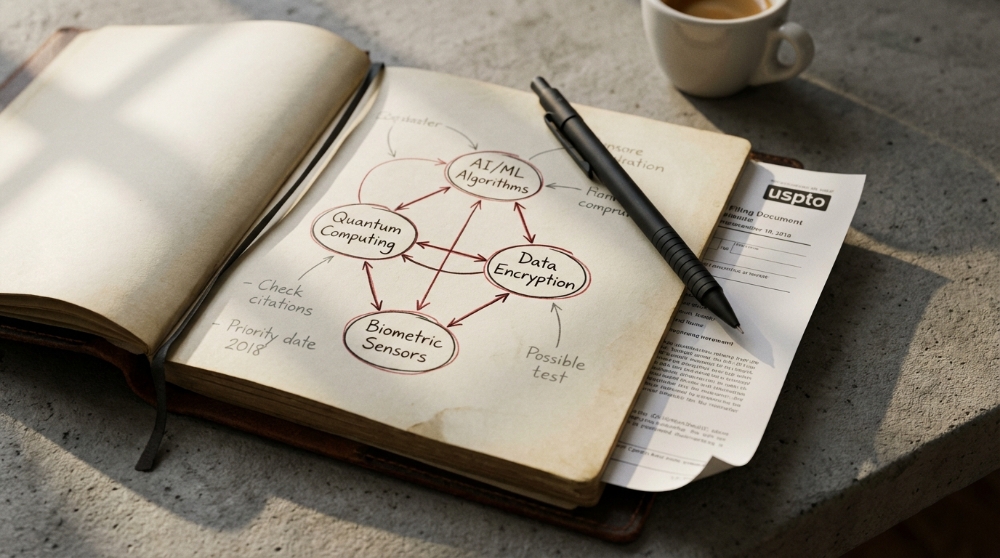
Data hygiene before alpha generation — always. Normalize filing dates against grant-lag distributions. Strip assignee obfuscation through entity-resolution layers. Only then build your mean reversion overlays against sector-relative R&D intensity. Tier your conviction: model-flagged, fundamentally confirmed, and position-sized accordingly.
---
The singularity of finance is not a moment when machines replace judgment. It is the quieter, more unsettling moment when the investors who refuse the machine become structurally incapable of competing with those who embraced it.
The patent was filed fourteen months ago. The market still hasn't read it.