What If Web3 Is Not the Final Answer?

For years, Web3 has been presented as the future.
The solution.
The next evolution of the internet.
The system that will fix everything.
But what if…
👉 Web3 is not the final answer?
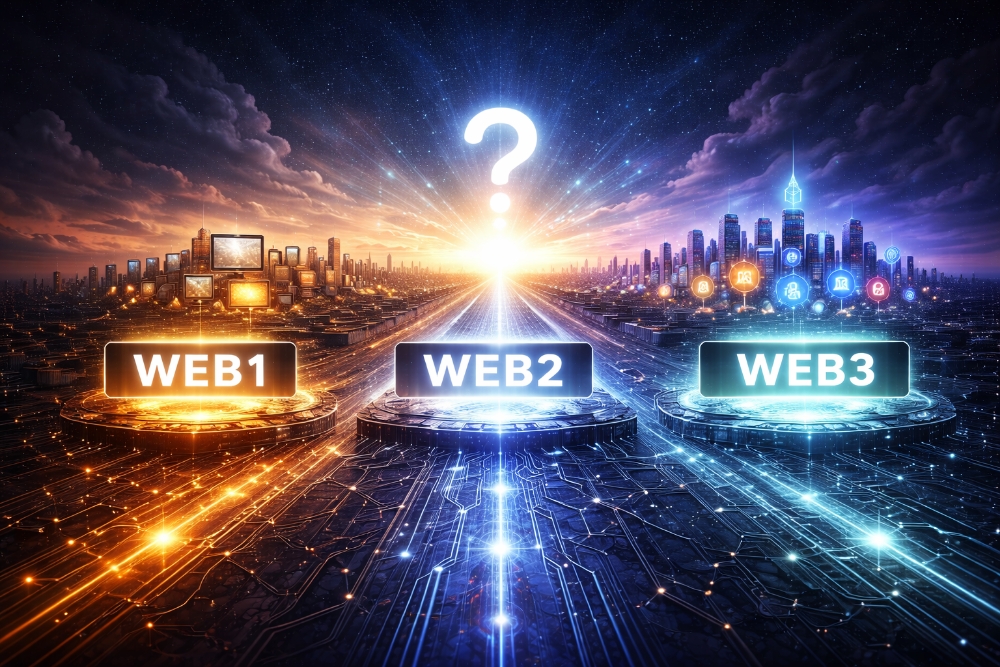
🚀 The Search for the “Perfect System”
Every generation believes it has found the solution.
- Web1 brought information 🌐
- Web2 brought interaction 📱
- Web3 brings ownership 💰
Each phase promised improvement.
And each one solved real problems.
But none of them were perfect.
🔁 Every System Has Limits
Web2 created:
- global connectivity
- powerful platforms
- massive innovation
But also:
- centralization
- data exploitation
- platform dominance
Web3 tries to fix these issues.
But as we’ve seen throughout this series, it introduces new challenges:
- complexity
- speculation
- inequality
- hidden centralization
👉 No system is flawless.
🧠 The Illusion of the “Final Revolution”
Humans love the idea of a final solution.
A system that fixes everything.
A technology that ends all problems.
But reality is different.
Every system:
- solves some problems
- creates new ones
And Web3 is no exception.
⚖️ Evolution, Not Perfection
Maybe Web3 is not the end.
Maybe it’s just:
👉 another step in a long evolution
A transition.
An experiment.
A phase in the continuous transformation of the internet.
💡 What Really Matters
The goal should not be to blindly believe in Web3.
But to:
- understand it
- question it
- improve it
- use it wisely
Because technology alone does not change the world.
👉 People do.
🔥 The Bigger Perspective
Instead of asking:
“Is Web3 the future?”
A better question might be:
👉 “What kind of future do we want to build?”
Because Web3 is just a tool.
And tools depend on how we use them.
🌍 Beyond Web3
The future might include:
- Web3
- new technologies
- systems we haven’t imagined yet
What seems revolutionary today…
may become outdated tomorrow.
🔥 Final Thought
Web3 is powerful.
Web3 is promising.
But it is not perfect.
And it is probably not final.
The real question is not:
👉 “Is Web3 the answer?”
But:
👉 Are we asking the right questions?