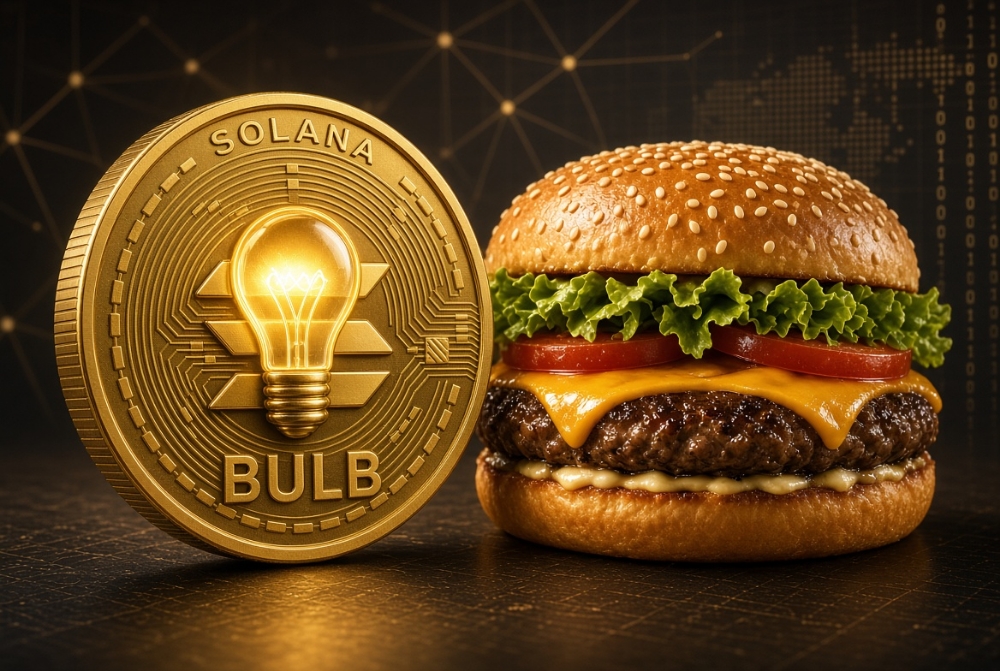
Blockchain The Distributed Ledger Technology Reshaping Global Trust

Blockchain is a distributed digital ledger that records transactions permanently, transparently, and in a way that is extremely difficult to alter without relying on intermediaries like banks.
🐝What Is Blockchain?
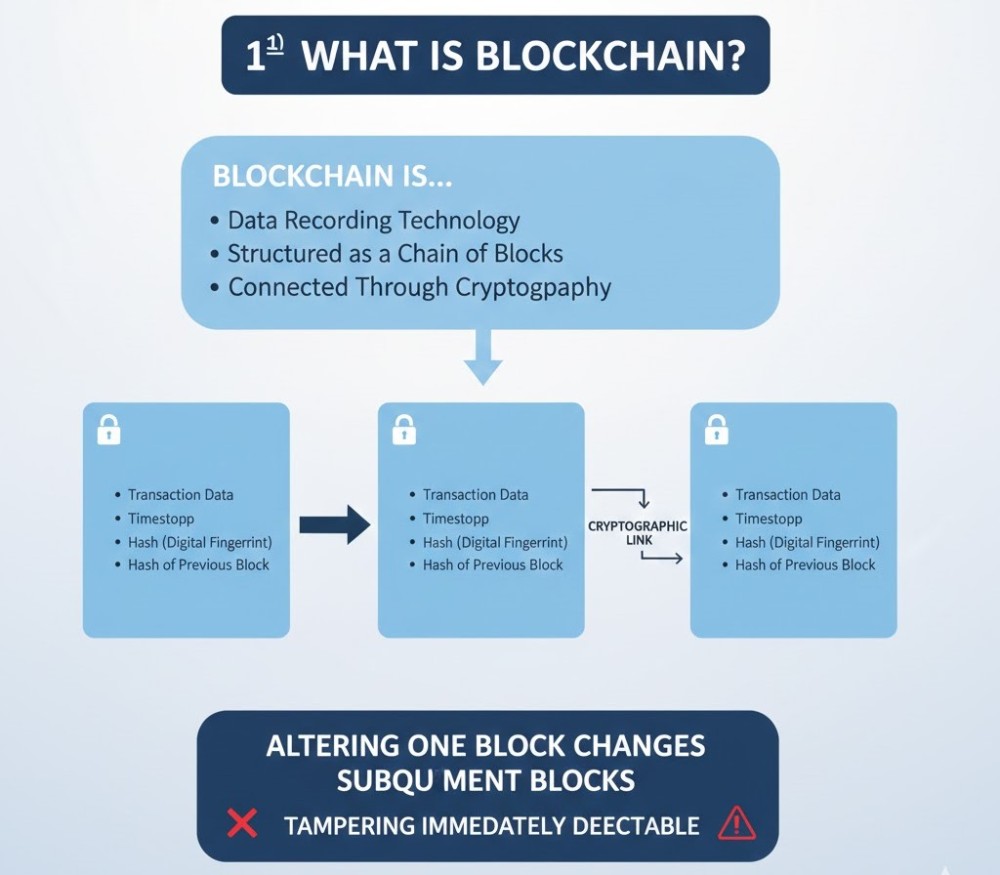
Blockchain is a data recording technology structured as a chain of blocks connected through cryptography.
Each block contains:
- Transaction data
- A timestamp
- A hash (a digital fingerprint of the block)
- The hash of the previous block
Because each block stores the previous block’s hash, altering one block would change every subsequent block making tampering immediately detectable across the network.
🐞Why Is It Called Distributed?
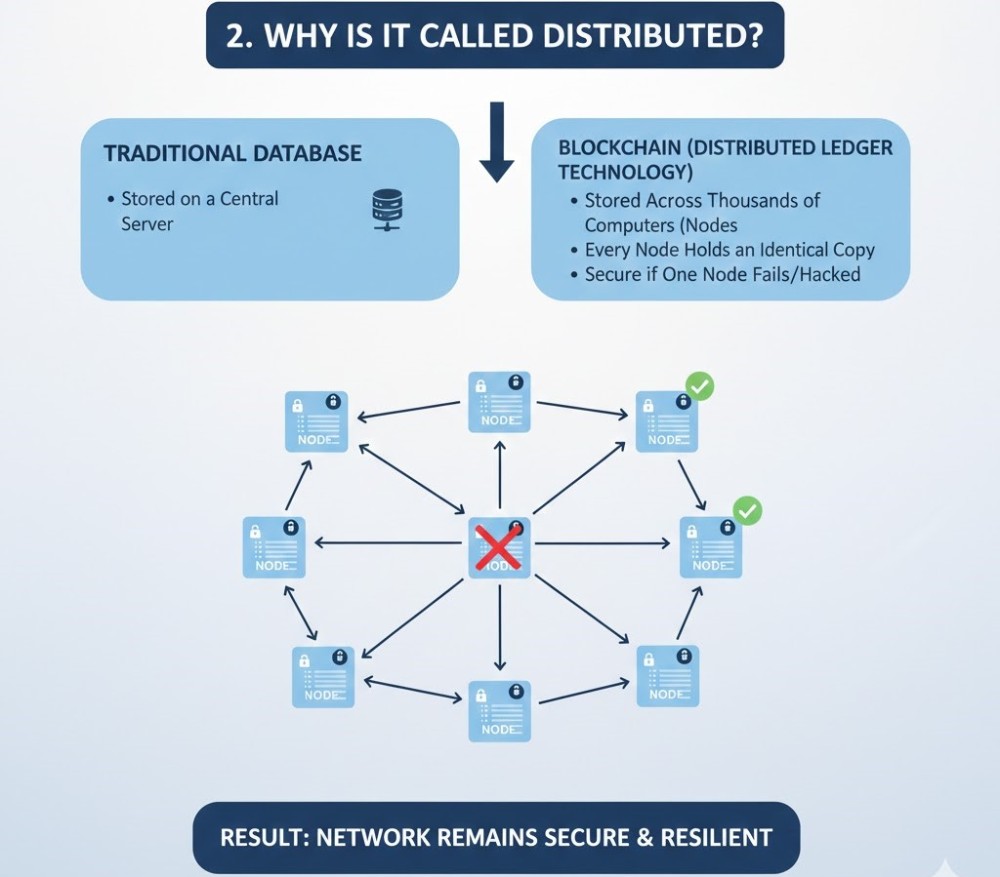
Unlike traditional databases stored on a central server:
- Blockchain is stored across thousands of computers (nodes) worldwide.
- Every node holds an identical copy of the ledger.
- If one node fails or is hacked, the network remains secure.
This system is known as Distributed Ledger Technology (DLT).
🐍How Does It Work?
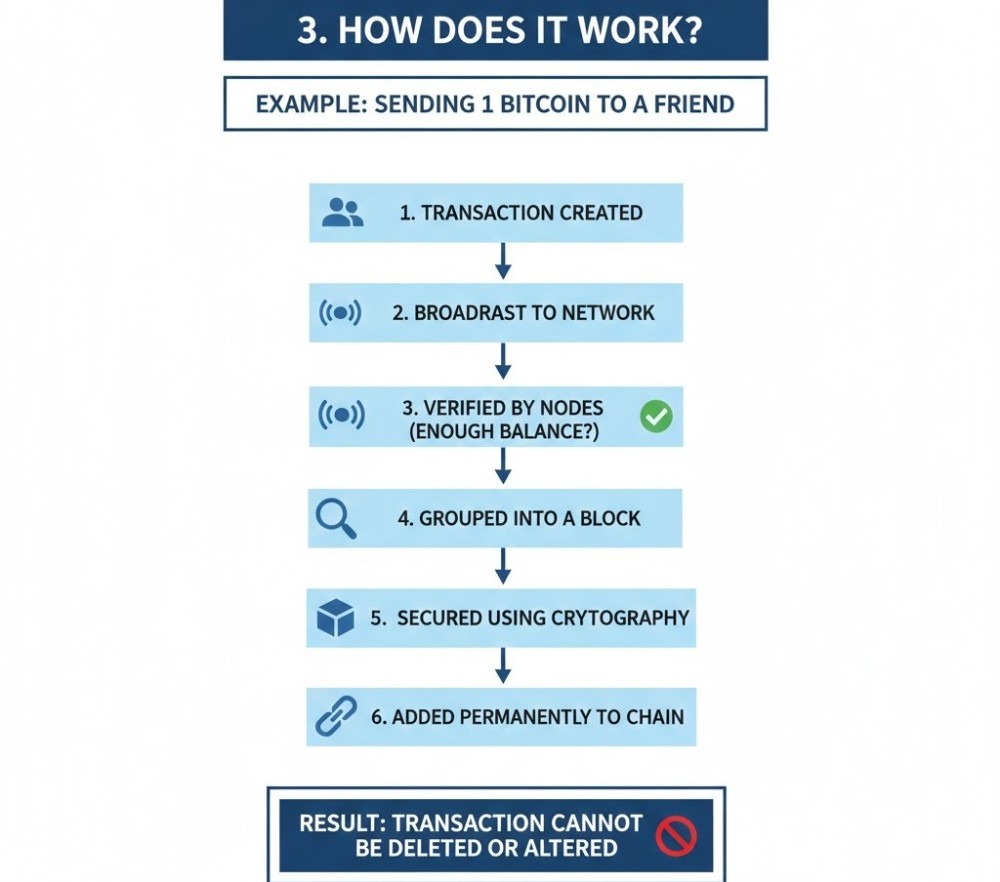
Let’s use a simple example:
You want to send 1 Bitcoin to a friend.
- The transaction is created.
- The transaction is broadcast to the network.
- Nodes verify it (Do you have enough balance?).
- The transaction is grouped into a block.
- The block is secured using cryptography.
- The block is added permanently to the chain.
Once recorded on the blockchain, the transaction cannot be deleted or altered.
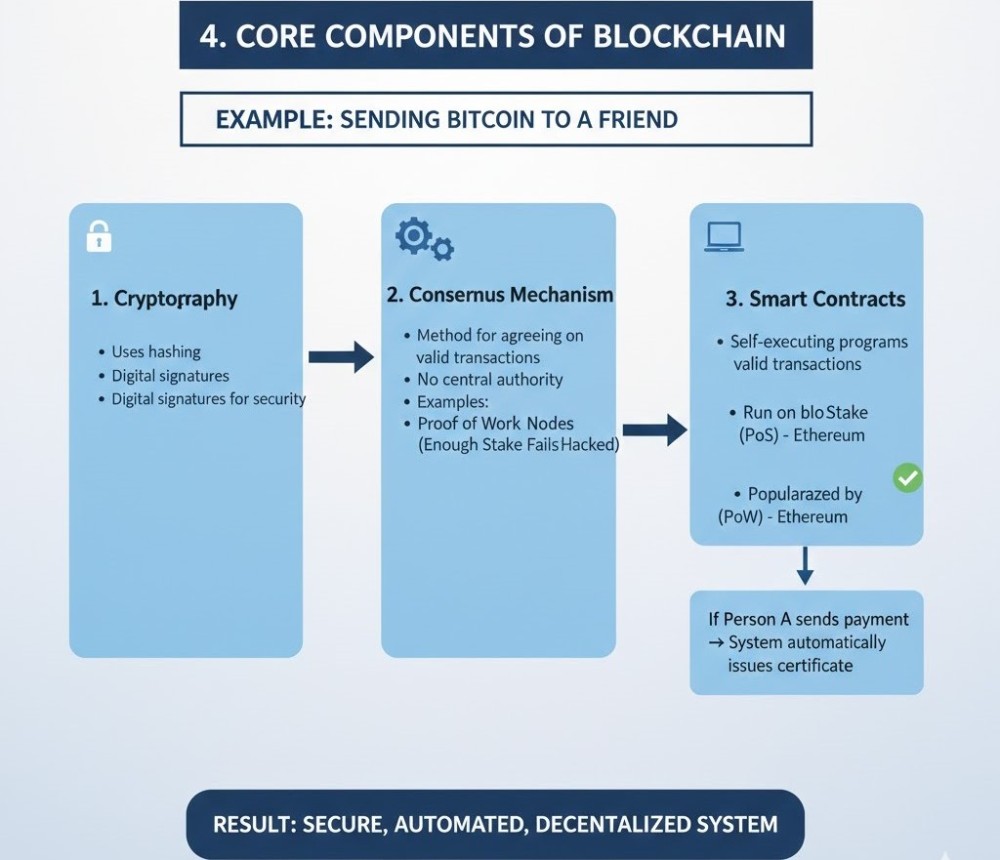
🦎Core Components of Blockchain
🔐 1. Cryptography
Uses hashing and digital signatures for security.
⚙️ 2. Consensus Mechanism
A method for agreeing on valid transactions without a central authority.
Examples:
- Proof of Work (PoW) used by Bitcoin
- Proof of Stake (PoS) used by Ethereum
💻 3. Smart Contracts
Self executing programs that run on the blockchain.
Popularized by Ethereum.
Example:
If Person A sends payment → the system automatically issues a certificate.
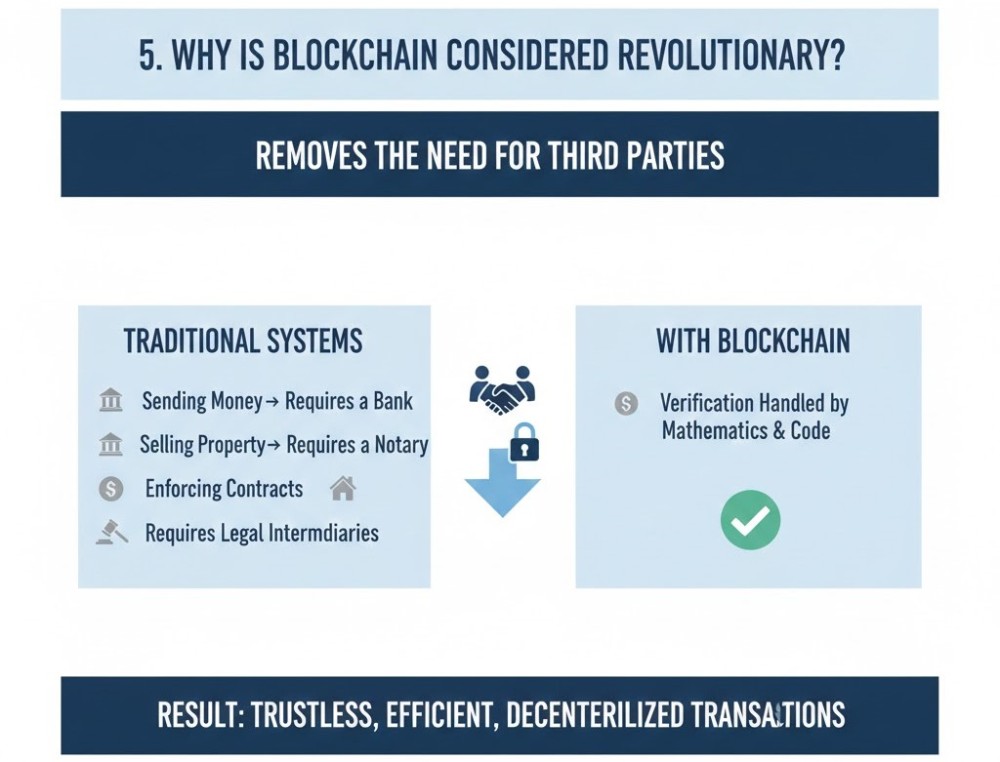
🦖Why Is Blockchain Considered Revolutionary?
Because it removes the need for third parties.
In traditional systems:
- Sending money → requires a bank
- Selling property → requires a notary
- Enforcing contracts → requires legal intermediaries
With blockchain:
- Verification is handled by mathematics and code, not institutions.
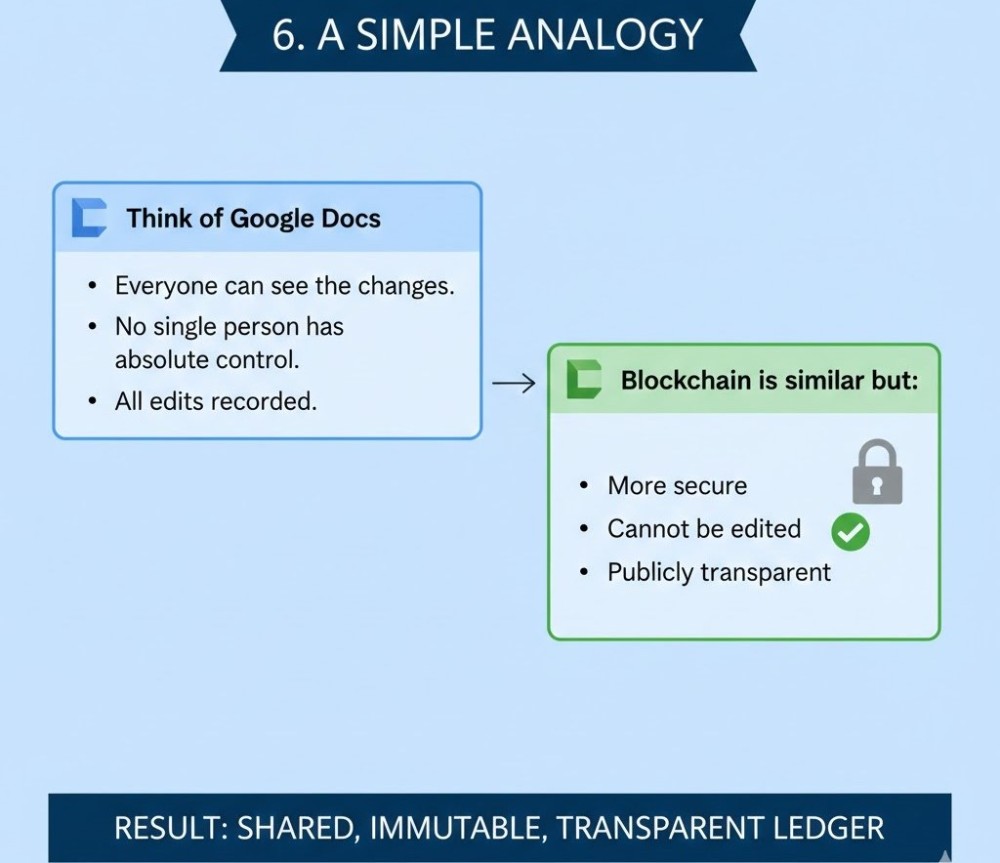
🦕A Simple Analogy
Think of Google Docs:
- Everyone can see the changes.
- No single person has absolute control.
- All edits are recorded.
Blockchain is similar but:
- More secure
- Cannot be edited
- Publicly transparent
🦂Deeper Insights (Often Overlooked)
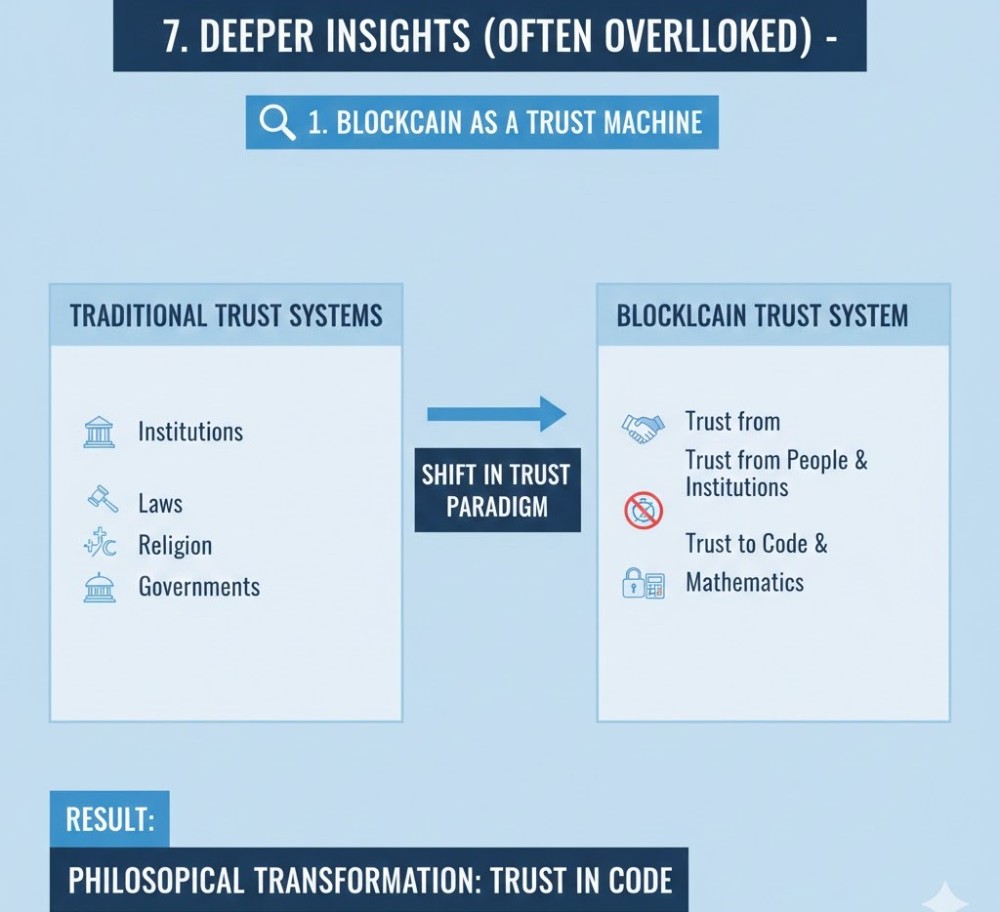
🔎 1. Blockchain as a Trust Machine
For thousands of years, humans built trust through:
- Institutions
- Laws
- Religion
- Governments
Blockchain shifts trust from people and institutions to code and mathematics.
Philosophically, this is a profound transformation.
🌍 Blockchain Is Not Just Cryptocurrency
Cryptocurrency was merely the first major application.
Blockchain is also used for:
- Supply chain tracking
- Digital voting
- NFTs
- Digital identity
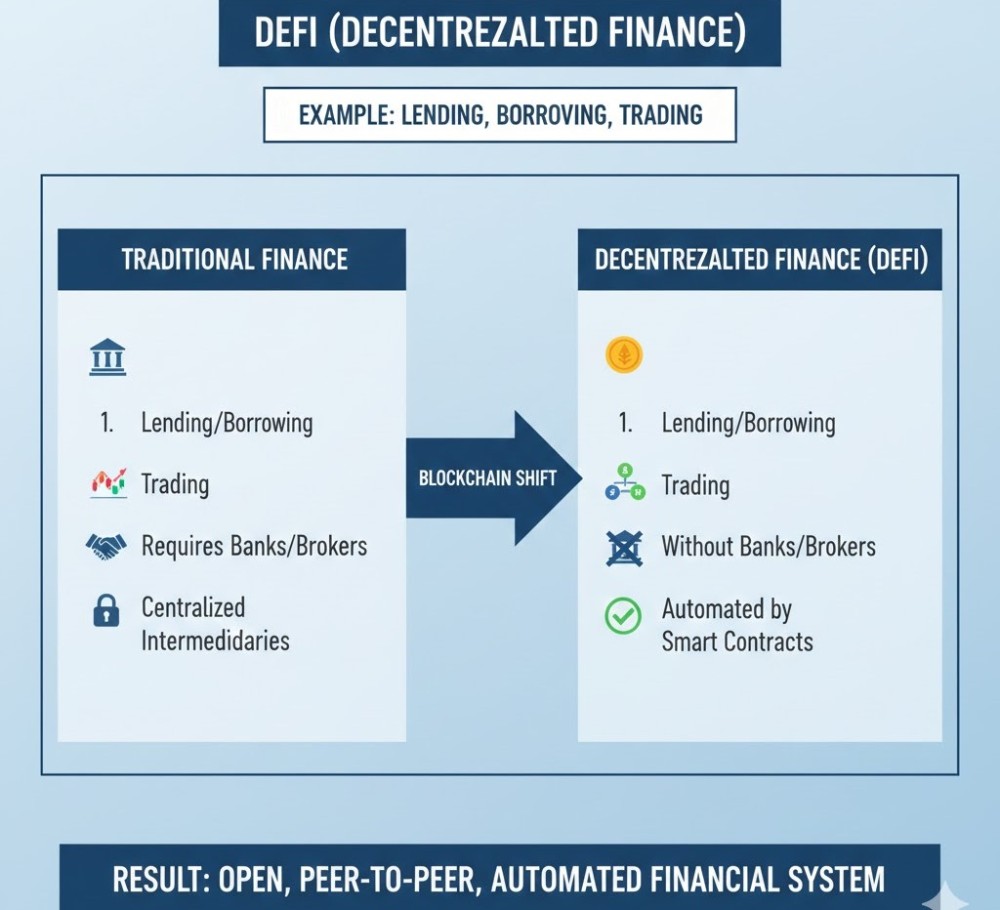
- DeFi (Decentralized Finance)
⚠️Not Everything Needs Blockchain
Many startups use blockchain simply because it is trendy.
If you do not need:
- Transparency
- Decentralization
- A trustless system
Then a traditional database may be faster and more cost effective.
✅ Advantages
- Transparent
- Difficult to manipulate
- Removes intermediaries
- Global access
Types of Blockchain
- Public (example: Bitcoin)
- Private
- Consortium
- Hybrid
🔎 Real World Examples of Blockchain
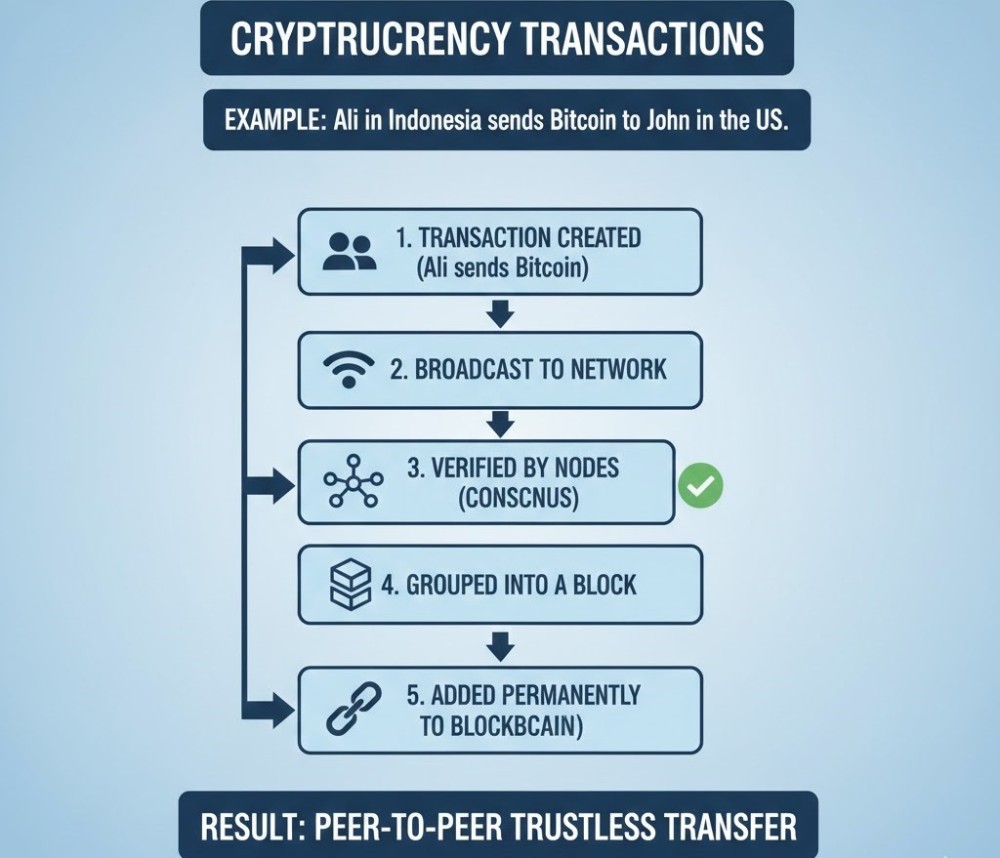
🦀Cryptocurrency Transactions
Bitcoin allows people to send money directly to each other without banks.
Example:
Ali in Indonesia sends Bitcoin to John in the US.
- No bank approves it.
- No central authority processes it.
- The network verifies it through consensus.
- The transaction is permanently recorded on the blockchain.
This is called peer to peer trustless transfer.
🦑Smart Contracts
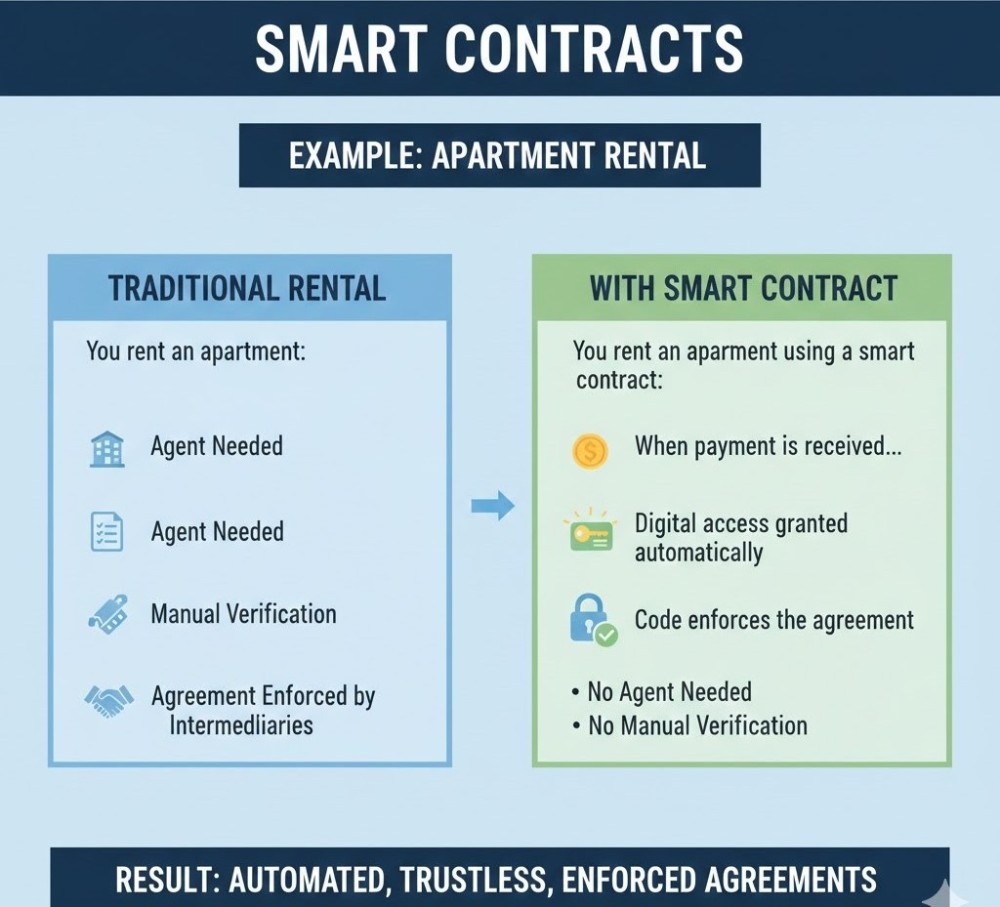
On Ethereum, agreements can execute automatically.
Example:
You rent an apartment using a smart contract:
- When payment is received → digital access is granted automatically.
- No agent needed.
- No manual verification.
The code enforces the agreement.
🐬Supply Chain Tracking
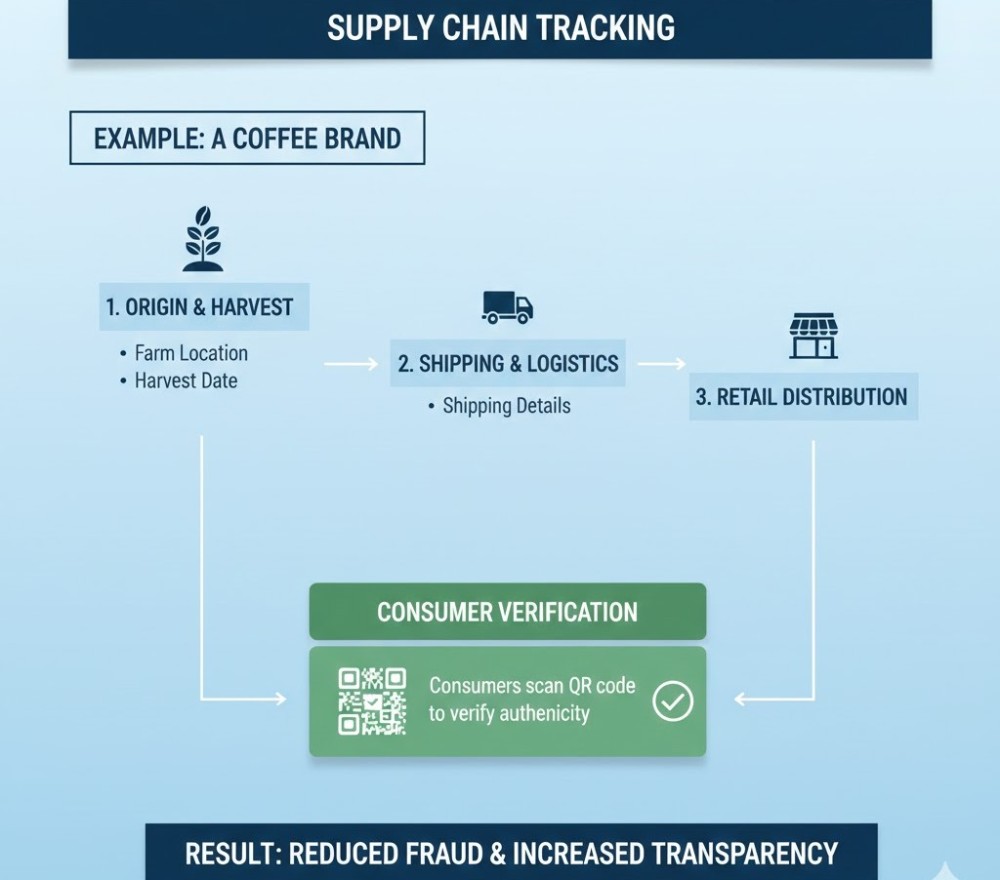
Companies use blockchain to track products from origin to consumer.
A coffee brand records:
- Farm location
- Harvest date
- Shipping details
- Retail distribution
Consumers can scan a QR code to verify authenticity.
This reduces fraud and increases transparency.
🐳Digital Identity
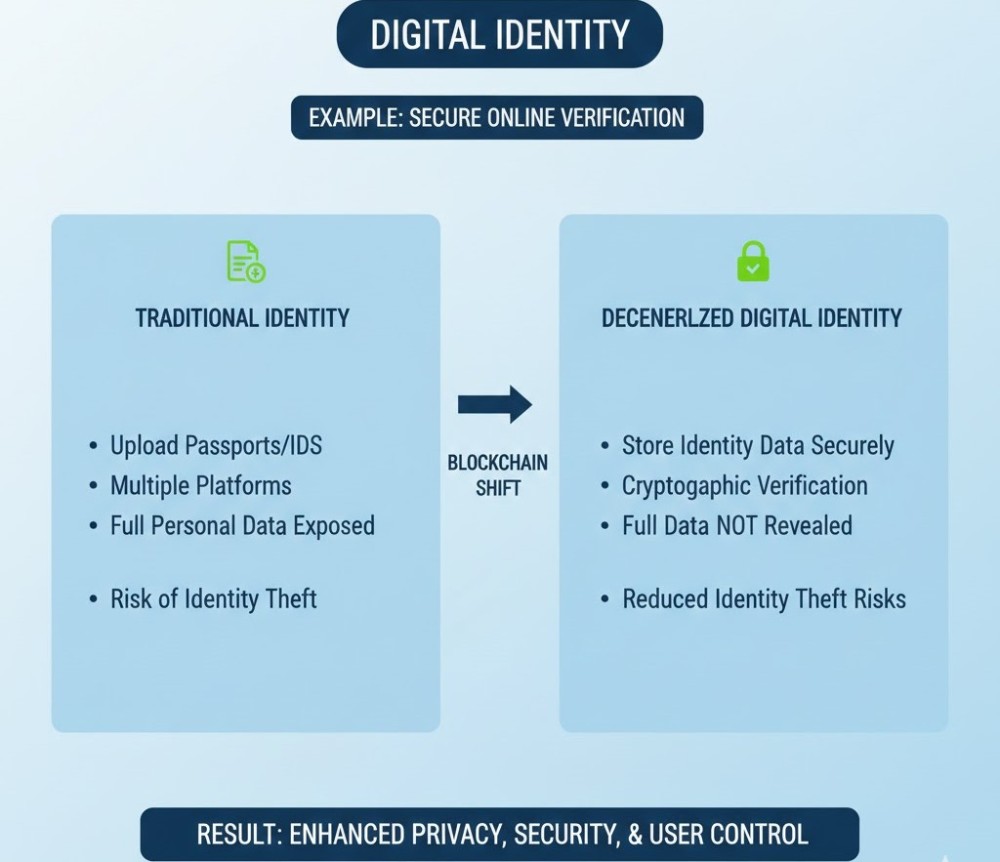
Blockchain can store identity data securely.
Example:
Instead of uploading passports to multiple platforms, your identity can be verified cryptographically without revealing full personal data.
This reduces identity theft risks.
🦈Digital Identity
Blockchain can store identity data securely.
Example:
Instead of uploading passports to multiple platforms, your identity can be verified cryptographically without revealing full personal data.
This reduces identity theft risks.
Blockchain represents a shift from trusting institutions to trusting mathematics and code. That shift could reshape finance, governance, digital ownership, and even how we define trust in the digital age.
If you'd like, I can also explain a business case study or a step by step technical example next.