DuelDuck prediction market Guide

DuelDuck prediction market Guide
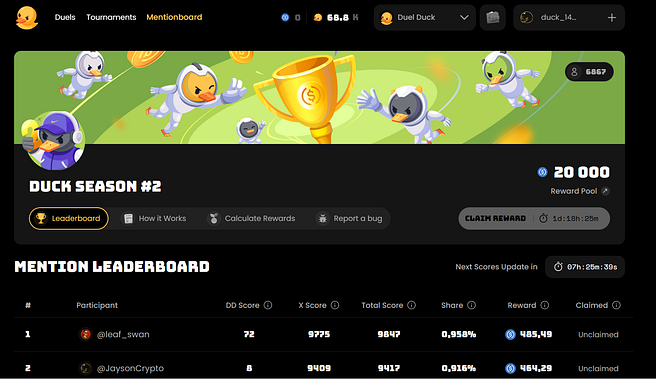
This guide explains how DuelDuck implements a decentralized event prediction market and how crypto native users can interact with it. It covers core mechanisms technology and common use cases and includes a soft call to action to explore the platform further. If you want to test the platform you can create an account on DuelDuck and follow the steps below.
What the project is
DuelDuck is a blockchain based prediction market platform that lets participants stake on binary or categorical outcomes of real world events. Markets are created for sports politics finance and other measurable events. Participants buy positions that represent outcomes and receive payouts if their chosen outcome is resolved as correct. The protocol aims to provide on chain settlement transparent market rules and composable market data for developers.
How it works step by step
Press enter or click to view image in full size
- Market creation Market creators specify the event the possible outcomes the resolution source and the settlement window.
- Liquidity and stakes Users supply liquidity or place direct stakes in outcome positions using supported tokens. Price formation follows an automated market maker or order book depending on the market type.
- Trading and position management Traders buy and sell outcome shares before market expiry. Positions can be held until resolution or traded to adjust exposure.
- Resolution At expiry an oracle or a predefined data source reports the event outcome. The protocol verifies and records the result on chain.
- Payout Winning positions receive payouts automatically based on the market rules. Losing positions forfeit staked funds according to the payout formula.
- Reporting and arbitration If there is a dispute the platform uses a reporting and arbitration procedure driven by token holders or a decentralized jury depending on the market design.
Technology overview
DuelDuck uses smart contracts to handle market lifecycles order matching staking settlement and payout. The architecture typically includes a core contract for market logic a liquidity module and an oracle integration layer. Oracles bridge off chain event data to the chain and can be native or third party services. The design emphasizes modularity so markets can adopt different pricing curves or settlement rules and so external tools can index market state for analytics.
Key features and advantages
- On chain settlement Transactions and payouts are settled on chain which increases transparency and auditability.
- Configurable market types Support for binary categorical and parimutuel style markets enables a range of event structures.
- Oracle flexibility Markets can choose trusted or decentralized oracles depending on the resolution needs.
- Composability Smart contracts expose market state allowing integrators to build dashboards analytic tools and automated agents.
- Permissionless creation Anyone can propose a market subject to protocol rules which expands the diversity of available events.
Use cases
- Speculation Traders can express views on political outcomes sports results and economic indicators.
- Hedging Market participants can use outcomes to hedge exposure to real world risks such as interest rate changes or election results.
- Research and signal generation Markets aggregate distributed expectations and can serve as a data source for forecasting models.
- Community engagement Projects can create markets to engage communities around product launches governance votes or content outcomes.
Why early users benefit
Early users gain access to deeper fee incentives and to markets with wider payout spreads before liquidity saturates. Market makers and liquidity providers often find better returns when participation is lower and opportunities to provide risk capital are greater. For traders early markets can reveal information asymmetries that are less visible once markets mature. Developers who integrate early can index raw market data and build tooling that benefits from first mover access. If you prefer to evaluate the platform hands on you can sign up using this link DuelDuck and test market creation and settlement flows.
Risks and limitations
Prediction markets carry several operational and protocol level risks. Oracle failure or manipulation can produce incorrect resolutions and lead to contested payouts. Low liquidity can create high slippage and make it expensive to enter or exit positions. Smart contract vulnerabilities carry the risk of fund loss though audits reduce that probability. Regulatory regimes vary and some jurisdictions may restrict participation or market types especially those tied to financial instruments. Users should perform due diligence review contract code and consider the legal status of participation in their jurisdiction.
Final CTA
For crypto native users seeking on chain event markets DuelDuck provides a modular platform to create trade and resolve markets with smart contract based settlement. Evaluate market rules review oracles and test with small stakes before increasing exposure. If you want to explore the interface or create a market you can visit DuelDuck and follow the documentation and market templates provided on the platform.