What Is the Difference Between a Karungali Bracelet and Rudraksha Bracelet?
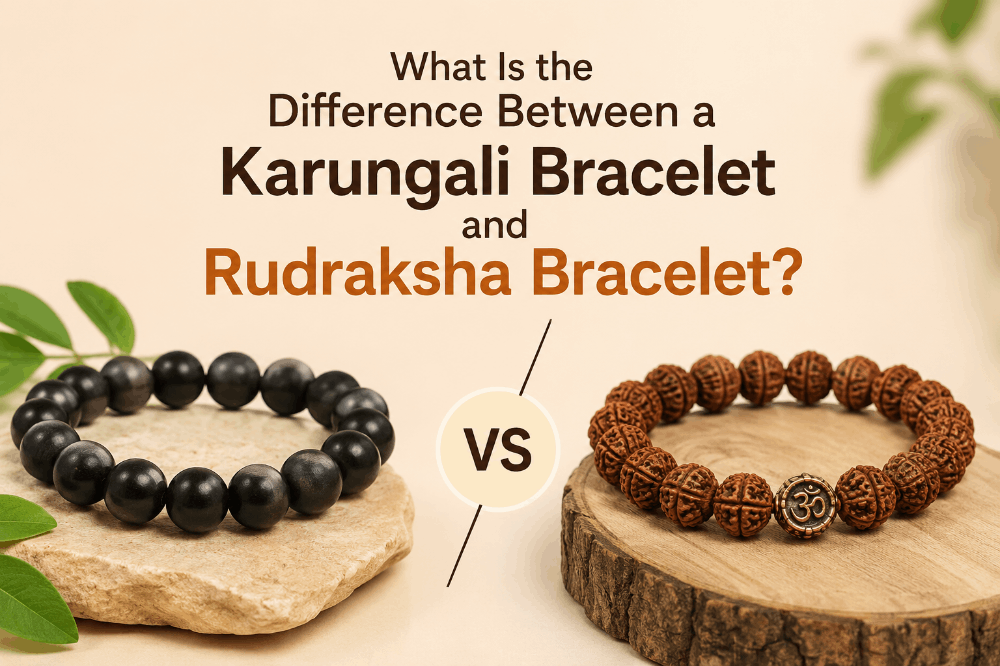
Although both are commonly associated with Indian spiritual traditions, they are not the same. They differ in material, traditional associations, appearance, care, and the way people may choose to wear them. So, if you are wondering which one is right for you, understanding these differences can make the choice much easier.
What Is a Karungali Bracelet?
A Karungali Bracelet is generally made using beads crafted from Karungali wood, commonly associated with ebony. The dark wooden beads give the bracelet a natural and understated appearance.
Karungali has traditional associations with grounding and protection in certain spiritual practices. For some wearers, the bracelet is valued as a symbolic accessory connected with these beliefs.
Its simple wooden appearance also makes it easy to wear with everyday clothing. Whether you are dressing traditionally or keeping things casual, it can blend into your look without being overly flashy.
What Is a Rudraksha Bracelet?
A Rudraksha Bracelet is made using Rudraksha beads, which come from the seeds of trees associated with the Elaeocarpus genus. Rudraksha has a long-standing place in Hindu spiritual traditions and is particularly associated with Lord Shiva.
The beads are naturally textured and usually have distinctive lines or grooves across their surface. These characteristics give a Rudraksha bracelet an appearance that is quite different from smooth wooden Karungali beads.
For many people, wearing Rudraksha is connected with prayer, meditation, devotion, or spiritual practice.
The Main Difference: Material
The most obvious difference between the two bracelets is what they are made from.
A Karungali Bracelet uses Karungali wood beads, while a Rudraksha Bracelet uses Rudraksha seeds or beads.
This difference affects everything from texture and appearance to maintenance. Karungali beads generally have a smooth wooden look, whereas Rudraksha beads have a naturally textured surface.
If you prefer a sleek, minimal appearance, Karungali may appeal to you. If you like distinctive natural textures, Rudraksha offers something quite different.
How Do Their Traditional Associations Differ?
Both bracelets have spiritual significance, but their traditional contexts are different.
Karungali is often associated with grounding, stability, and protection in certain cultural and spiritual beliefs. Rudraksha, meanwhile, has a particularly strong association with Shiva worship, meditation, prayer, and spiritual discipline.
These meanings can vary according to tradition and personal practice, so they should not be treated as universal rules.
Ultimately, your reason for wearing a bracelet may be just as important as the material itself.
What About Their Appearance?
This is where the difference is easy to spot.
Karungali beads are typically dark and smooth, giving the bracelet a clean and earthy appearance. Rudraksha beads have a more rugged texture because of their natural grooves and contours.
A Karungali Bracelet may therefore suit someone who prefers subtle jewellery, while a Rudraksha bracelet can appeal to someone who likes a more visibly traditional spiritual accessory.
Neither is necessarily “better.” It simply comes down to your personal preference.
Are They Worn for the Same Purpose?
Not always.
Someone may wear a Karungali bracelet because they connect with its traditional symbolism or like its natural wooden form. Another person may choose Rudraksha because of its connection with devotional or meditative practices.
Some people may even wear both, depending on their personal beliefs and preferences.
The important thing is not to assume that the two bracelets are interchangeable simply because both are used as spiritual accessories.
How Does Maintenance Differ?
Both types deserve reasonable care, but their natural materials have different characteristics.
A Karungali Bracelet should generally be protected from prolonged exposure to water, excessive moisture, and harsh cleaning products because it contains wooden beads.
Rudraksha beads should also be handled carefully and kept in suitable conditions. Following the care instructions provided by the seller or maker is the safest approach, particularly if the bracelet has additional materials such as metal, thread, or decorative elements.
In both cases, gentle handling can help preserve the bracelet for longer.
Which One Should You Choose?
There is no universal answer.
Choose a Karungali Bracelet if you prefer dark wooden beads, a simple aesthetic, and the traditional associations connected with Karungali. Rudraksha may be more suitable if you feel drawn to its Shiva-related significance, natural texture, or devotional use.
You should also consider comfort, bracelet size, construction, and how frequently you plan to wear it.
And if you simply like the way one looks better? That's a perfectly valid reason too.
Can You Wear Both?
Some people may choose to wear both Karungali and Rudraksha bracelets. There is no need to assume that selecting one automatically means rejecting the other.
However, if you follow a particular spiritual tradition or have received personalised guidance about what you should wear, follow the practices relevant to your tradition.
The meaning of a spiritual accessory often depends on the context in which you use it.
Final Thoughts
The Karungali Bracelet and Rudraksha Bracelet may both be associated with spirituality, but they are distinct in material, appearance, traditional significance, and use.
Karungali bracelets are made from dark wooden beads and are often connected with grounding and protection in traditional beliefs. Rudraksha bracelets use naturally textured Rudraksha beads and have a strong association with Shiva, prayer, meditation, and spiritual practice.
Rather than asking which bracelet is universally better, consider what you personally want from it. Your beliefs, style, comfort, and purpose can all guide your choice. After all, the best spiritual accessory is one that feels meaningful to you—not simply the one with the most impressive description on the product page.