What to Include in a Marriage Biodata: Essential Details and Tips
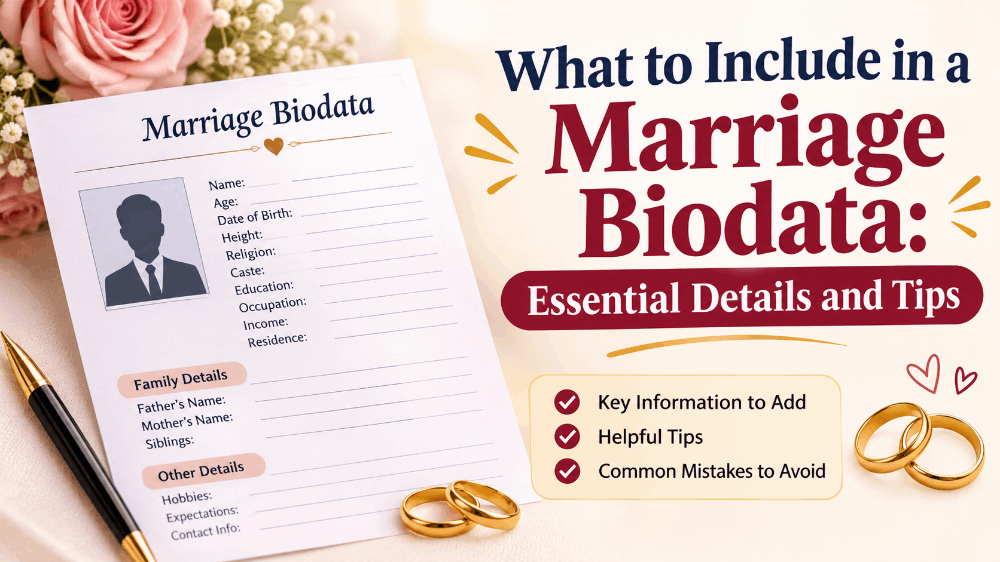
A well-prepared marriage profile answers these questions without sharing too much or leaving out important details. The right marriage biodata format helps you present your background, personality, and preferences in a clear, organized way. Here is what to include and how to make each section useful.
1. Basic Personal Information
Start with the essential details that introduce you to a prospective partner. These usually include your full name, age or date of birth, current city, and languages spoken. You may also mention your height and marital status if these details are relevant to your preferences.
Keep this section brief. The purpose is to provide a basic introduction, not to fill the page with information that can be discussed later.
Check every detail before sharing the document, especially your date of birth and other factual information. Small errors can create unnecessary confusion during matrimonial discussions.
2. Education and Professional Background
Education and career details help someone understand your current lifestyle and future plans. Mention your highest qualification, profession, industry, and employer or business details where appropriate.
If you are pursuing higher studies, preparing for competitive examinations, or building your own business, explain your situation clearly. There is no need to make your career sound more impressive than it is.
You can also briefly mention your professional goals if they are important to your future. For example, you may be planning to continue working after marriage or considering a career transition. Honest information makes it easier to discuss expectations later.
3. Family Background
Family information is commonly included in an Indian marriage biodata because family relationships and responsibilities may be relevant to both partners.
You can mention your parents' occupations, siblings, and the city where your family lives. If you wish, you may also include a short description of your family's general background or values.
Avoid including a long list of relatives or unnecessary personal details about family members. A few clear lines can provide enough context without making the document crowded.
Also read: Kundli Matching in Modern Relationships: Does It Still Influence Marriage Decisions?
4. Personality, Hobbies, and Lifestyle
Your biodata should tell a prospective partner something about the person behind the qualifications and family details.
Mention a few interests you genuinely enjoy, such as reading, travelling, cooking, fitness, music, or creative activities. You can also describe your lifestyle in simple terms. Perhaps you enjoy quiet weekends, meeting friends, spending time with family, or exploring new places.
Specific details are more useful than broad claims. Instead of writing only that you are friendly and caring, explain what you enjoy doing and what matters to you in everyday life.
5. Expectations From a Future Partner
This section helps communicate what you value in a relationship. You might prioritize honesty, mutual respect, emotional maturity, shared responsibilities, or similar long-term goals.
You can also mention practical preferences relating to location, lifestyle, education, or career when these genuinely matter to you.
Keep your wording considerate and realistic. A marriage biodata should open the door to a conversation rather than make the other person feel they are being assessed against a rigid list of demands.
Remember that preferences can guide your search, but getting to know someone personally is essential to understanding compatibility.
6. Photograph and Contact Details
A recent photograph is often included in a marriage biodata, although it is optional. If you choose to add one, select a clear picture that represents you naturally. Good lighting and a simple background are usually enough.
Contact details should be shared thoughtfully. You might include a phone number or email address intended for matrimonial communication, depending on your comfort level.
Avoid publishing the document openly with private information. Your full residential address, government identification numbers, financial details, and other sensitive data generally do not belong in a marriage profile.
7. Should You Include Horoscope Details?
In many Indian families, astrology is part of the marriage discussion. If horoscope matching matters to you, your biodata may include your date of birth, exact birth time, and birthplace.
These details can help an astrologer prepare a birth chart or compare two charts according to the astrological tradition being followed. Accuracy matters, particularly when recording the birth time.
You may also mention whether a horoscope is available separately instead of placing every astrological detail in the main document.
If astrology is not part of your approach to marriage, you can leave this section out. Your profile should reflect your own preferences and family context.
8. Follow a Clear Marriage Biodata Format
Once you have collected the information, organize it into a readable document. A practical marriage biodata format might follow this order:
- Personal details
- Education and career
- Family background
- Personality and interests
- Partner preferences
- Photograph and contact details
- Horoscope information, if relevant
Use clear headings, consistent fonts, and enough spacing between sections. One or two pages are generally sufficient for most profiles. Avoid excessive colors, decorative elements, and long paragraphs that make important information difficult to find.
Final Thoughts
A useful marriage biodata includes enough information to introduce your background, lifestyle, family, and expectations without revealing every detail of your life. The best format is clear, honest, and easy to read.
Whether you include horoscope information or prefer to focus on personal compatibility, let your profile reflect what matters to you. A thoughtfully prepared biodata can help begin the conversation, but mutual understanding, open communication, and shared values are what allow a relationship to develop.