A Twisted Tale: The Crazy Story Of FM Radio

On January 31, 1954, a man in an overcoat stepped out from a 13th-floor window of his Manhattan apartment. He’d addressed an envelope to his wife, Marion, and left it on a table.
At 63 years old, the man who gave the world FM radio died on the street below, alone and bankrupted by the very industry he’d built
The tale of FM radio is as intense as it is brilliant. What would end up becoming mainstream technology in the modern world would start with a contested claim, an intense legal battle and a process that would leave the inventor broken at the end of it all.
There’s really only one question worth asking when we consider this situation contextually:
How did one of the greatest radio inventors of the 20th century end up here?
Who Was Edwin Armstrong?
Edwin Howard Armstrong was born in New York City in 1890 and was fascinated by radio before most people even knew what it was. As a young man, he was known for rigging antennas, building transmitters and spending hours listening to faint Morse code transmissions that would come from far away.
Eventually, his path would take him to Columbia University, a place that would play a key role in his developing story. While he was technically brilliant, he would be somewhat of a square peg in a round hole. Too technical and hands-on to be a pure academic, however, too inventive and innovative to be a pure engineer.
In 1912, aged 21, Armstrong made his first major discovery. Working in his parents’ attic, he found that feeding some of the output signal from a vacuum tube amplifier back into its input would have some startling consequences. Known as regeneration, he could dramatically amplify weak incoming signals.
The regenerative circuit transformed radio from a curiosity capable of receiving only the strongest local transmitters into a technology that could pull signals from across oceans and had the potential to change the world.
It was a foundational insight that would have long-reaching consequences. Initially, it made him famous. It would also make him enemies in high places.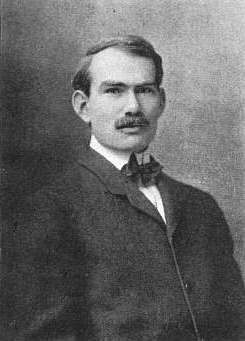
The Beginnings Of A Dispute
The problem wasn’t with the effectiveness of the regenerative process. The problem would start with the fact that someone else would also claim to have invented the process. American Lee de Forest would play a key role in the disputes that were starting to shape up.
Lee de Forest would have an interesting tale himself. While he was a prolific inventor who was known to hold hundreds of patents, this translated into mixed financial success as he would claim he “earned and lost” multiple fortunes. He was also well known to the legal system, having participated in multiple high-profile court cases over the course of his career.
De Forest would style himself as the “father of radio” and claimed that he invented the concept of regeneration first. His own notes showed a cursory understanding of the concept at best and reflected the fact that this claim was unfounded. What he did have, however, was a pre-existing reputation and willingness to fight for the concept. With that in mind, the stage would be set for a long and public legal battle that would test these claims at length.
It would take seventeen years, four Supreme Court visits, and would end in a decision that most experts would agree was a miscarriage of justice, as De Forest would win the case. However, he did not win on substance. It was a mere legal technicality that would see him stripped of his rightful patent recognition.
The decision would deeply affect Armstrong, leaving him with little trust in the legal system and bitter due to being denied the rightful recognition of his invention.
For many people, this would be a peak in life. For Armstrong, he was just getting started. 
The Superhet
Being stripped of recognition after a nearly two-decade fight would be enough to make most people call it quits; however, in 1918, Armstrong would be back on the bench carrying out further research.
His tenacity would pay off as he would invent yet another fundamental concept relevant to modern radio, the Superheterodyne receiver. The principle is as elegant as it is simple: rather than trying to amplify a received signal directly at its transmission frequency, which is technically difficult and unstable, the superheterodyne converts it to a fixed intermediate frequency first, then amplifies it there.
This gives the receiver consistent, controllable gain regardless of what frequency it’s tuned to, a feature we take for granted in most radio systems today. When you tune across a band in SDR software, the digital mixing and filtering happening in the chip is Armstrong’s idea, translated into real silicon.
By the mid-1920s, he was wealthy, celebrated, and engaged to Marion MacInnis, the secretary of his great patron, RCA founder David Sarnoff. At the wedding, Sarnoff gave Armstrong a gift: a complete home radio receiver, personally assembled. The two men were close.
That would not last.
The Fight
To understand what Armstrong did next, we need to understand what radio sounded like in 1930. In this era, Amplitude Modulation (AM) was king however, it would come with some distinct characteristics that would cause some problems.
AM encodes audio by varying the strength of the carrier wave. A loud sound makes the wave taller, while a quiet sound makes it smaller. The receiver detects these variations and converts them back to audio. The system works, but anything that disturbs the amplitude of the signal (lightning, electrical interference, other transmitters), gets reproduced as noise.
Static was not a flaw of early radio. Static was AM, and it was simply accepted at that point that was how things were. While many engineers had looked to tackle this issue in the past, there was little appetite to move beyond the status quo.
Armstrong refused to accept this consensus. His insights would lay the foundations for the commercial radio and broadcast FM stations that still exist in the modern day.
His insight was this. Noise predominantly attacks the amplitude of a signal. If you encode your audio in the frequency of the carrier instead, amplitude-based noise largely stops mattering.
The receiver doesn’t care about the height of the wave. It only cares about where the frequency is at each moment.
If you think that this sounds familiar. You’re right. This is essentially the Frequency Modulation mode of the modern day, which gives us high-fidelity radio transmissions at long distances. 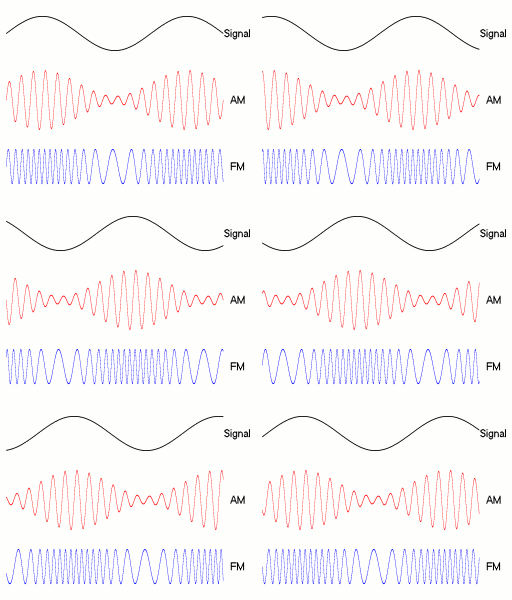
After building a prototype transmitter, Armstrong demonstrated FM radio publicly for the first time on June 16, 1936, before the Institute of Radio Engineers.
He played a variety of audio sources, including a piano, a glass of water being poured and crumpled paper, to an audience that had never heard radio without static. The silence between sounds was absolute.
One engineer in the audience reportedly said: “I heard the paper crinkle and I didn’t hear anything else.”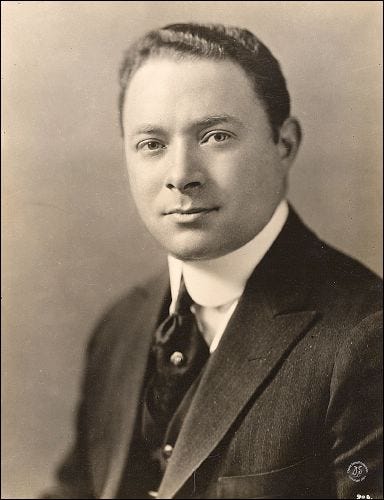
The Man Who Tried To Kill FM
While this was clearly a revolutionary concept, the problem for Armstrong is that the industry, and more importantly, Sarnoff himself, was hugely invested in the success of AM as the standard transmission medium.
He understood immediately what FM meant. Tens of millions of dollars worth of investment into the future of AM was on the line, and FM threatened not only the current market but the future market as well.
Armstrong had demonstrated his system to Sarnoff privately, from a transmitter atop the Empire State Building, before the public debut. Sarnoff’s reported response has become one of the most quoted lines in broadcasting history, reportedly saying, “I thought Armstrong was going to improve radio. He’s invented a new one.”
It is usually quoted as a compliment. It was not meant as one.
What followed was a campaign, conducted through regulatory channels, corporate legal strategy, and the straightforward exercise of institutional power, to ensure that FM never became the threat it could have been.
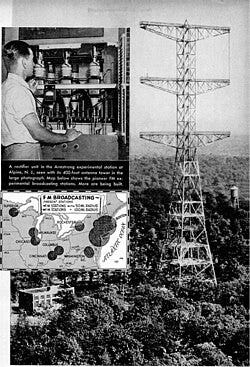
The campaign would focus on reallocating the spectrum to the new FM modes upwards. What would start in the 50MHz band would end in the 88–108 MHz band that is still in use today.
For commercial operators and Armstrong himself, this would have long-reaching effects. Not only would this lead to yet more extensive legal battles, but every transmitter sold prior to the reallocation would be useless. Large amounts of capital would be spent acquiring new transmitters to work with the new spectrum requirements.
While it wouldn’t kill FM outright, it would help to delay and prolong the rollout.
A Legal War
You might have realised that Armstrong was somewhat of a stubborn fellow, and with that stubbornness came the desire to be proved right. Due to this, along with the fact that patent litigation moves slowly, Armstrong would spend nearly two decades in legal battles with RCA and other companies over the future of FM.
Struggling to fund the barrage of often self-initiated cases, Armstrong would leap from case to case, using each legal settlement to subsequently fund the next challenge. While it did some with some success, it did come at an extensive physical cost as his health slowly started to deteriorate.
His marriage would also face issues as well. Marion, his long-loyal wife, could visibly see the toll that the legal battles had taken on him. She would encourage him to settle and walk away.
With his work on the line, however, Armstrong was incapable of stepping back. For him, the principal was more important than the outcome.
As 1953 arrived, he had spent the majority of his fortune. He had also transferred to Marion, without telling her, a substantial portion of their savings. Armstrong was clearly struggling with decades of stress brought on by his intensive legal battles. 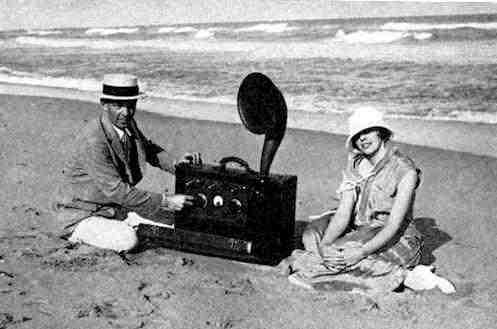
A Broken Man & A Focused Woman
Armstrong would soldier on for a while longer, but in January of 1954, he would step out of his window, falling to his death on the street below. The medical examiner would rule it as suicide, however, Armstrong left no note of intent. Only the unsent letter to Marion would give insight into his emotional state, which expressed guilt and exhaustion rather than resolution.
The radio industry he had built mourned publicly and briefly. Sarnoff reportedly sent a telegram of condolence to Marion. She did not reply.
Marion was not a lawyer. She was not an engineer and had little experience with legal matters. Despite this, in the aftermath of her husband’s death, she would pursue his legal battles to their completion. She would hire new counsel and refuse to settle until she reached terms that she believed her husband would have been satisfied with.
Her tenacity would pay off in a short time. By the end of 1954, less than a year after Armstrong’s death, company after company would settle her suits. RCA alone would settle for more than a million dollars, and while this was far less than what the patents were worth, it was a clear vindication of the claims' substance and worth.
Opinion
The story of FM is an interesting tale, not just for the material but also for what it represents. Armstrong’s story is sometimes told as a simple morality tale about corporate greed and the lone inventor. It is that, but it’s also something more specific. Namely, a story about what happens when an incumbent industry encounters a technology that makes its infrastructure obsolete.
This pattern has changed little over the years. It is a problem that exists today, only the names and companies look a little different. The status quo abhors innovation and, with that, evolution and change.
On a modern receiver, Armstrong’s fingerprints are everywhere, and while he wouldn’t live to see his ideas be vindicated and receive mainstream adoption, his legacy lives on in every car radio and modern receiver in use today.
Investigator515 explores the RF spectrum, cybersecurity, and the hidden tech behind modern espionage.
Follow for new content weekly
Bluesky • X • Substack
You might also like,
- OSINT Investigators Guide to Self Care & Resilience
- Spies In The Mud: The RF-111 Aardvark
- What The Tech?! Space Shuttles