Trade Asset Tokenization: Modernizing Traditional Trade Markets

Global trade depends on a complex network of exporters, importers, banks, logistics providers, insurers, and financial institutions. While this infrastructure supports trillions of dollars in transactions, many trade processes still rely on paper documentation, fragmented databases, manual verification, and multiple intermediaries.
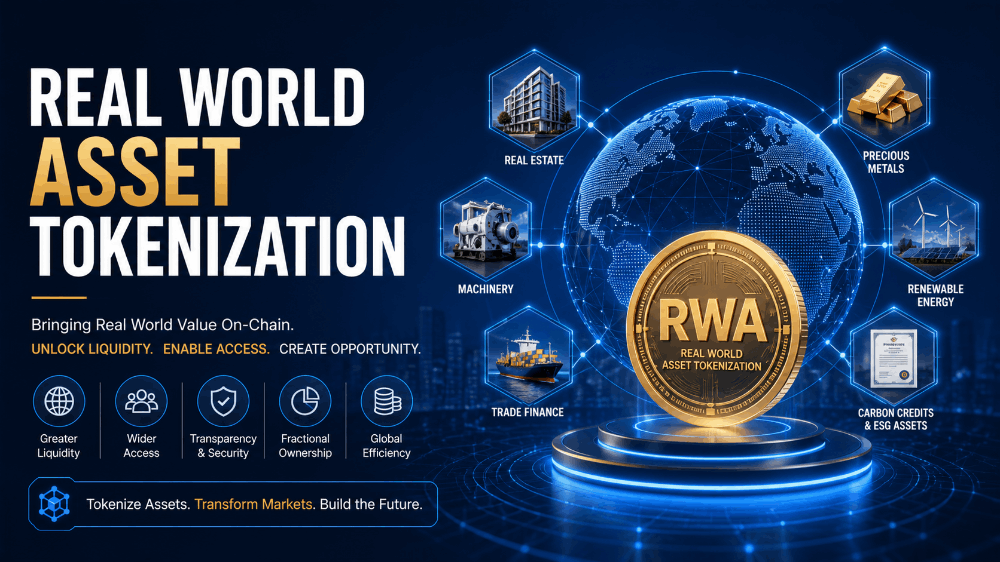
Trade asset tokenization is emerging as a way to modernize this infrastructure. By converting trade-related assets and financial claims into blockchain-based digital tokens, businesses can potentially improve transparency, access liquidity, automate settlement, and create more efficient financing models. From invoices and trade receivables to commodities and warehouse receipts, tokenization can connect traditionally fragmented trade assets with modern digital financial infrastructure.
What Is Trade Asset Tokenization?
Trade asset tokenization is the process of representing real-world trade assets or financial claims as digital tokens on a blockchain or distributed ledger.
A token may represent an economic interest in an underlying asset or claim, depending on the legal structure. Examples include:
- Trade invoices
- Accounts receivable
- Purchase orders
- Warehouse receipts
- Bills of lading
- Letters of credit
- Commodity-backed trade assets
- Supply chain financing instruments
The blockchain provides a digital record of ownership, transfers, and transactions, while smart contracts can automate predefined financial and operational processes. The important distinction is that tokenization does not automatically change the underlying legal rights. Those rights must be established through appropriate contracts and regulatory structures.
How Trade Asset Tokenization Works
The tokenization process typically involves several stages.
1. Identifying the Trade Asset
The process begins by selecting an eligible trade asset or financial claim. For example, an exporter may have an outstanding invoice from a verified corporate buyer.
2. Verification and Due Diligence
The underlying asset must be verified. This can include checking ownership, transaction documentation, buyer information, payment terms, and potential duplication or fraud.
3. Legal Structuring
The economic rights associated with the asset are established through contracts, an SPV, trust, or another appropriate legal structure, depending on the jurisdiction and transaction.
4. Token Creation
A digital token is issued to represent the defined economic interest in the trade asset. The token can contain rules governing ownership, transfers, and settlement.
5. Investor or Lender Participation
Eligible investors or financing providers can acquire the token or provide financing against the underlying trade asset.
6. Settlement and Redemption
When the underlying trade obligation is fulfilled, the corresponding payment can trigger settlement or redemption of the token according to the agreed structure. This creates a bridge between traditional trade activity and blockchain-based financial infrastructure.
Key Trade Assets That Can Be Tokenized
Trade Receivables
Trade receivables represent money owed to businesses for goods or services already delivered. Tokenizing these receivables can allow companies to seek financing before invoices reach maturity. This can improve working capital and reduce the pressure caused by lengthy payment cycles.
Invoices
Invoices are among the most straightforward trade assets to digitize. A verified invoice can potentially be represented by a token that provides access to financing or future payment rights.
Warehouse Receipts
Warehouse receipts document ownership or claims over stored commodities. Tokenization can create digital representations of these claims, improving traceability and potentially enabling more efficient commodity financing.
Purchase Orders
Purchase orders represent commitments to purchase goods or services. When properly verified, tokenized purchase orders could support alternative financing models for suppliers preparing to fulfill an order.
Bills of Lading
Bills of lading are important documents in shipping and logistics. Digitizing and tokenizing relevant trade documentation can reduce paperwork and improve information sharing between participants.
How Trade Asset Tokenization Is Modernizing Trade Markets
1. Improving Access to Working Capital
Small and medium-sized businesses frequently face cash-flow challenges because buyers may take weeks or months to pay. Tokenized trade receivables can provide an alternative route to financing. Instead of waiting until maturity, businesses may be able to use verified receivables to attract investors or financing providers. This can release working capital earlier and help businesses maintain smoother operations.
2. Creating Greater Transparency
Traditional trade transactions often involve information distributed across multiple systems.
Blockchain-based tokenization creates a shared digital record of relevant transactions. Depending on the architecture, authorized participants can verify ownership, transaction history, and settlement information. This can reduce information gaps between businesses, lenders, investors, and other stakeholders.
3. Reducing Administrative Friction
Trade transactions require substantial documentation and reconciliation. Tokenized assets can automate parts of these workflows through smart contracts and digital verification systems. This can reduce repetitive administrative tasks and accelerate transaction processing. The result is a more streamlined trade finance environment.
4. Enabling Fractional Participation
Tokenization can divide an economic interest into smaller digital units. For example, instead of one institution financing an entire trade receivable portfolio, a legally compliant structure could allow multiple qualified participants to gain exposure to portions of the financing. This potentially expands the pool of capital available for trade.
5. Connecting Trade Assets With Global Capital
One of the most important opportunities is connecting real-world trade activity with broader pools of capital. Tokenized trade assets can potentially be offered through digital investment and financing platforms, subject to applicable securities, lending, and financial regulations.
This could create new channels through which institutional and qualified investors participate in trade finance.
6. Improving Settlement Efficiency
Traditional cross-border trade can involve multiple financial institutions and settlement systems. Blockchain infrastructure can support digital settlement and programmable transactions. Smart contracts may automatically execute predefined actions when specified conditions are satisfied. This can reduce reconciliation requirements and improve transaction efficiency.
7. Strengthening Fraud Detection
Trade finance is vulnerable to problems such as duplicate invoices, forged documentation, and multiple financing claims against the same asset. Tokenization can help establish a unique digital representation and transaction history for an asset. When combined with identity verification and off-chain validation, this can make fraudulent duplication more difficult to execute. However, blockchain cannot independently verify whether the original trade information is truthful. Reliable external data and verification remain essential.
Benefits for Different Trade Market Participants
Exporters
Exporters can potentially access working capital sooner by financing tokenized receivables or other trade assets.
Importers
Importers may benefit from more efficient settlement processes and improved transaction transparency.
Banks
Financial institutions can use tokenized infrastructure to automate selected trade finance workflows and improve operational efficiency.
Investors
Eligible investors can gain access to structured exposure to trade-related assets that were previously difficult to access.
Logistics Providers
Digital trade documentation can improve information exchange between logistics providers and financial participants.
SMEs
Smaller businesses may benefit significantly from alternative financing channels and improved access to liquidity.
Trade Asset Tokenization and Supply Chain Finance
Supply chain finance is one of the strongest potential applications for trade asset tokenization.
A typical supply chain involves manufacturers, suppliers, distributors, retailers, and financial institutions. Payment obligations move through this network, but information and financing often remain fragmented.
Tokenization can connect these elements through a shared digital infrastructure.
For example, once an approved buyer confirms an invoice, the receivable could be represented digitally and made available for financing. A financing provider could then provide capital against the receivable, while settlement rules are embedded into the transaction infrastructure.
This can create a more connected supply chain finance ecosystem.
Trade Asset Tokenization and DeFi
The emergence of real-world asset infrastructure is also creating connections between trade finance and decentralized finance.
Tokenized trade assets could potentially serve as collateral or investment instruments within regulated digital financial ecosystems. This creates an opportunity to bring real-world cash flows into blockchain-based markets.
However, trade assets should not automatically be treated as permissionless DeFi assets. Regulatory restrictions, investor eligibility, identity verification, custody, and legal enforceability must be considered before integrating tokenized trade instruments with decentralized platforms.
The future is likely to involve regulated and permissioned blockchain environments rather than unrestricted token markets for many institutional trade assets.
Major Challenges of Trade Asset Tokenization
Regulatory Complexity
Trade assets can fall under different legal and regulatory frameworks depending on their structure and jurisdiction. A token representing a financial claim may be treated differently from a token representing ownership of a physical commodity. Regulatory classification therefore needs to be established before issuance.
Legal Enforceability
A blockchain token does not automatically create legal ownership of an underlying trade asset. The relationship between the token and the underlying legal claim must be clearly established through enforceable agreements.
Data Quality
Blockchain records can be immutable while still containing inaccurate information.
If incorrect invoice, shipment, or ownership information enters the system, blockchain technology does not automatically correct it.
Legacy System Integration
Banks and large enterprises already use established ERP, accounting, logistics, and financial systems. Connecting these systems to blockchain networks can require significant technical work.
Liquidity Limitations
Tokenization can make an asset technically transferable, but this does not guarantee an active market. Liquidity depends on investor demand, market infrastructure, regulatory permissions, and sufficient transaction volume.
Cybersecurity Risks
Smart contracts, wallets, custody systems, and blockchain infrastructure introduce additional technology risks. Strong security architecture, audits, access controls, and custody processes are therefore essential.
The Future of Trade Asset Tokenization
Trade asset tokenization is likely to develop alongside broader digital transformation in financial markets.
Future platforms may combine blockchain with artificial intelligence, Internet of Things devices, digital identity systems, and automated compliance tools.
For example, IoT systems could provide information about shipments, AI could assist with risk assessment, and smart contracts could automate selected settlement conditions.
Interoperability will also become increasingly important. Trade assets may need to move between different blockchain networks, financial institutions, and traditional settlement systems.
As these technologies mature, tokenized trade assets could become an important component of digital trade finance infrastructure.
Conclusion
Trade asset tokenization is modernizing traditional trade markets by creating digital representations of invoices, receivables, commodities, warehouse receipts, and other trade-related assets. Its potential benefits include improved liquidity, faster settlement, greater transparency, fractional participation, and broader access to financing. For SMEs in particular, tokenization could provide new ways to unlock working capital and connect with financing providers. However, successful adoption requires more than putting trade assets on a blockchain. Legal enforceability, regulatory compliance, data verification, interoperability, cybersecurity, and genuine market liquidity are equally important.