How to Choose the Best Blockchain Payment Gateway: Merchant Checklist
Merchant checklist for choosing a crypto payment gateway
Quick answer. To choose the best blockchain payment gateway, check ten things: total cost, supported coins and networks, fiat settlement, settlement speed, integration options, security, compliance, checkout experience, refunds and support. The cheapest headline fee isn't always the cheapest gateway, so compare full costs for your real volume and run a test payment before you commit.
Picking a payment gateway feels like a small decision until something goes wrong. A payment gets stuck. A payout takes a week. A customer pays on the wrong network and nobody can tell you where the money went. By then you've already built the integration, and switching costs time.
I put this checklist together so you can avoid that. Whether you're adding your first blockchain payment gateway or replacing one that let you down, these are the questions worth asking before you sign up.
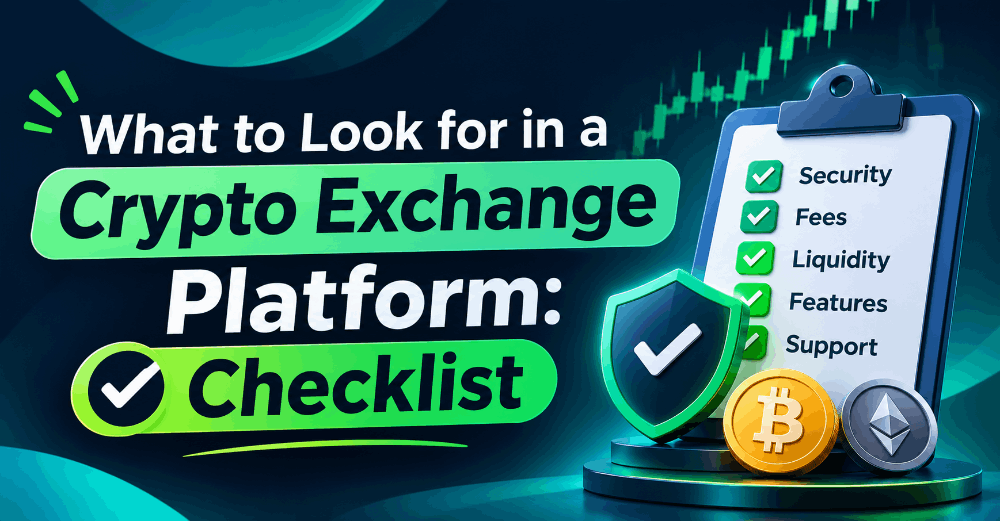
The checklist at a glance
Check What to look at Question to ask1. Total cost Platform, conversion, payout and network fees What will I pay on $10,000 a month, all in?2. Coins and networks BTC, ETH, USDT, USDC and low-fee chains Which coins and chains can my customers use?3. Fiat settlement Payout currencies and timing Can I get paid to my bank, in my currency?4. Settlement speed Confirmation and payout times How fast does money reach me?5. Integration Plugins, API, webhooks, sandbox Is there a plugin for my store?6. Security Custody, 2FA, API keys, AML Who holds the keys, and how are funds stored?7. Compliance Licences, KYC, supported countries Can you onboard my business and country?8. Checkout experience Mobile, QR codes, under payments What happens if a customer underpays?9. Refunds Refund tools and who pays fees How do I refund a crypto payment?10. Support Response times and channels Who do I contact when a payment gets stuck?
Below, I go through each item and explain what good looks like.
1. Total cost, not just the headline fee
Every gateway advertises a percentage, and many call themselves the best blockchain payment gateway. That number is one of four costs you'll pay. The others are the conversion spread when crypto turns into fiat, payout fees when money moves to your bank or wallet, and blockchain network fees.
Published platform fees in 2026 range from 0% to about 2% plus a fixed fee per order. A provider charging 0.5% with a poor exchange rate can cost more than one charging 1% with a fair one. Ask each gateway for an example of what you'd actually receive on a $1,000 payment that's converted to your currency.
Also watch for fixed per-order fees and minimum fees. They barely matter on a $500 order but can eat 5% or more of a $10 sale.
2. Coins and networks your customers use
The best blockchain payment gateway for you is the one that supports what your customers already hold. For most stores that means Bitcoin, Ethereum and the two big stablecoins, USDT and USDC.
Networks matter as much as coins. USDT exists on several blockchains, and the fee to send it varies a lot between them. A gateway that supports low-cost networks lets customers pay a few cents instead of a few dollars, which means fewer abandoned checkouts.
3. Fiat settlement
Unless you want to hold crypto, you'll need the gateway to convert payments and send money to your bank. Check which currencies it pays out in, how often, and whether there's a minimum withdrawal. Weekly payouts and daily payouts feel very different when you're paying suppliers.
4. Settlement speed
Speed has two parts. First, how fast the payment is confirmed so you can ship the order. Second, how fast the money reaches your account. Some gateways quote very fast settlement but only for certain coins or networks. Read the fine print and ask what "instant" means for the coins you'll actually accept.
5. Integration
If you run Shopify, WooCommerce or Magento, a ready-made plugin can get you live in an afternoon. If you have a custom site, look for a clear REST API, webhooks for payment updates, and a sandbox where you can test without real money.
Read the developer docs before you sign up. Thin or outdated docs are a warning.
6. Security
Find out who holds the private keys. With a custodial gateway, the provider holds funds for you. With a non-custodial or self-hosted one, funds go straight to your wallet. Neither is automatically better, but you should know which you're getting.
For custodial providers, ask about cold storage, two-factor authentication, scoped API keys and AML screening on incoming payments. These protect both you and your customers.
7. Compliance and where you operate
Some gateways only serve certain countries. Others refuse certain industries, like iGaming or trading. Before you build anything, confirm the provider can onboard your business. If you're in the EU, a provider licensed under MiCA can make conversations with banks and regulators easier.
Also check the KYC process. Some providers approve you in a day. Others take weeks and ask for detailed documents.
8. Checkout experience
Customers judge your store by its checkout. Look for a mobile-friendly payment page, QR codes for wallet apps, a clear countdown on the exchange rate, and simple instructions for choosing a network.
Ask how the gateway handles underpayments. Customers sometimes send slightly less than the invoice because of wallet fees. A good gateway lets you set a small tolerance so those orders still go through.
9. Refunds
Blockchain payments can't be reversed by a bank, which removes chargeback fraud. You'll still need to refund customers sometimes. Check whether the gateway has a refund tool, whether refunds go out in crypto or fiat, and who pays the network fee.
10. Support
When a payment gets stuck, you want a human who answers. Check support channels, response times and whether you get a dedicated contact at your volume. Send a pre-sales question and see how long the reply takes. It's a cheap test.
Putting the checklist to work
Here's how I'd use this list to find the best blockchain payment gateway for your store. Pick three gateways that pass checks 2, 5 and 7, since those are deal-breakers. Then compare them on total cost for your expected monthly volume. Shortlist two, run a small real payment through each, and see what lands in your account and how long it takes.
If you want a starting point, FaradPay charges a 0% platform fee with no setup cost or monthly minimum. It supports Bitcoin, Ethereum, USDT, USDC and what it describes as 350+ assets across 24 networks, pays out in 38 fiat currencies, and has plugins for Shopify, WooCommerce and Magento. As with any provider, ask about conversion rates and payout fees before signing up.
The best blockchain payment gateway on paper won't always be the best in practice. A test payment tells you more than any comparison table.
Common mistakes to avoid
The biggest mistake when looking for the best blockchain payment gateway is choosing on the headline fee alone. The second is skipping the test payment. The third is ignoring networks, then finding out customers can only pay through an expensive one.
Also, don't forget to recheck your gateway's pricing once a year. Providers change fees and products more often than you'd think.
Frequently asked questions
What is a blockchain payment gateway?
It's a service that lets a business accept cryptocurrency payments. It creates an invoice, watches the blockchain for the payment, confirms it, and then either keeps the funds in crypto or converts them to fiat for the merchant.
How do I choose the best blockchain payment gateway for my business?
Compare total cost, supported coins and networks, fiat settlement, speed, integration, security, compliance, checkout experience, refunds and support. Then run a test payment with your top two choices.
What fees should I expect?
Platform fees usually range from 0% to about 2%, sometimes with a fixed fee per order. On top of that, expect network fees, and possibly conversion and payout fees.
Is a custodial or non-custodial gateway better?
Custodial gateways are easier and often include fiat settlement. Non-custodial gateways give you direct control of funds but need more setup. Choose based on your technical skills and how you want to handle money.
Which coins should my store accept?
Start with Bitcoin, Ethereum, USDT and USDC. Stablecoins are popular because their value stays close to the dollar, which keeps pricing simple.
Can the best blockchain payment gateway protect me from chargebacks?
Yes, in the card sense. Confirmed blockchain payments can't be reversed by a bank. You still control refunds, so you can keep customers happy without fraud risk.
How long does it take to start accepting crypto?
With a plugin, often a single afternoon after your account is approved. Custom API work depends on your developer. Approval itself can take from a day to a few weeks.
Final thoughts
There's no single best blockchain payment gateway for every merchant. The right one fits your customers, your volume, your country and your technical skills. Work through the ten checks, get real numbers in writing, and test before you switch. Spend an afternoon on this now and you'll save yourself from changing providers later.