🧭 Will Decentralized Social Media Ever Beat the Algorithm?

For more than a decade, social media has shaped our ideas, our habits, our politics, and even our identities.
But behind every post, every reaction, and every trending topic, one hidden force rules everything:
The algorithm.
It decides what you see.
It decides what goes viral.
It decides who gets silenced.
It decides who becomes influential.
Algorithmic feeds were designed for engagement, not empowerment. They keep people scrolling, not thinking. They reward outrage, not nuance. They prioritize profit, not truth.
So a new movement emerged:
Decentralized social media.
Platforms like Lens, Farcaster, Bluesky, Nostr, and others promise a world without corporate gatekeepers — a world where users own their identity, their data, their audience, and maybe even their social graph.
But the question remains:
Can decentralized social media ever defeat the almighty algorithm? Or is decentralization simply replacing one form of control with another?
Let’s dive in.
1. The Algorithm: Friend, Enemy, or Both?
At its core, an algorithm is simply a ranking system.
It decides what content each user is most likely to interact with.
In theory, algorithms are useful:
- They organize millions of posts
- They help users find relevant content
- They prevent chaos in massive feeds
But in practice, centralized algorithms become weapons of influence:
- They can be tuned to increase ad revenue
- They can amplify certain content for political or corporate interests
- They can hide content without transparency
- They can manipulate emotions to keep users hooked
The problem is not the algorithm itself.
It’s who controls it — and why.
2. What Decentralized Social Media Promises
Decentralized platforms aim to flip the model upside down. Instead of the platform owning everything, users own the network.
Key promises include:
• Data Ownership
You own your profile, your connections, your content — all stored on-chain or in a portable social graph.
• Censorship Resistance
No single entity can erase your account or silence your opinions.
• Open Algorithms
In theory, users can choose which feed-ranking algorithm they prefer, or even build their own.
• Monetization Without Middlemen
Creators can earn via tokens, tips, or on-chain royalties without platform cuts.
• Identity Portability
You don’t lose your followers if you move to another app on the same protocol.
It's an attractive vision — a social internet built on freedom, choice, and transparency.
But promises are easy. Implementing them is harder.
3. The Hidden Challenge: Decentralization Doesn’t Remove Algorithms
Here’s the uncomfortable truth:
Even decentralized networks need algorithms.
Without ranking systems, decentralized feeds would be:
- overwhelming
- chaotic
- spam-filled
- impossible to navigate
The difference is not whether algorithms exist, but whether users can:
- choose them
- audit them
- build them
- understand how they work
The real battle is not “algorithm vs no algorithm.”
It is transparent algorithms vs opaque algorithms.
4. Can Decentralized Algorithms Stay Neutral?
In decentralized systems, algorithms are supposed to be open-source and transparent.
But neutrality is hard to achieve.
Even open algorithms must decide:
- what counts as spam
- what counts as quality
- what should be prioritized
- which signals matter
- how fast content spreads
And once people can choose between multiple algorithms, new issues appear:
• Algorithm Bubbles
Users may choose ranking systems that reinforce their worldview.
• Market-Driven Algorithms
Popular algorithms may be optimized for token rewards, not quality.
• Manipulation by Wealthy Actors
Decentralized systems can still be gamed by influencers, bots, or token whales.
• Incomplete Transparency
Even if code is open, most users will never read it — making “transparency” symbolic rather than impactful.
Decentralization reduces platform power, but it does not eliminate influence.
5. The Social Graph Problem
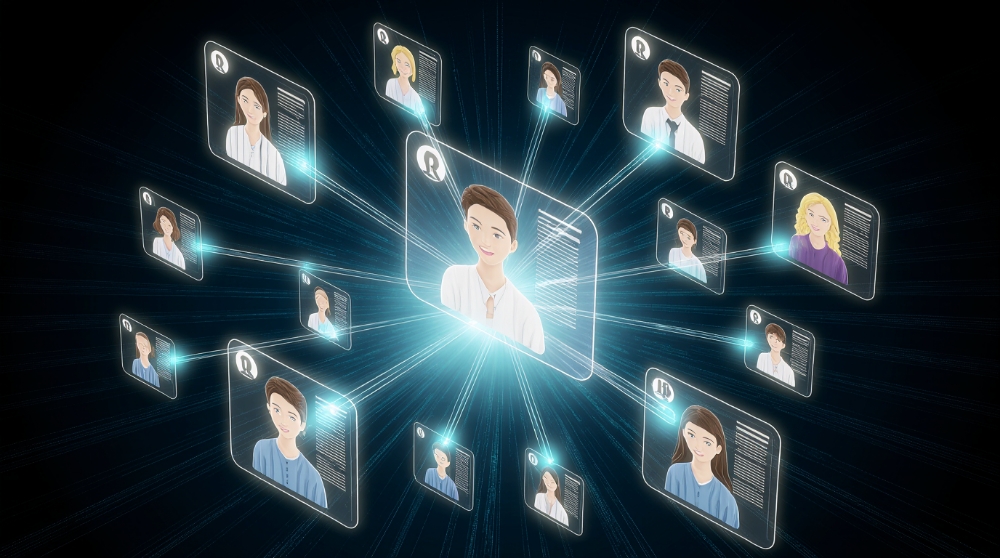
One of the most powerful tools in centralized networks is the social graph — the map of who follows whom.
In decentralized networks:
- Users may control their graph
- The graph may be portable
- Multiple apps may build on the same graph
This is good for freedom — but bad for control of harmful content.
If no single entity controls the graph, moderation becomes extremely complex.
Instead of one algorithm protecting the feed, thousands of small apps must create their own protections.
Fragmentation is both a strength and a challenge.
6. Will Users Really Choose Their Algorithm?
In theory, users can select personalized feed algorithms.
In practice, most people:
- don’t want to configure settings
- don’t know how algorithms work
- rely on default options
This means the developers building the apps on top of decentralized networks will have enormous influence.
Decentralization of the protocol does not guarantee decentralization of the experience.
Someone still builds the interface.
Someone still decides the default feed.
Someone still sets the rules most users will never change.
So the question becomes:
Is this enough to truly “beat” the algorithm?
Or does it simply redistribute power from corporations to developers and early adopters?
7. Where Decentralized Social Media Already Wins
Despite the challenges, decentralized social networks shine in important areas:
• User Ownership
You keep your profile forever.
• Cross-App Identity
Your followers travel with you.
• Creator Monetization
On-chain tips, subscriptions, and social tokens.
• Community Governance
Users help shape the rules, not executives.
• Resistance to Deplatforming
No one can delete your existence.
These are massive wins in a world where centralized platforms treat users as products, not participants.
8. Where Decentralized Social Media Still Struggles
But the limitations are real:
- Lower user adoption
- Technical learning curve
- Less polished apps
- Difficulty moderating harmful content
- Fragmented experiences
- Competing protocols
- Limited incentives for mainstream users to switch
The biggest challenge is psychological:
People say they want freedom, but they often prefer convenience.
Until decentralized apps rival the ease of TikTok, Instagram, and X, mass migration won’t occur.
9. So… Can Decentralized Social Media Beat the Algorithm?
The honest answer:
Not by eliminating the algorithm — but by redefining it.
Decentralized social replaces:
- secret algorithms → open algorithms
- forced feeds → customizable feeds
- corporate control → community governance
- data extraction → user ownership
It doesn’t destroy the algorithm.
It democratizes it.
Victory comes not from beating the algorithm, but from reclaiming agency over it.
The future of social media will not be algorithm-free.
But it can be algorithm-fair, algorithm-open, and algorithm-optional.
That is the win.
Final Thought
The goal isn’t to kill the algorithm — it’s to free it.
Because social media will never be healthy until users control the feed that shapes their minds.