Bridging in Web3
What Is Bridging in Web3?
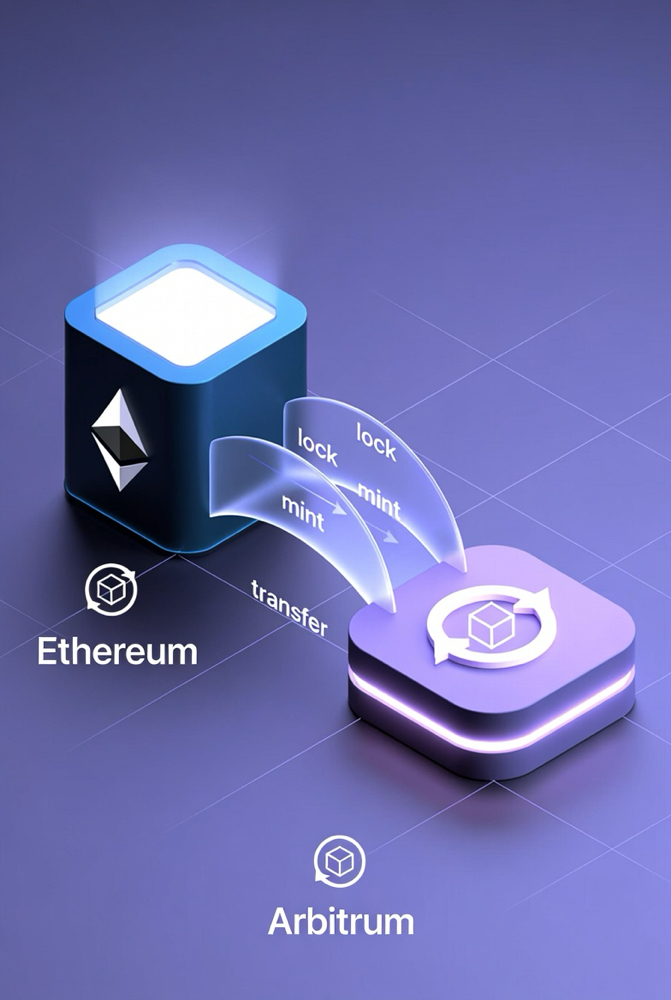
Bridging is the process of transferring crypto assets from one blockchain to another.
Example:
•Moving ETH from Ethereum to Arbitrum
•Moving tokens from BNB Chain to Polygon
Stay with me as I walk you through step-by-step process on how to bridge assets between chains,
Using common examples like moving Ethereum to Arbitrum
Step 1:
Choose a Reputable Bridge
The two different type of bridges are:
•Official Bridges Built by the chain team
•Third-party Bridges, built by independent protocols
Example:
•Arbitrum Foundation provides the official Ethereum -> Arbitrum bridge.
Step 2:
Connect Your Wallet
Use a non-custodial wallet like:
•MetaMask
•Rabby Wallet
Make sure:
•You are on the correct website (double-check URL)
•You have enough gas fees in the source chain
Step 3:
Select Source and Destination Chains
Choose:
•Source chain (e.g., Ethereum)
•Destination chain (e.g., Arbitrum)
Select the asset (ETH, USDC, etc.)
Enter the amount.
Step 4:
Review Fees and Time
Bridging involves:
•Gas fees (paid on source chain)
•Bridge fee (if applicable)
•Waiting time
Important:
•Ethereum -> Arbitrum may take minutes
•Arbitrum -> Ethereum withdrawals can take up to 7 days (security delay)
Step 5:
Approve and Confirm Transaction
You will:
1.Approve token spending
2.Confirm the bridge transaction
Wait for:
•Source chain confirmation
•Relayer/validator processing
•Asset appearing on destination chain
MINOR RISKS OF BRIDGING
This is where most people take risks
1. Smart Contract Exploits
Bridges are frequent hack targets. Billions have been lost to bridge vulnerabilities.
2. Wrapped Asset Risk
If you bridge BTC to Ethereum, you’re not holding native BTC anymore, you’re holding a representation.
And If your bridge fails your assets may lose value.
3. Liquidity Risk
Some bridges rely on liquidity pools. If liquidity dries up, withdrawals may fail or become expensive.
4. Wrong Network Mistakes
Sending tokens to the wrong chain or unsupported address can permanently lock funds.
WHEN YOU SHOULD BRIDGE.
You bridge when:
•You want lower fees on a Layer 2
•You’re farming yield on another chain
•You need access to apps not available on your current chain
But remember:
The moment your asset leaves its native chain, it takes new risks.
FINAL RULE BEHIND BRIDGING
Bridging is not just a transaction.
It’s a trust decision.
You are trusting:
•Smart contracts
•Validators or relayers
•Liquidity providers
•The bridge’s security model
In Web3, convenience always comes with trade-offs.
Move carefully, test small and verify more than once.
I hope you stay illuminated and not liquidated.