🌐 What Is DeFi (Decentralized Finance)?

🌐 What Is DeFi (Decentralized Finance)?
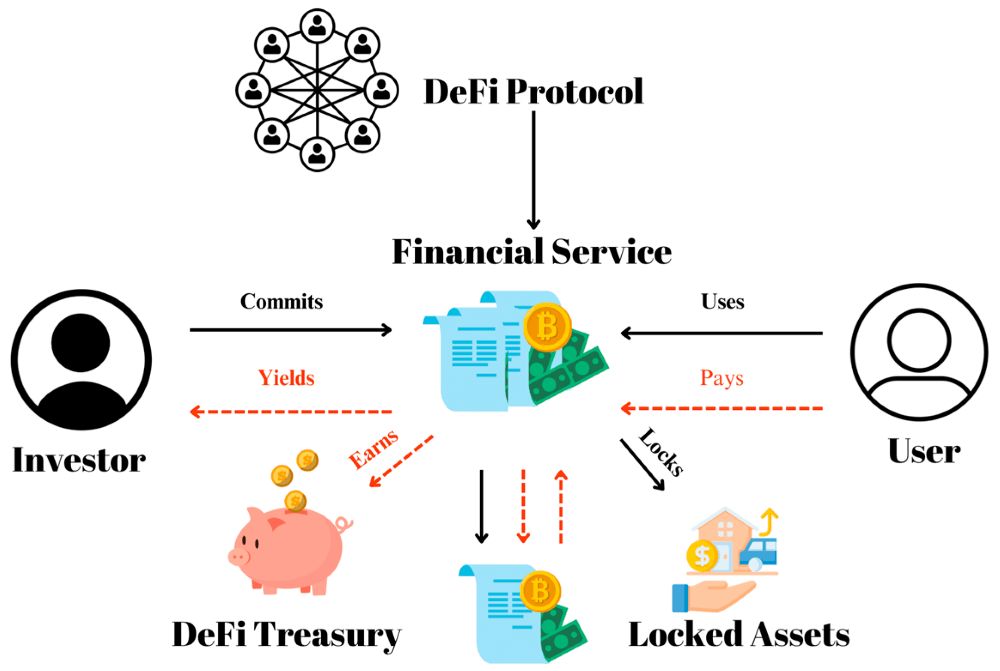
DeFi (Decentralized Finance) is a digital financial system built on blockchain technology that does not rely on centralized institutions such as banks, brokers, or financial companies.
If traditional finance depends on institutions to:
- Hold your money
- Issue loans
- Process transactions
- Regulate the system
DeFi replaces those roles with smart contracts (self executing code) running on blockchains such as Ethereum.
Think of DeFi as an automated financial engine that runs 24/7 and is accessible to anyone with an internet connection and a crypto wallet.
🧠 The Core Foundations of DeFi
To truly understand DeFi, you need to understand its four main pillars:
1. Blockchain
A blockchain is a digital ledger that is:
- Decentralized (not controlled by a single entity)
- Transparent
- Tamper resistant
Every transaction is permanently recorded and publicly verifiable.
2. Smart Contracts
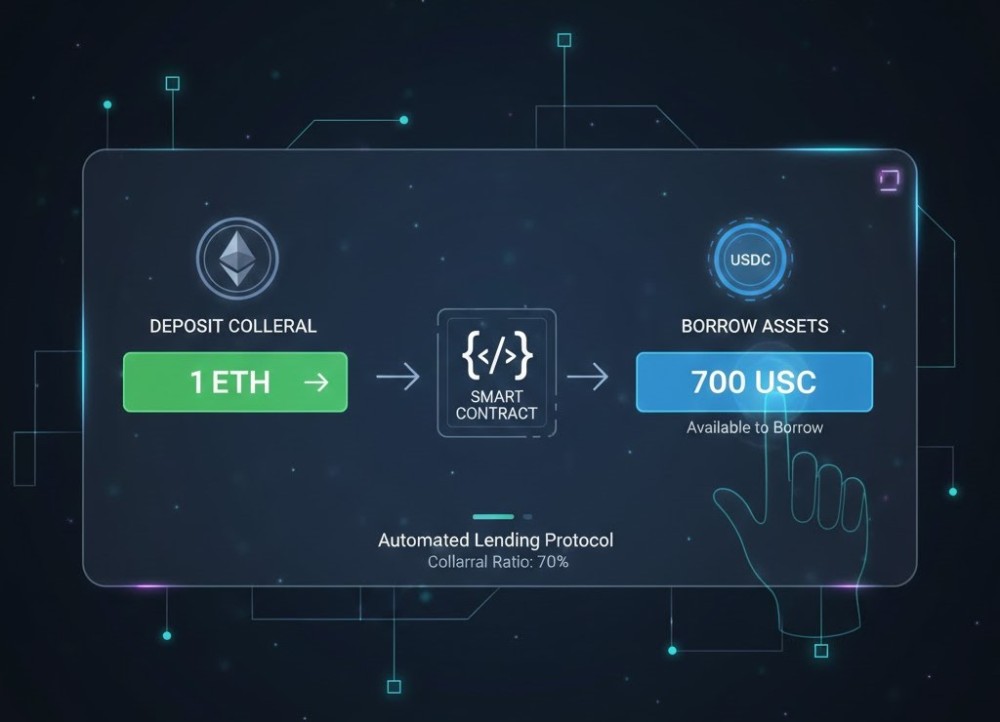
Smart contracts are automated programs that execute predefined rules.
A simple example:
No bank officer. No manual approval.
Everything runs automatically according to code.
3. Crypto Wallet
To access DeFi, you need a crypto wallet such as:
- MetaMask
- Trust Wallet
A wallet does not “store money” like a bank. Instead, it stores your private keys, which give you control over your assets.
In DeFi, the core principle is:
“Not your keys, not your coins.”
4. Stablecoins
Because cryptocurrencies are volatile, DeFi heavily uses stablecoins such as:
- DAI
- USDC
- USDT
These are designed to maintain a stable value, typically pegged to the US dollar.
🔁 Practical Examples & How DeFi Works
Now let’s look at how DeFi is actually used in real scenarios.
💱 1. Decentralized Exchanges (DEX)
One of the most well known examples is Uniswap.
📌 What Is a DEX?
A DEX allows users to swap cryptocurrencies without a centralized intermediary.
🔍 How It Works
Unlike traditional exchanges that use order books, Uniswap uses liquidity pools.
The mechanism:
- Users deposit pairs of tokens (e.g., ETH & USDC) into a pool.
- The pool becomes the source of liquidity.
- When someone swaps ETH for USDC, the system pulls funds from the pool.
- Liquidity providers earn transaction fees.
So instead of trading directly with another person, you trade against a pool of funds.
🏦 2. Lending & Borrowing
Example: Aave
📌 What Is It?
A platform where users can lend or borrow crypto without banks.
🔍 How It Works
If you want to borrow:
- You deposit collateral (e.g., ETH).
- The system allows you to borrow stablecoins.
- If your collateral value drops too much, the system automatically liquidates it.
If you want to earn interest:
- You deposit stablecoins into a lending pool.
- The system lends them to borrowers.
- You earn interest from borrowers.
Everything is governed by smart contracts.
🌾 3. Yield Farming
Yield farming is a strategy of moving funds between different protocols to maximize returns.
For example:
- Deposit USDC into Aave
- Earn reward tokens
- Swap rewards back into stablecoins
- Repeat
This can generate high returns but also comes with higher risks.
📊 4. Staking
Staking involves locking up crypto to help secure a blockchain network.
On Ethereum, for example:
- You stake ETH
- Help validate transactions
- Earn rewards
🔎 Case Study (Simple Simulation)
Suppose you have:
- $1,000 USDC
You could:
- Deposit in a bank → earn around 2–5% annually
- Deposit in DeFi lending → possibly earn 4–10% (variable)
- Provide liquidity → potentially 10–30% (with higher risk)
⚠️ Major Risks You Must Understand
DeFi can be attractive, but the risks are real:
1. Smart Contract Risk
A small bug in code can result in loss of funds.
2. Impermanent Loss
Loss caused by price changes when providing liquidity.
3. Liquidation Risk
If your collateral value drops sharply, it can be automatically sold.
4. Rug Pulls
Developers abandon a project and take investors’ funds.
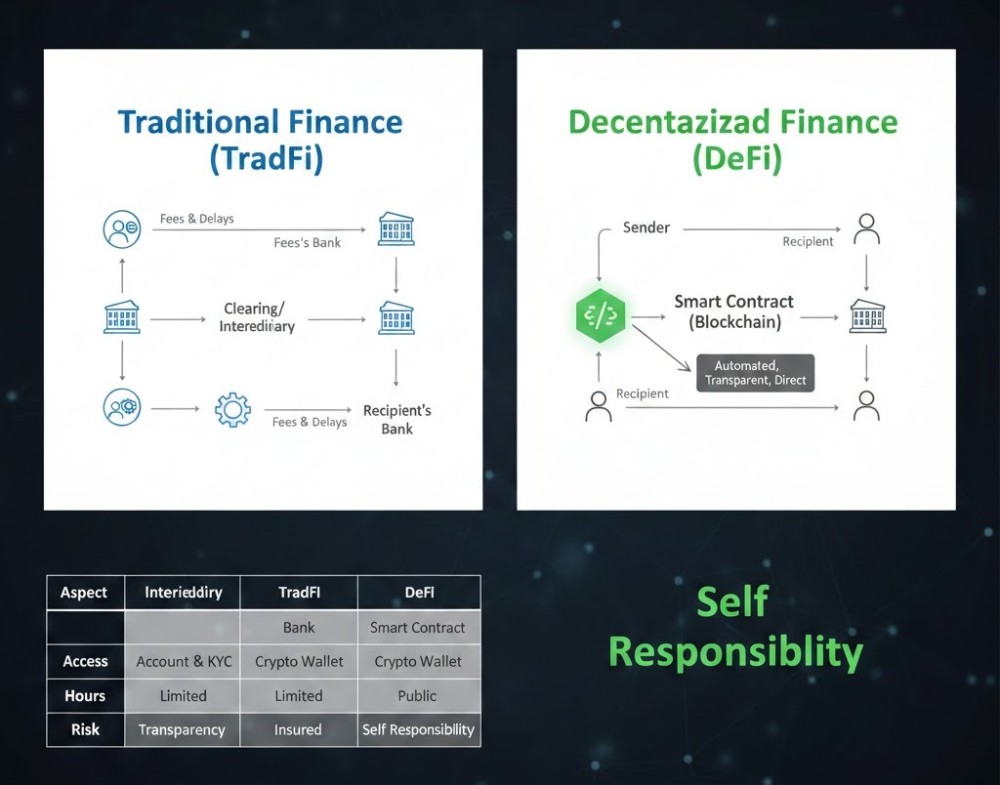
🧭 DeFi vs Traditional Finance
🔮 What Is the Real Meaning of DeFi?
DeFi is not just “crypto with high interest”.
It is a global experiment aiming to:
- Remove dependency on centralized institutions
- Provide financial access to the unbanked
- Increase transparency through open systems
However:
- Regulation is still evolving
- Security is not perfect
- Education is still lacking
DeFi is not yet a full replacement for banks.
It is an alternative financial infrastructure that is still developing.
💡 Conclusion
DeFi is:
- A financial system without intermediaries
- Built on blockchain
- Powered by smart contracts
- Open to anyone
But remember:
Full financial freedom also means full responsibility.