The Plush Hype: Beanie Babies
Plush Pyramid: The Anatomy of the Beanie Baby Mass Hysteria
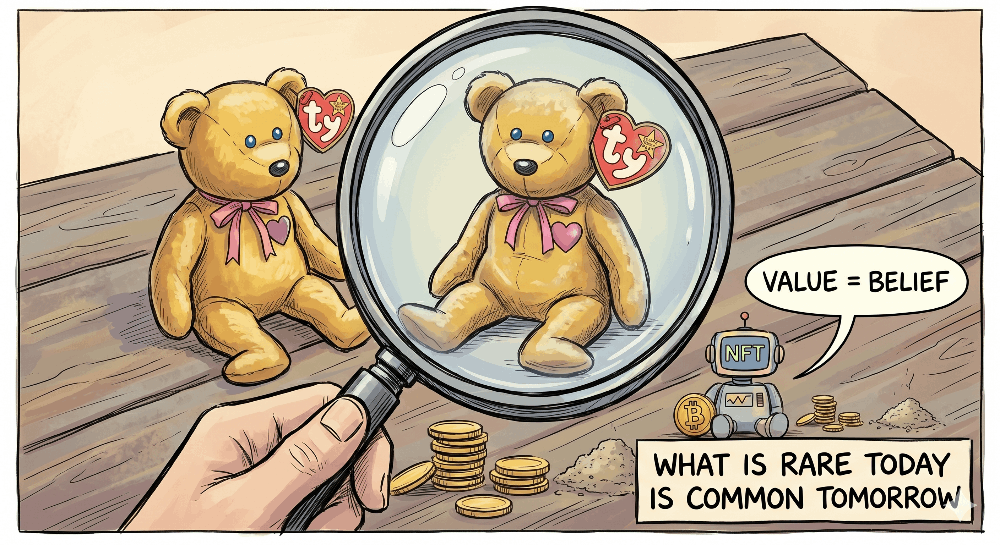
In the 1990s, the world didn’t just go crazy for toys—it started believing in a new form of currency. The story of Beanie Babies is a textbook example of a speculative bubble that predated the era of cryptocurrencies and NFTs, demonstrating how easily the human psyche can be manipulated using a needle, thread, and plastic pellets.
Visionary or Calculating Manipulator?
The architect of this empire, Ty Warner, became one of the wealthiest people in the world without spending a single dollar on traditional advertising. His company generated profits exceeding those of industry giants like Hasbro and Mattel combined. Warner was obsessively detail-oriented—he was known to personally adjust toy displays, using hair dryers to ensure the plush fur had the perfect fluffiness.
His brilliant, albeit ruthless, move was to brand himself as the sole genius behind the success. The names of the actual designers were scrubbed from the tags so that all the glory would reflect back on the owner. A legendary example is the story of a young girl who designed the ghost named Spook; her name vanished from the product as soon as the toy achieved cult status.
eBay and the Birth of a Digital Gold Rush
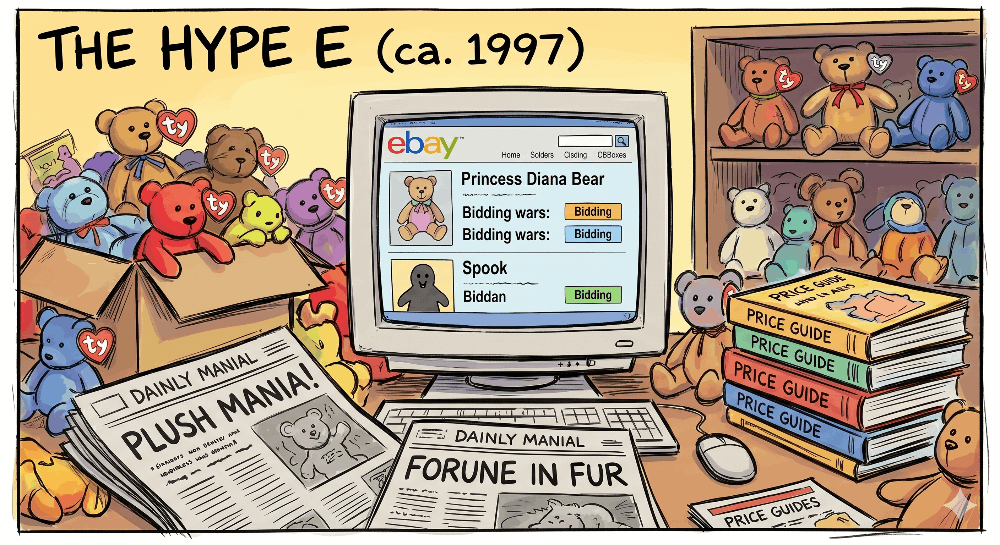
This was the birthplace of the amateur investment market. People followed unofficial "price guides" with bated breath. The most absurd part? These publications weren't based on hard data, but on guesswork and rumors that collectors accepted as gospel, treating plush toys like blue-chip stocks.
"Artificial Scarcity": A Bubble Manual
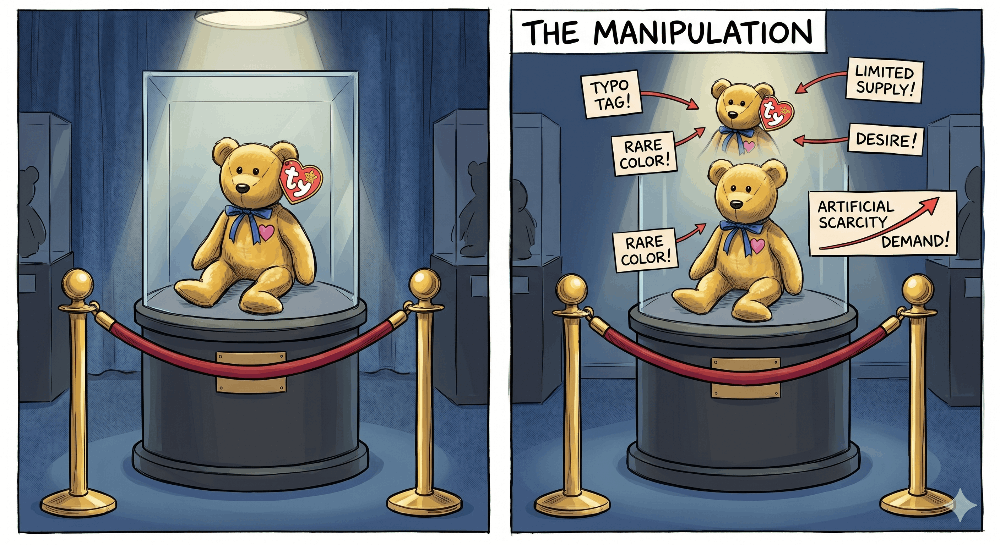
- Penalties for Stores: Retailers were only allowed to order a limited number of units per model each month.
- Product Blackmail: Stores were forced to buy other, less popular toy lines if they wanted access to the coveted Beanie Babies.
- Production Errors as Assets: Rare tag mistakes—such as typos or date errors—made a toy "unique," driving prices into the thousands of dollars despite production costs being only a few dozen cents.
The Dark Side of the Plush: Crimes and Tragedies
- Violence and Murder: There were recorded cases of murder over debts incurred to buy toys, as well as violent hijackings of delivery trucks.
- Destroyed Savings: Many parents invested their children's college funds into plushies, believing their value would grow indefinitely. When the bubble burst, they were left with bags of toys worth a fraction of their purchase price.
- Collective Hysteria: During accidents involving trucks transporting the goods, people were known to stop their cars on highways and run onto the road, risking their lives to scavenge plushies from the wreckage.
The Finale: The Crash and Legal Troubles
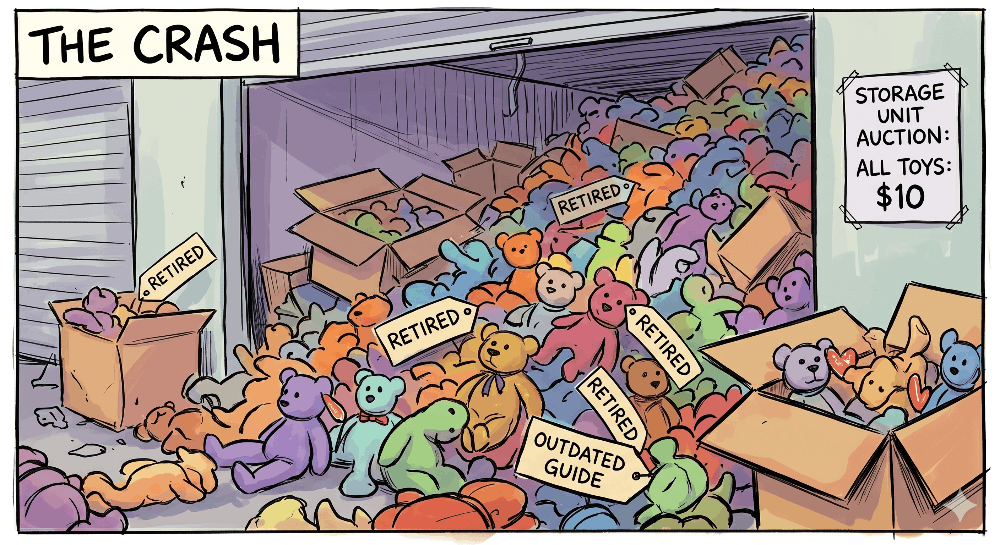
Years later, Ty Warner himself stood trial for tax evasion, having hidden over $100 million in secret Swiss bank accounts. Although he avoided prison due to his charitable works, he was forced to pay a record-breaking financial penalty.
Today, Beanie Babies serve as a cautionary tale. They remind us that an object's value is only as great as the next person's belief that they can sell it for more. It is a lesson in how easily something "cute" can bring out the absolute worst in people.
How Much Are Beanie Babies Actually Worth Today?
While most Ty toys from the '90s can be bought for a few dollars on local auction sites today, the market for "rare specimens" can still be shocking. The contemporary value of Beanie Babies is no longer based on mere affection for the plushie, but on a rigorous assessment of production errors and condition.
Record-Breaking Transactions and "Holy Grails"
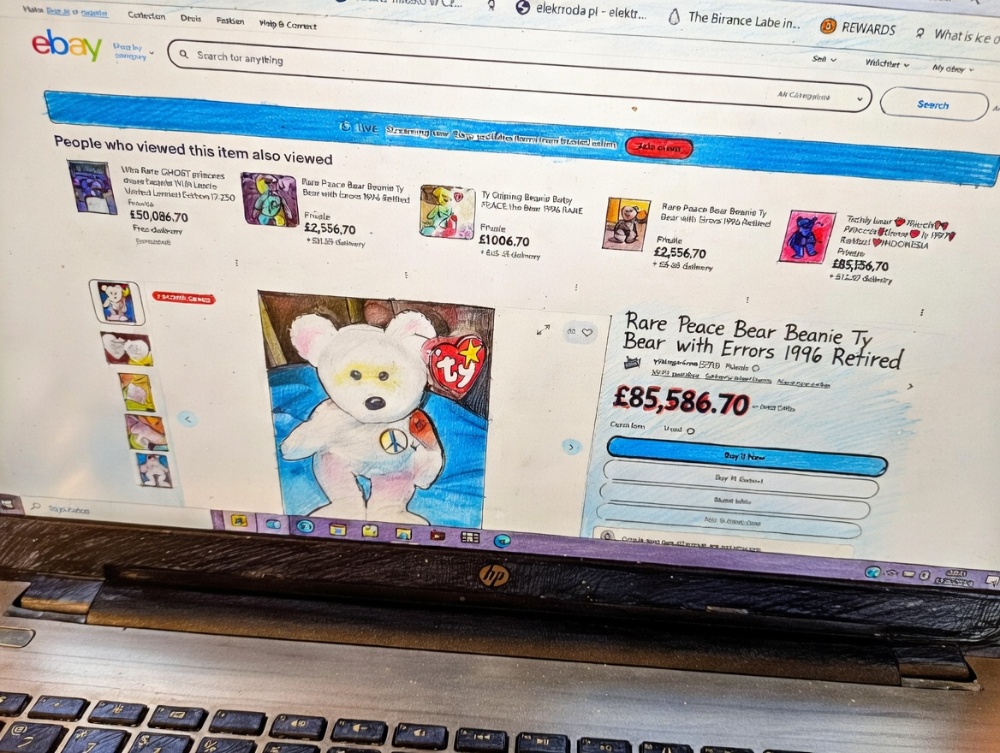
- Valentino (The Valentine Bear): The absolute record-holder of recent years. In 2019, a rare version with numerous tag errors (typos, incorrect nose color) sold for a staggering $42,300.
- Gobbles (The Turkey): Though he seems like a common toy, a perfectly preserved specimen with printing errors reached a price of $24,000.
- Halo (The Angel Bear): Prized for its "heavenly" look, it earned a seller $23,500 in 2021.
- Princess (The Princess Diana Bear): Contrary to popular myth, not every "Princess" is a fortune. Only those from the earliest series (produced in Indonesia) hold significant value. Record sales still hover around $20,000 for a piece in mint condition.
The "Asking Price" Trap
When browsing sites like Etsy or eBay, you may stumble upon listings for astronomical sums—for instance, Batty the Bat is often listed for anywhere between $2,750 and $10,000. However, experts warn: the asking price is not the sale price. Many of these listings are attempts to find an uninformed buyer or are examples of "wash trading." The real collector value of Batty, even with tag errors, rarely exceeds a fraction of those amounts unless it carries a certificate of authenticity from a recognized appraiser.
What Determines a Fortune?
If you find an old plushie in your attic, three factors will decide its price:
- Tag Errors: Missing spaces in the text, typos in the creator's name, or incorrect birth dates.
- "Mint" Condition: The paper hang tag must be perfectly smooth, preferably kept in a plastic protector.
- Place of Manufacture: First editions from Korea or Indonesia are significantly more valuable than the later mass-produced versions from China.
Beanie Babies have become a "lottery from the past" for many. Most are just fond memories, but for the lucky few owning rare production blunders, they can still be a ticket to a major cash injection.
Will History Repeat Itself?
Nowdays, looking at Labubu keychains fetching hundreds of dollars on the secondary market, we see the exact same emotions that gripped people back in 1997. However, modern mascots face a tougher challenge—the attention span of internet users is incredibly short.
The Beanie Baby bubble burst spectacularly, leaving people holding worthless plush. Current trends, like Huggy Wuggy, don’t necessarily "burst"—they simply "burn out." The mascot just stops being trendy and ends up in the bargain bin, making way for the next viral sensation.
Looking at today’s queues for limited-edition toys, one has to wonder: have we learned anything from Ty Warner’s story, or do we simply enjoy the thrill of chasing the next "rabbit" (or monster)?
Resources:
https://www.etsy.com/pl/listing/1401201786/ty-rare-oryginalny-1996-batty-beanie?gpla=1&gao=1&&utm_source=google&utm_medium=cpc&utm_campaign=shopping_pl_pl_pl_-fs_all_products&utm_custom1=_k_Cj0KCQjwy_fOBhC6ARIsAHKFB7_PDjdihkSwb_CkhTuSlPpEmyCksm1AiqMY7ONm-93LmmfyOLR8cqsaAncPEALw_wcB_k_&utm_content=go_22795168440_180129018942_767425786751_pla-293946777986_c__1401201786plpl_5593182679&utm_custom2=22795168440&gad_source=1&gad_campaignid=22795168440&gbraid=0AAAAADutTMd8-dcyh2K_rejQl9yKY51mR&gclid=Cj0KCQjwy_fOBhC6ARIsAHKFB7_PDjdihkSwb_CkhTuSlPpEmyCksm1AiqMY7ONm-93LmmfyOLR8cqsaAncPEALw_wcB
https://www.mentalfloss.com/fun/toys/how-playground-rumors-and-artificial-scarcity-created-beanie-baby-mania
https://www.biography.com/business-leaders/a44661324/beanie-babies-movie-true-story
https://www.youtube.com/watch?v=smjf_nlSld0
https://people.com/most-valuable-beanie-babies-according-to-expert-7567692
https://www.today.com/popculture/news/ty-warner-now-beanie-baby-founder-rcna98266
https://en.wikipedia.org/wiki/Ty_Warner