Wind–Dampness Syndrome in Traditional Medicine

Clinical Signs, Pathogenesis, and Natural Herbal Treatments
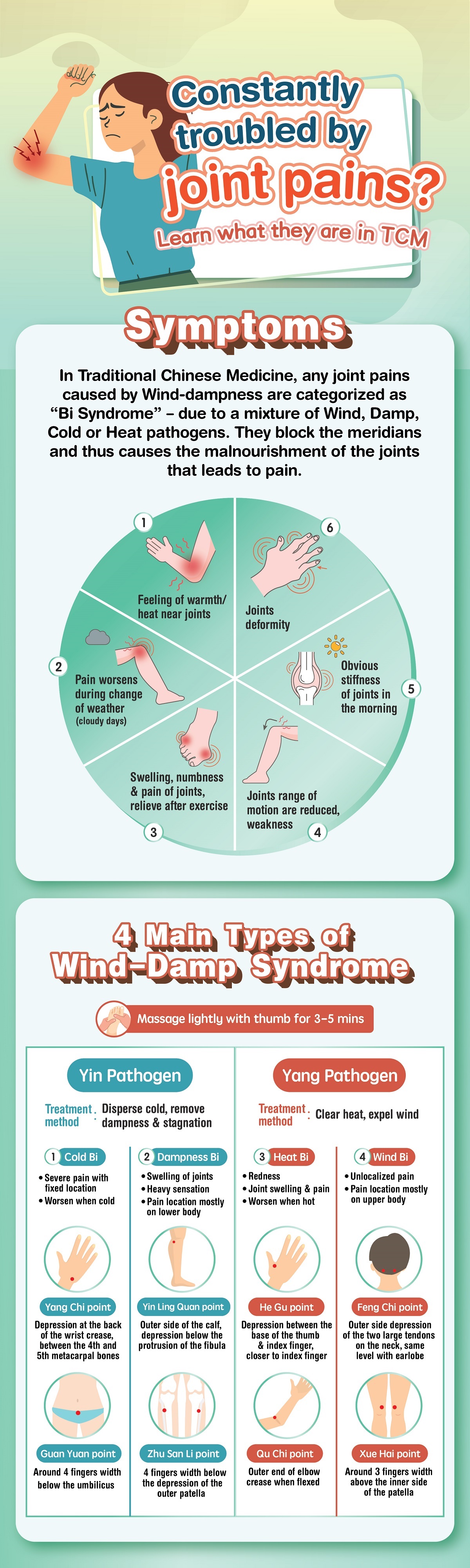

 In Traditional Oriental Medicine, Wind–Dampness Syndrome (commonly associated with chronic joint pain and stiffness) belongs to the category of Bi Syndrome.
This condition occurs when external pathogenic factors — wind, cold, and dampness — invade the body, obstructing the meridians and impairing the smooth circulation of Qi and blood.
Over time, this blockage leads to persistent joint pain, stiffness, numbness, and reduced mobility, particularly in middle-aged and elderly individuals or those with weakened constitutional energy.
1. Clinical Signs of Wind–Dampness Syndrome

 According to Traditional Medicine theory and clinical observation, common symptoms include:

🔹 Weather-sensitive joint pain
- Pain worsens in cold, damp, or rainy conditions
- Increased discomfort at night or early morning
- Pain may migrate along meridian pathways
🔹 Numbness and morning stiffness
- Stiff joints after waking up
- Gradual improvement with gentle movement
🔹 Mild swelling and limited mobility
- Some joints may feel warm or slightly swollen
- Long-term stagnation may cause deformity
🔹 General fatigue
- Poor circulation of Qi and blood leads to tiredness
- Pain disrupts sleep quality
📌 Traditional diagnosis insight:
- Fixed pain → Dampness predominance
- Migrating pain → Wind predominance
- Severe pain aggravated by cold → Cold predominance
2. Pathogenesis from a Traditional Medicine Perspective


The root causes of Wind–Dampness Syndrome often include:
- Invasion of wind, cold, and damp pathogens when defensive Qi is weak
- Liver and Kidney deficiency, failing to nourish tendons and bones
- Qi and blood stagnation within the meridians
- Prolonged exposure to cold or damp environments
👉 In Traditional Medicine, this is considered a chronic condition requiring consistent and holistic treatment.
3. Principles of Treatment in Traditional Medicine
The therapeutic focus is not merely pain relief, but restoring internal balance:
🔹 Dispelling wind and eliminating dampness
🔹 Warming the meridians and dispersing cold
🔹 Promoting blood circulation and unblocking channels
🔹 Tonifying the Liver and Kidney to strengthen bones and joints
4. Common Traditional Herbal Remedies for Wind–Dampness Syndrome


🌿 Remedy 1: Mugwort, Ginger, and Salt Compress
Function: Warms the meridians and relieves joint pain
- Fresh mugwort leaves
- Fresh ginger slices
- Coarse salt
👉 Dry-roast until warm, wrap in cloth, and apply to painful joints — especially effective for cold-dominant cases.
🌿 Remedy 2: Herbal Wine for External Massage
Common herbs:
Cinnamon twig, Homalomena root, Angelica pubescens, Millettia vine
👉 Soak herbs in alcohol and use for daily massage to improve circulation and reduce stiffness.
🌿 Remedy 3: Black Bean and Mugwort Soup
Function: Nourishes the Kidneys and strengthens tendons
- Roasted black beans
- Fresh mugwort
👉 Consume 2–3 times per week for chronic joint discomfort.
🌿 Remedy 4: Wild Betel Leaf Decoction
Function: Dispels wind–dampness and alleviates pain
👉 Can be taken as a daily herbal drink or used for foot soaking and steam therapy.
5. Lifestyle Care and Prevention (Traditional Medicine Approach)


- Keep the body warm, especially during cold seasons
- Avoid prolonged exposure to damp environments
- Practice gentle movement to promote Qi flow
- Favor warm, balanced meals; avoid excessive cold foods
- Maintain regular sleep and emotional balance
6. Conclusion from a Traditional Medicine Viewpoint
Wind–Dampness Syndrome is not an acute illness, but with proper treatment and consistent lifestyle adjustment, it can be effectively managed and significantly improved.
🌿 Traditional Medicine emphasizes treating the root cause, restoring internal harmony, and supporting long-term joint health rather than temporary symptom suppression.
read my blog https://gocdongygiatruyen.blogspot.com/