How One Vintage RV Owner Solved a $3,000 Wheel Problem with Premium Wheel Simulators

Inside WheelCovers.com's 45-year legacy of solving "discontinued" wheel mysteries using precision-fit wheel simulators
Let me tell you about Sarah.
Sarah drives a 2003 Fleetwood Bounder—a 36-foot Class A motorhome built on a Workhorse chassis. She's had it for eight years, lovingly maintained every inch of it, and planned to keep it until the wheels literally fell off.
Last spring, that's almost exactly what happened.
Not the wheels themselves, but the wheel covers—those 16.5-inch dual-wheel hubcaps that came stock from the factory. Twenty years of UV exposure, freeze-thaw cycles, and highway vibrations had turned them into brittle plastic shards. One hard bump on I-70 outside Denver, and three of them cracked clean off.
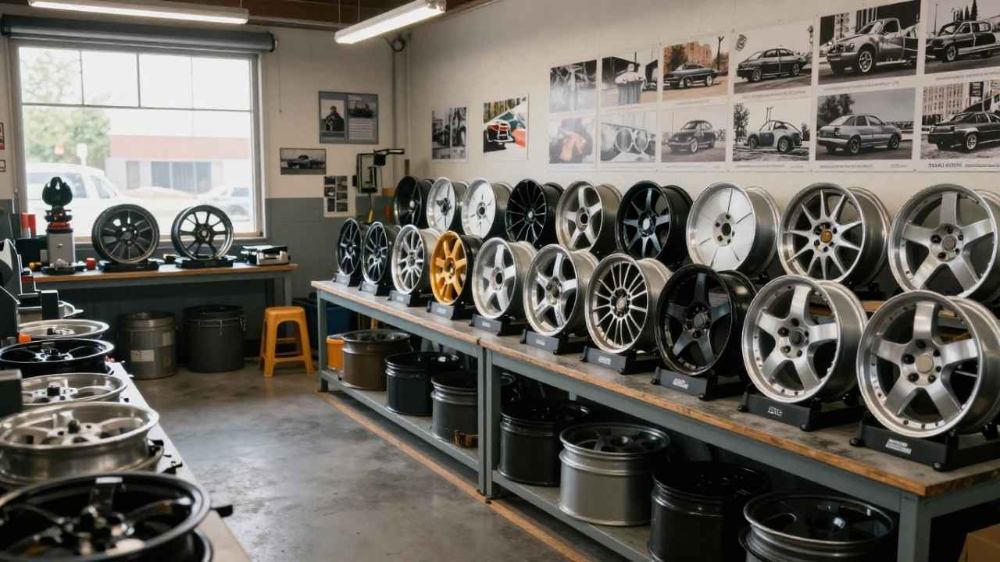
"I called every dealership in Colorado," Sarah told me when she reached out to WheelCovers.com last June. "They all said the same thing: 'Discontinued. No longer available. Try eBay.' But even eBay didn't have them. It was like this part had vanished from existence."
Sarah's predicament isn't rare—it's the best-kept secret in the RV and commercial fleet world. OEM wheel appearance parts have a shorter lifespan than the vehicles they adorn. And when they disappear, you're left with three bad options: ugly exposed wheels, expensive custom fabrication, or premature vehicle replacement.
That's exactly where wheel simulators change the game.
At WheelCovers, we've built our 45-year reputation on being the place where "discontinued" doesn't exist—thanks to our extensive catalog of stainless steel wheel simulators. Let me show you why the "hard-to-find" wheel simulator market affects more than just vintage RV owners.
The Discontinuation Crisis: When 16.5" Becomes "Extinct"
Here's a reality check that keeps fleet managers and RV owners awake at night: The average commercial vehicle stays in service for 10-15 years, but OEM wheel covers are typically only manufactured for 3-5 years after the model launch.
That math doesn't work. And it creates a massive secondary market of vehicles driving around with:
- Missing or damaged hubcaps (aesthetic nightmare, resale killer)
- Mismatched replacements (fleet identity crisis)
- Exposed steel wheels (accelerated corrosion, as we discussed in our previous analysis)
Sarah's 16.5-inch Workhorse bolt pattern? Discontinued by the manufacturer in 2008. The mold was destroyed, the supplier moved on, and thousands of Bounders, Southwinds, and Hurricanes were suddenly orphans in the wheel appearance market.
But here's what most people don't realize: this "hard-to-find" segment represents a massive opportunity for wheel simulators. RVs, vintage fleet trucks, imported commercial vans, and specialty chassis all fall into this gap. And WheelCovers has been manufacturing precision wheel simulators for these obscure fitments since 1979.
What Are Wheel Simulators? (And Why They're Better Than Hubcaps)
Before we dive deeper, let's clarify what we mean by wheel simulators—because they're not hubcaps, and they're definitely not cosmetic covers.
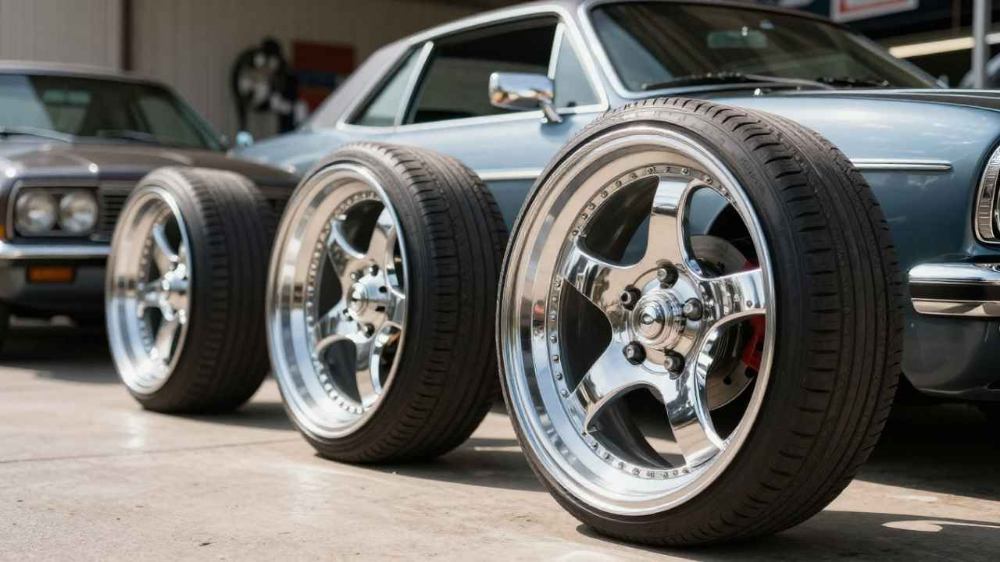
Wheel simulators are heavy-duty, form-fitting stainless steel shells that mount directly over your existing steel wheels. Unlike plastic hubcaps that clip on and fly off on the highway, quality wheel simulators—like the T304 stainless steel models we manufacture at
WheelCovers bolt on securely and become a permanent protective layer.
The difference is engineering:
- Hubcaps: Plastic, cosmetic-only, clip-on retention, temporary
- Wheel simulators: Stainless steel, protective and cosmetic, bolt-on mounting, permanent solution
For Sarah's vintage Fleetwood, wheel simulators weren't just an option—they were the only viable replacement for her discontinued OEM parts.
The Modern RV Landscape: Why "Standard" Doesn't Exist Anymore
To understand why WheelCovers maintains a database of over 15,000 obscure wheel simulator fitments, you need to understand the modern RV ecosystem. It's not just Class A motorhomes anymore.
The Sprinter Revolution:
Mercedes-Benz Sprinter vans (and their Ford Transit/Ram ProMaster competitors) have created a boom in Class B and Class C RVs. These European-style vans use metric bolt patterns, unique center bore sizes, and offset specifications that differ from traditional American truck chassis.
WheelCovers.com wheel simulator specialists regularly solve mysteries like:
- 2007-2018 Sprinter 3500 dual rear wheel simulators (European metric vs. American standard confusion)
- Ford E-450 chassis motorhome wheel simulators (the 8-lug pattern that isn't quite the same as F-450 trucks)
- Isuzu NPR box trucks converted to RV haulers (commercial bolt pattern, passenger appearance needs)
Each of these requires a different wheel simulator design. The Sprinter needs a simulator that accommodates its exposed lug nuts while maintaining the aerodynamic efficiency crucial for fuel economy. The E-450 needs wheel simulators that handle higher heat from motorhome braking systems. The Isuzu needs commercial-grade wheel simulators with aesthetic appeal.
At WheelCovers, we don't just sell wheel simulators—we reverse-engineer fitments for vehicles that the OEMs have forgotten.
Case Study: The "Ghost Fleet" of Government Surplus
Last year, a municipal fleet manager in Oregon contacted WheelCovers with a puzzle. His department had acquired 12 decommissioned military transport vehicles—Freightliner M2 106 chassis with 19.5-inch wheels and a proprietary 10-lug pattern that hadn't been used in civilian vehicles since the 1990s.
Local dealers quoted him $800+ per wheel for custom fabrication to replace missing hubcaps. The vehicles were mechanically sound but looked like "demilitarized junk"—not ideal for city PR when serving elderly transport routes.
The WheelCovers.com Wheel Simulator Solution:
Our technical team pulled the original military specs, cross-referenced them with commercial truck data, and identified that the pattern was actually a variation of the Freightliner M2 112 civilian pattern—just with a deeper dish requirement. Within two weeks, WheelCovers supplied T304 stainless steel wheel simulators that fit perfectly.
- Total cost for wheel simulators: $2,400 for the entire fleet.
- Alternative cost: $9,600+ for custom work.
- Result: Professional appearance, corrosion protection, and $7,000 saved for taxpayer funds.
This is why WheelCovers maintains what we call our "Ghost Database"—specifications for discontinued, military surplus, grey-market imports, and orphan chassis that nobody else catalogs for wheel simulators.
Material Science in Harsh Environments: Why Wheel Simulators Beat OEM Covers
You might think RVs have it easier than commercial trucks. They're not carrying 40,000-pound loads, right? Wrong. RVs actually present more severe challenges for wheel appearance products than most fleet trucks—exactly why wheel simulators are superior to OEM plastic.
The UV Exposure Factor:
RVs sit. For weeks or months. That stationary exposure to direct sunlight creates UV damage that fleet trucks—constantly moving—don't experience. Cheap plastic covers become brittle and craze-crack within two years of full-time RV exposure.
WheelCovers solution: T304 stainless steel wheel simulators don't UV-degrade. Ever. That mirror polish you install in year one looks identical in year ten.
The Temperature Cycling Torture Test:
RVs often travel from desert heat (120°F ground temperature) to mountain passes (below freezing) in a single day. This creates expansion/contraction cycles that destroy adhesive-mounted or clip-on plastic covers.
WheelCovers solution: Our bolt-on and snap-on wheel simulator mounting systems account for thermal expansion. Stainless steel wheel simulators expand and contract at a rate compatible with your wheel, maintaining fit integrity across temperature extremes.
The "Permanent Resident" Corrosion:
Unlike commercial trucks that get regular pressure washing, RVs often sit through entire winters or rainy seasons with minimal maintenance. Road salt, de-icing chemicals, and atmospheric moisture accumulate for months.
WheelCovers solution: T304 wheel simulators' 18% chromium content creates a passive protective layer that doesn't require regular washing to maintain. These wheel simulators protect even when neglected—a crucial factor for seasonal RV owners.
The DIY Installation Advantage: Why RV Owners Choose Wheel Simulators
Here's an interesting demographic fact: 78% of RV owners perform their own maintenance [RV Industry Association data]. They're hands-on, mechanically inclined, and deeply invested in their vehicles. When they find wheel simulators that work, they become vocal advocates.
That's why WheelCovers invests heavily in wheel simulator installation documentation for obscure fitments. It's not just about selling the wheel simulators—it's about empowering the owner.
The "Impossible" 16.5-Inch Wheel Simulator Success Story:
Remember Sarah and her 2003 Fleetwood Bounder? The one with the "extinct" 16.5-inch wheels? Here's how WheelCovers solved it with wheel simulators:
Our technical team identified that while the OEM plastic covers were discontinued, the wheel itself was a standard 16.5 x 6.75 steel dual wheel used across multiple Workhorse applications. We had WheelCovers stainless steel wheel simulators designed for that specific wheel dimension in our catalog—but they were labeled for commercial Isuzu NPR trucks, not RVs.
Sarah never would have found these wheel simulators without calling our specialists. We cross-referenced the bolt pattern (8x165mm), center bore (125mm), and offset specifications. The "truck" wheel simulators fit her RV perfectly.
- Installation time for wheel simulators: 20 minutes per wheel.
- Tool required: Basic socket set.
- Result: Factory-fresh appearance on a 20-year-old RV using modern wheel simulators.
Sarah posted her before/after wheel simulator photos on an RV forum. Within a month, WheelCovers received 47 inquiries from vintage Fleetwood owners looking for the same wheel simulators. That's the power of solving the "hard-to-find" puzzle.
Fleet Application: Why Wheel Simulators Matter for Commercial Operations
You might be thinking: "This is interesting for RV owners, but I run a commercial fleet. Why do wheel simulators matter to me?"
Because fleet composition is changing. The used vehicle market is booming, and smart fleet managers are buying 5-7 year old trucks at auction rather than new equipment at MSRP. But those auction trucks often come with damaged or missing wheel covers—and the OEM stopped making them two years ago.
The Workhorse Chassis Lesson:
Remember when Workhorse dominated the step-van market (think UPS-style delivery trucks)? Thousands are still on the road, but Workhorse wheel covers? Discontinued. WheelCovers is the only source keeping these fleets looking professional with precision-fit wheel simulators.
The Ford E-Series Void:
Ford stopped making E-Series cutaway chassis for commercial use (except stripped chassis) but there are hundreds of thousands still in service as shuttle buses, ambulances, and utility trucks. WheelCovers maintains the only active catalog of E-350/E-450 dual wheel simulators for 1992-2024 models.
The Import Truck Challenge:
Isuzu NPR, Hino 155, Mitsubishi Fuso—these Japanese cabovers are fleet staples, but their wheel appearance parts are impossible to find through domestic dealers. WheelCovers specializes in metric-to-standard wheel simulators that fit these imports perfectly.
For fleet managers, WheelCovers isn't just a parts supplier—we're a fleet standardization partner. When you acquire mixed-lot vehicles at auction, our wheel simulators help you unify their appearance even when OEM support disappeared years ago.
The WheelCovers.com Heritage Methodology: 45 Years of Wheel Simulator Expertise
How does WheelCovers succeed where billion-dollar OEMs fail? It comes down to our wheel simulator heritage methodology developed over four and a half decades.
The Cross-Reference System:
When Ford discontinues a hubcap for the F-450, we don't just remove it from our catalog. We analyze:
- Which other vehicles used that same wheel underneath?
- Is the bolt pattern shared with International, Freightliner, or Isuzu applications?
- Can we adapt wheel simulators from a different category to fit this orphaned application?
The Military/Grey Market Pipeline:
WheelCovers maintains relationships with military surplus dealers, import specialists, and grey-market importers. When a rare vehicle enters the civilian market, we document its wheel simulator specifications before anyone else realizes they need them.
The T304 Universal Wheel Simulator Strategy:
In some cases, no direct replacement exists. That's when WheelCovers engineers universal mounting wheel simulators using T304 stainless steel bands and adjustable retention systems. It's not as elegant as a direct fit, but our wheel simulators work when "direct fit" is impossible to find.
The Technical Deep-Dive: Wheel Simulator Sizing Guide
For the gear-heads and maintenance directors reading this, let's get technical about wheel simulators. The "hard-to-find" market breaks down into specific diameter categories that WheelCovers tracks:
16.5-Inch Wheel Simulators (The Vintage Standard):
Used primarily 1985-2010 on Class A RVs and light commercial trucks. WheelCovers maintains one of the only active 16.5-inch stainless steel wheel simulator catalogs because we know these vehicles aren't going anywhere—they're just becoming classics.
19.5-Inch Wheel Simulators (The Fleet Sweet Spot):
Ford F-450/F-550, Freightliner M2, International CV. This is the most active "hard-to-find" category because fleets keep these trucks for 15+ years. WheelCovers stocks more 19.5-inch wheel simulators than any other diameter.
22.5-Inch Wheel Simulators (The Heavy-Duty Challenge):
Class 8 trucks and heavy RVs. While 22.5 wheels are common, specific pilot holes and hand-hole configurations vary wildly. WheelCovers carries 47 different 22.5-inch wheel simulator configurations to match these variations.
Understanding your wheel's hand-hole pattern (the cutouts for valve stem access) is crucial when ordering wheel simulators. Two wheels can have the same bolt pattern but different hand-hole arrangements. WheelCovers technical guides walk you through measuring these obscure specifications to ensure your wheel simulators fit perfectly.
Implementation Guide: Auditing Your "At-Risk" Fleet for Wheel Simulators
Whether you manage RVs, commercial trucks, or mixed fleets, here's the WheelCovers framework for identifying your vulnerability to "discontinued" parts—and where wheel simulators become your solution:
Step 1: The Age Audit
Identify vehicles older than 8 years in your fleet. Cross-reference with manufacturer discontinuation notices. If OEM wheel covers are NLA (No Longer Available), you're in the danger zone where wheel simulators become necessary.
Step 2: The Obscurity Check
Do you have:
- Import chassis (Isuzu, Hino, Mitsubishi)?
- Military surplus conversions?
- Grey-market imports?
- Orphan brands (Workhorse, Navistar International specific models)?
If yes, bookmark WheelCovers now. You'll need our wheel simulators eventually.
Step 3: The Preemptive Standardization
Don't wait for breakage. If you have five 2015 Ford E-450 shuttle buses and three still have good hubcaps, buy WheelCovers wheel simulators for all of them now. Standardize on T304 stainless steel wheel simulators before you're forced into mismatched "whatever we could find" territory.
Step 4: The Wheel Simulator Documentation Phase
When you find a wheel simulator fitment that works, document everything. Take photos. Save the WheelCovers wheel simulator part number. Share it with your maintenance team. Knowledge preservation is asset preservation.
The Future: Why Wheel Simulators Are Becoming Essential
Looking ahead to 2026 and beyond, the discontinuation problem is accelerating—and wheel simulators are the answer:
OEM Consolidation:
Major manufacturers are reducing SKU counts. If a wheel cover doesn't sell 50,000 units annually, it's discontinued. That eliminates 60% of commercial vehicle applications, making aftermarket wheel simulators the only option.
Electrification Chaos:
Electric commercial vehicles use different wheel architectures (often hub-centric vs. lug-centric). As fleets transition to electric, parts for legacy diesel chassis will disappear faster. WheelCovers wheel simulators bridge this gap.
Import Complexity:
More fleets are buying Chinese and Indian commercial vehicles (BYD electric trucks, Mahindra utility vehicles). These use metric patterns rarely seen in North America. WheelCovers is already building wheel simulator databases for these incoming patterns.
The Right-to-Repair Impact:
As "right-to-repair" legislation expands, OEMs are responding by discontinuing cosmetic parts faster (they can't legally discontinue mechanical parts, but appearance parts have no protection).
WheelCovers is positioning as the permanent archive of wheel appearance specifications. While OEMs delete data to save server space, we preserve it—and manufacture the wheel simulators to match.
Conclusion: The Value of "Impossible" Fits
Sarah's 2003 Fleetwood Bounder still rolls down I-70 every summer, its wheels gleaming with WheelCovers T304 stainless steel wheel simulators. The RV is 23 years old, officially "vintage," but it looks factory-fresh because WheelCovers refused to accept that "discontinued" means "unavailable."
For fleet managers, the lesson is clear: Your asset lifespan is longer than your OEM's attention span. Whether you're running a fleet of vintage RVs, surplus military trucks, or discontinued commercial chassis, appearance parts availability shouldn't dictate your replacement cycle.
Wheel simulators from WheelCovers.com have spent 45 years proving that "hard-to-find" is just "not looking in the right place." From 16.5-inch RV mysteries to 10-lug military oddities, we manufacture the wheel simulators that keep your fleet looking professional long after the factory stopped caring.
Don't let discontinued parts force you into premature equipment replacement. Don't let "unavailable" mean "unprofessional." And definitely don't let a missing $200 wheel simulator become a $3,000 custom fabrication project.
The impossible fit isn't impossible—it's just waiting for WheelCovers.com wheel simulators to solve it.