Can Decentralization Survive Mass Adoption?

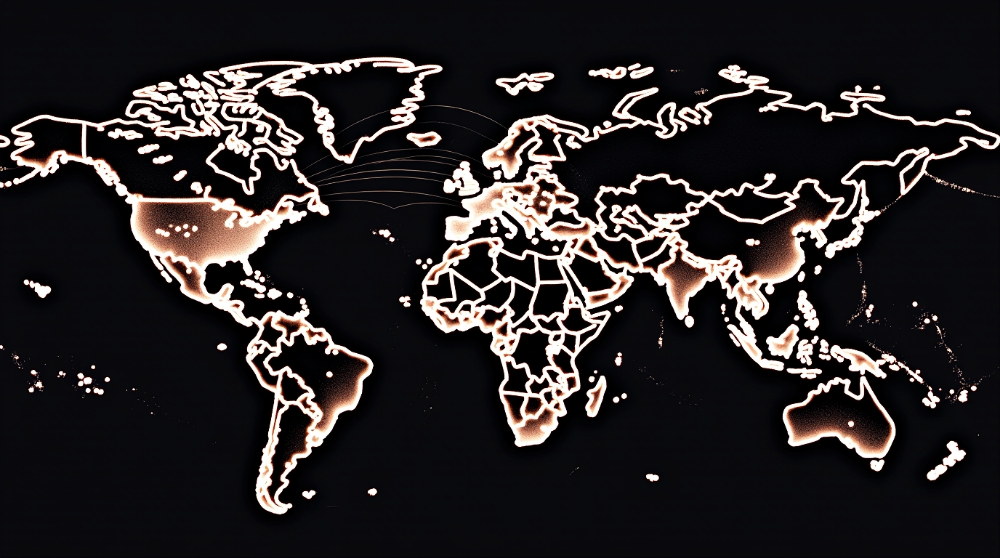
Web3 dreams of global adoption.
Millions.
Hundreds of millions.
Billions of users.
A decentralized internet where anyone can:
- Own digital assets
- Access financial tools
- Participate in governance
- Exchange value freely
But mass adoption introduces a paradox.
Because decentralization and scale
do not always grow together.
Sometimes…
They move in opposite directions.
The Scaling Dilemma
Decentralized systems are built for:
Security
Transparency
Trustlessness
But these features often come at the cost of:
Speed
Efficiency
Convenience
As networks grow:
Transaction demand increases.
User expectations rise.
Performance pressure builds.
Users want:
Fast confirmations
Low fees
Simple interfaces
To meet these expectations,
projects must:
Optimize infrastructure
Simplify access
Reduce friction
But reducing friction can introduce:
Centralization points.
The Infrastructure Trade-Off
Many blockchain ecosystems now rely on:
Layer 2 scaling solutions
Sidechains
Bridges
Off-chain services
These tools help:
Improve speed
Reduce costs
Enhance usability
But they may also:
Depend on centralized operators
Require trust assumptions
Introduce coordination layers
Which slightly shifts control away from:
Purely decentralized consensus.
User Experience vs Sovereignty
Mass adoption requires simplicity.
Most users do not want to:
Store seed phrases
Manage private keys
Understand gas fees
Monitor smart contract permissions
They want:
Convenience.
So platforms introduce:
- Custodial wallets
- Account recovery systems
- Transaction batching
- Managed services
Each improvement enhances usability.
But may reduce direct user control.
Convenience becomes:
A gateway
to
centralization.
Governance at Scale
Decentralized governance works best when:
Communities are engaged
Participants are informed
Voting power is distributed
But with millions of users:
Participation decreases.
Engagement becomes shallow.
Technical understanding varies.
Many users choose:
Delegation
Passive participation
Non-involvement
Governance power may concentrate among:
- Experts
- Institutions
- Large stakeholders
Which resembles:
Representative systems.
Not direct decentralization.
Institutional Integration
As Web3 grows,
traditional institutions begin to:
Integrate blockchain tools
Offer crypto custody
Develop tokenized products
Institutional participation brings:
Capital
Compliance
Credibility
But also:
Regulation
Oversight
Standardization
To operate at scale,
systems must align with:
Legal frameworks.
Which may require:
Identity verification
Risk monitoring
Transaction reporting
Mass adoption invites:
Institutional structure.
The Network Effect
Decentralization thrives in:
Open participation
Distributed validation
Transparent rules
But network effects encourage:
Platform dominance
Ecosystem consolidation
Protocol standardization
Users gather around:
Popular wallets
Major exchanges
Leading protocols
Smaller networks may:
Lose activity
Lose liquidity
Lose relevance
Adoption concentrates usage.
Usage concentrates influence.
Does This Mean Decentralization Fails?
Not necessarily.
But it evolves.
Pure decentralization may:
Exist in early stages.
Hybrid decentralization may:
Define maturity.
Some layers remain:
Permissionless.
Others become:
Managed.
Balance becomes essential.
The Future: Layered Trust
Web3 may develop:
Layered trust models.
Where:
Base layers remain decentralized
Application layers optimize usability
Service layers enhance experience
Users choose:
Level of control
Level of convenience
Decentralization becomes:
Optional
not
mandatory.
Final Thought
Mass adoption changes systems.
It introduces:
Complexity
Coordination
Expectation
Decentralization must adapt.
Or risk becoming:
Impractical.
The challenge for Web3 is not:
To remain purely decentralized.
But to remain:
Transparent
Accountable
User-empowering
Even at global scale.
Because adoption without decentralization
creates digital efficiency.
But not digital freedom.