Blockchain in Healthcare: Real Use Cases

Introduction
Healthcare systems around the world face serious challenges: data breaches, lack of transparency, fragmented records, fraud, and inefficient processes.
As healthcare becomes more digital, protecting sensitive medical data is more important than ever.
This is where blockchain technology is gaining attention.
Blockchain is not just about crypto or finance.
It is increasingly being explored as a solution for real problems in healthcare.
So how exactly is blockchain used in healthcare today?
Let’s explore the most important real-world use cases in simple terms.
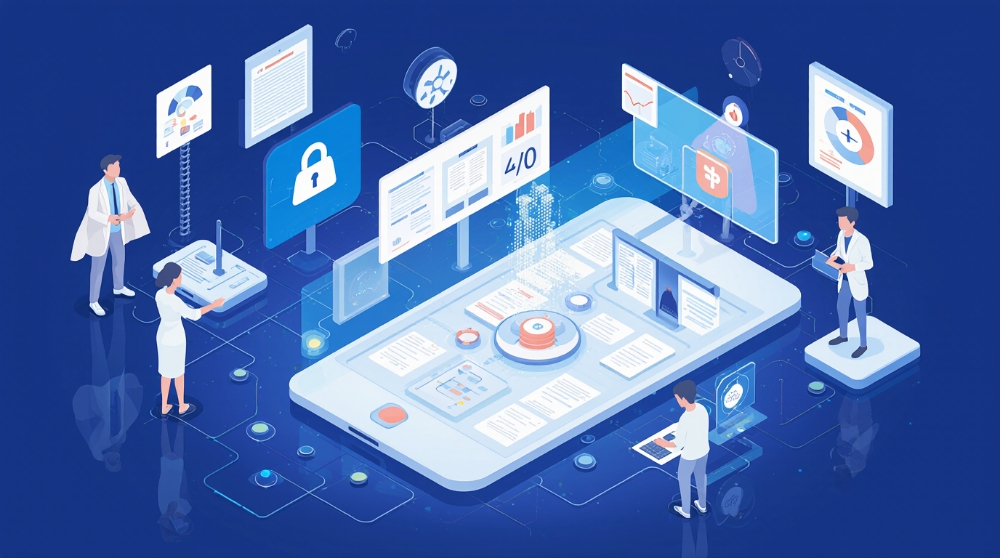
1. Secure Medical Records Management
One of the biggest problems in healthcare is medical data security.
Patient records are often:
- Stored in centralized databases
- Shared between hospitals manually
- Vulnerable to hacking and data breaches
Blockchain helps by:
- Creating tamper-proof records
- Allowing controlled access to data
- Ensuring data integrity over time
Patients can have more control over who accesses their medical history.
2. Patient Data Ownership and Privacy
In traditional systems, patients rarely own their data.
With blockchain:
- Patients control access permissions
- Data sharing is transparent
- Every access is recorded
This reduces unauthorized data usage and improves trust between patients and healthcare providers.
Privacy becomes a feature, not an afterthought.
3. Interoperability Between Healthcare Providers
Healthcare data is often fragmented.
Different hospitals and clinics use:
- Different software
- Different databases
- Incompatible systems
Blockchain can act as a shared layer that connects systems securely.
This allows:
- Faster data sharing
- Reduced paperwork
- Better coordination of care
Doctors can access accurate information when it matters most.
4. Preventing Medical Data Tampering
Medical records must be accurate.
Blockchain ensures that:
- Records cannot be altered secretly
- Any change is visible and traceable
- Data history remains intact
This is critical for:
- Diagnoses
- Insurance claims
- Legal cases
Trust in data leads to better healthcare outcomes.
5. Supply Chain Transparency for Medicines
Counterfeit drugs are a major global problem.
Blockchain helps track:
- Drug production
- Distribution paths
- Storage conditions
Each step is recorded on the blockchain.
This makes it easier to:
- Verify authenticity
- Reduce fake medicines
- Improve patient safety
Transparency saves lives.
6. Clinical Trials and Research Integrity
Clinical trials require trust and accuracy.
Blockchain can:
- Record trial data immutably
- Prevent data manipulation
- Improve transparency
Researchers, regulators, and patients can trust that results have not been altered.
This improves credibility in medical research.
7. Health Insurance Claims Processing
Insurance claims are often:
- Slow
- Complex
- Prone to fraud
Blockchain can automate claims using smart contracts.
Benefits include:
- Faster claim processing
- Reduced fraud
- Lower administrative costs
Automation improves efficiency for both providers and patients.
8. Identity Management for Patients and Providers
Verifying identities in healthcare is critical.
Blockchain-based identity systems can:
- Secure patient identities
- Reduce identity fraud
- Simplify onboarding processes
This ensures the right care is delivered to the right person.
9. Data Sharing for Public Health
During health crises, data sharing is essential.
Blockchain can:
- Enable secure data sharing
- Protect patient privacy
- Improve real-time monitoring
Public health agencies can respond faster without compromising trust.
10. Challenges of Blockchain in Healthcare
Despite its potential, blockchain is not a magic solution.
Challenges include:
- Regulatory compliance
- Scalability issues
- Integration with existing systems
- Cost and technical complexity
Adoption requires careful planning and collaboration.
11. Why Healthcare Needs Blockchain Now
Healthcare is becoming more digital, connected, and data-driven.
Without strong data security and transparency:
- Trust erodes
- Errors increase
- Costs rise
Blockchain offers a foundation for secure, patient-centered healthcare systems.
12. The Future of Blockchain in Healthcare
Blockchain adoption in healthcare is still early.
Future developments may include:
- AI and blockchain integration
- Global health data standards
- Patient-controlled health ecosystems
As technology matures, real-world impact will grow.
Conclusion
Blockchain in healthcare is not about hype — it’s about solving real problems.
From secure medical records to transparent supply chains, blockchain offers:
- Better data security
- Increased trust
- Improved efficiency
While challenges remain, blockchain has the potential to reshape healthcare for the better.
The future of healthcare may be decentralized, transparent, and patient-driven.
💬 Do you think blockchain can improve healthcare systems in your country?
Share your thoughts in the comments.