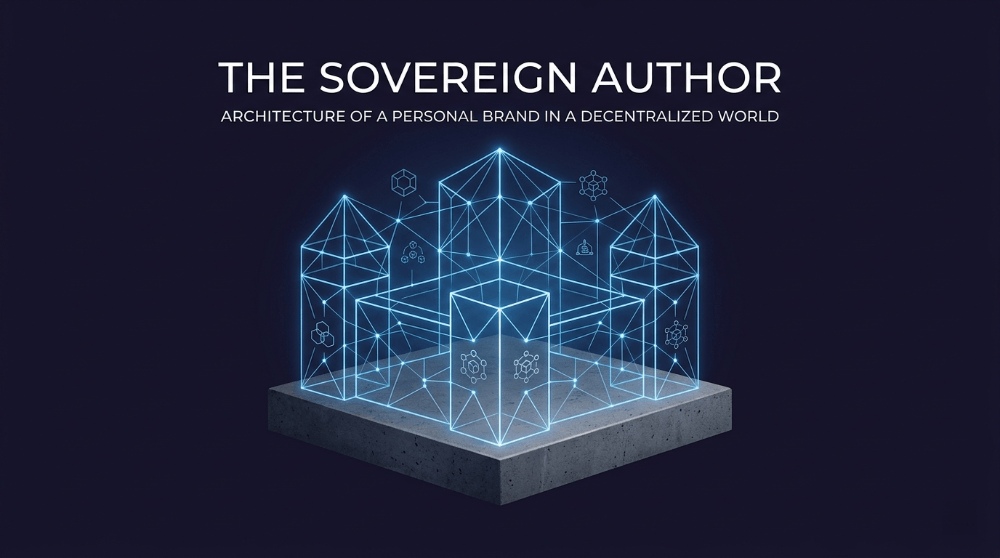
The Sovereign Author Manifesto: Architecture of a Personal Brand in a Decentralized World

The era when centralized algorithms defined a creator’s professional value is coming to a logical end. The transition into the Web3 space requires a radical rethinking of the creator’s role: from a passive user whose activity enriches a platform to an active architect of one’s own digital infrastructure. The "Sovereign Author" concept is not a manifesto of success, but a methodology for building a professional identity based on the principles of autonomy and technological independence.
1. Content Portability: Ownership vs. Rental
Traditional media models build a personal brand based on "rental property." The audience owner is the platform, not the author. The sovereign methodology is based on a strict requirement for data portability.
Technical Standard: Content must be presented in formats that allow for its unhindered migration between protocols.
Strategic Advantage: Decoupling a brand from the interface of a specific site eliminates the risk of losing an audience due to changes in terms of service or a service shutdown. A Sovereign Author views a platform exclusively as a distribution point, not as a storage location for intellectual capital.

2. Radical Transparency: Verifiable Experience
In an environment oversaturated with promotional content in Web3, trust becomes a convertible asset. The market is tired of "influencers" with an undefined knowledge base.
Validation of Actions: A Sovereign Author’s brand is built on the documentary recording of experiments. Any statement is supported by raw data: earnings reports, transaction logs, and technical calculations.
Trust Function: Transparency also includes admitting mistakes. Demonstrating exactly how technical obstacles were overcome is more valuable than the result of "overnight success." The author becomes a guide whose competence is confirmed by practical experience, not marketing slogans.

3. Architecture of Knowledge as a Product & 4. Rejection of KYC
A personal brand in Web3 is outgrowing the "blog" format and becoming a systemic product. This is a process of synthesizing fragmented data into a structured knowledge base. A fundamental rejection of KYC is not just a matter of privacy, but a matter of professional ethics.
Structural Integrity: A brand built as an architecture of knowledge is more resilient to market fluctuations. While others chase fleeting engagement metrics, a Sovereign Author forms long-term intellectual value that remains relevant regardless of the current market cycle.

Closing Thoughts
Becoming a Sovereign Author is a process of conscious choice that requires discipline in building an autonomous workflow. It is a rejection of the comfort of centralized recognition in favor of structural integrity. The foundation of a brand is not laid in moments of virality, but in the daily practice of owning one’s data.
Build your foundation. Own your data. Be the architect.
Question for audience engagement:
Which of these four aspects — content portability, data verification, systemic knowledge, or privacy protection — is the critical weak point in your current brand development strategy?