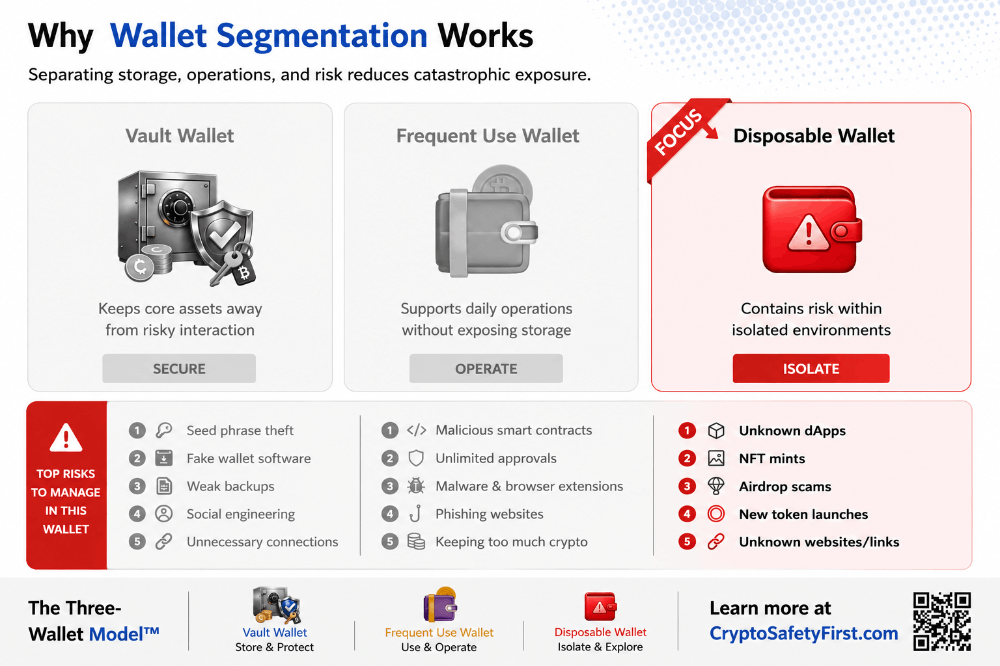
Why Every Crypto User Should Have a Disposable Wallet

Many cryptocurrency users spend time choosing the most secure wallet, yet still expose their entire portfolio to unnecessary risk.
The problem is not always the wallet itself. It is using the same wallet for every activity.
Whether you're claiming an airdrop, minting an NFT, testing a new DeFi protocol, or connecting to an unfamiliar website, every new interaction carries some level of uncertainty. A Disposable Wallet allows you to explore these opportunities without putting your primary holdings at risk.
What Is a Disposable Wallet?
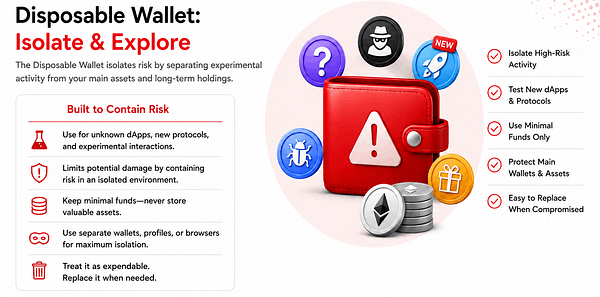
A Disposable Wallet is a wallet created specifically for high-risk or experimental activities.
Unlike a long-term storage wallet or an everyday wallet, it is expected to interact with unfamiliar applications, new protocols, and projects that have not yet earned your trust.
It should contain only a small amount of cryptocurrency—an amount you are comfortable losing if something goes wrong.
If the wallet is ever compromised, the correct response is simple: stop using it, create a new one, and move on.
The 5 Most Common Risks
1. Unverified Decentralized Applications
Thousands of new decentralized applications launch every year.
Some are legitimate. Others contain malicious smart contracts designed to steal funds or obtain excessive permissions.
Connecting your primary wallet to an unverified application exposes your entire balance to unnecessary risk.
2. New Token Launches and Memecoins
Early token launches often attract scammers alongside genuine projects.
Fake websites, malicious contracts, and fraudulent presales frequently appear during periods of excitement.
Using a separate wallet limits the potential damage if a project turns out to be malicious.
3. NFT Mints
NFT minting campaigns commonly require users to connect their wallets and approve transactions.
While many are legitimate, fake mint pages and malicious contracts continue to drain wallets belonging to unsuspecting users.
A Disposable Wallet keeps these experiments isolated from your long-term holdings.
For supported wallets and applications, wallet delegation can provide another layer of separation. Instead of connecting the wallet holding the valuable asset directly, the owner can delegate specific rights to another wallet. That wallet can then perform supported actions—such as claiming or interacting with an application—while the original asset remains in the Vault Wallet.
This creates a useful separation:
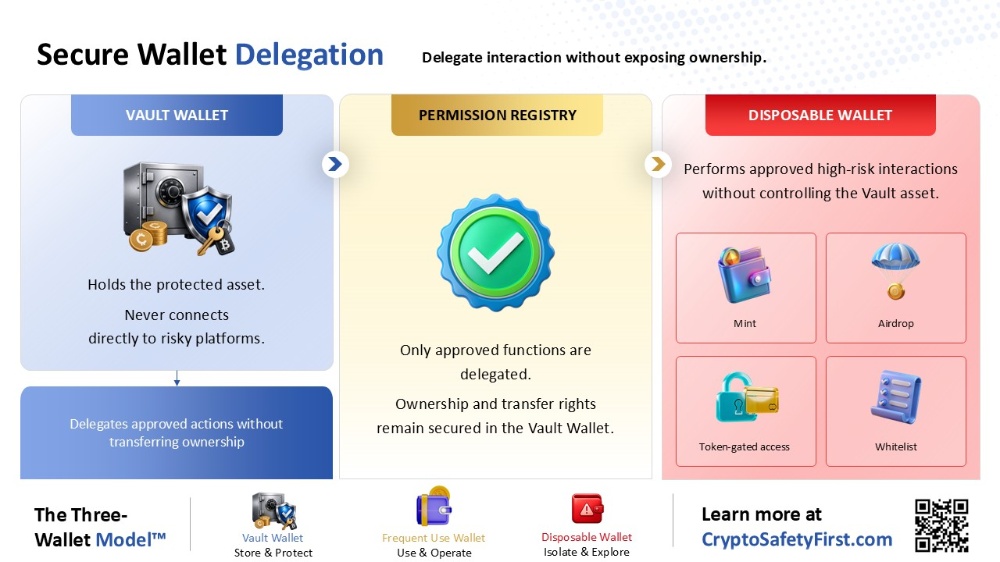
- Vault Wallet → holds the asset
- Delegation → grants limited permissions
- Disposable Wallet → performs the higher-risk interaction
However, delegation is not automatically safe. Users must understand exactly what permissions they are granting, which assets or functions they cover, whether the delegation can transfer assets, and how it can be revoked. A malicious or overly broad delegation can itself create risk.
Where properly supported and configured, delegation can allow users to participate in Web3 opportunities without routinely connecting the wallet holding their most valuable assets to unfamiliar applications.
4. Airdrops
Not every free token is harmless.
Fraudulent airdrops may encourage users to connect their wallets, approve dangerous transactions, or visit phishing websites.
Treat unexpected tokens and unsolicited rewards with caution.
5. Unknown Links Shared Online
Social media platforms, messaging apps, Discord communities, Telegram groups, and online forums regularly contain links to new crypto projects.
Even if a link appears to come from a trusted source, it may lead to a compromised website or an impersonation page.
Testing unfamiliar opportunities with a dedicated wallet significantly reduces your exposure.
Using Delegation for Additional Protection
When supported, delegation can provide another layer of separation between your valuable assets and higher-risk Web3 interactions.
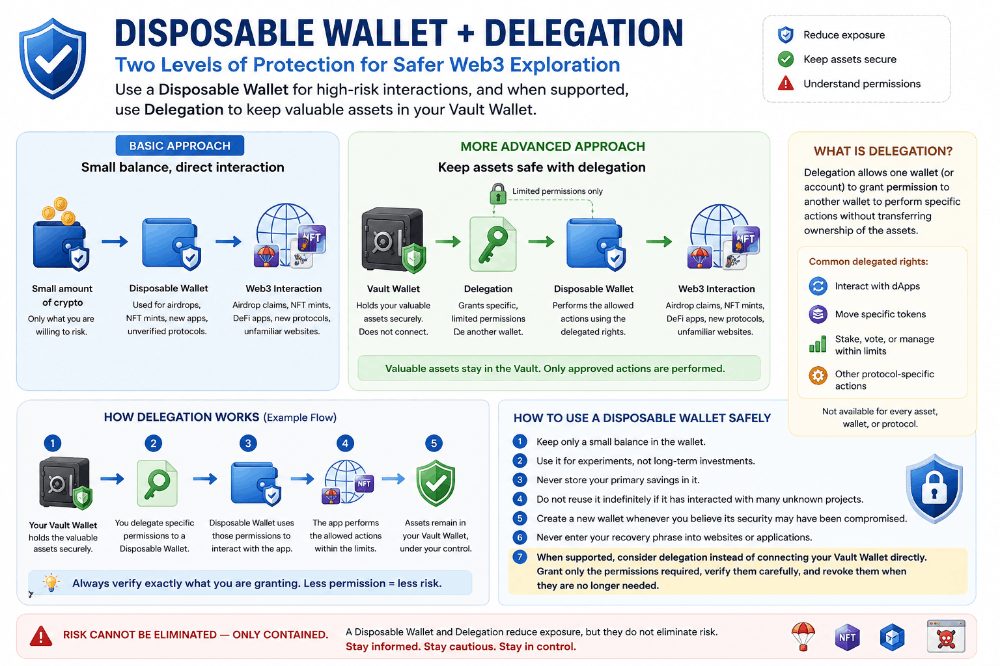
Instead of connecting your Vault Wallet directly to an airdrop, NFT mint, or unfamiliar application, you can delegate specific permissions to a Disposable Wallet. The valuable asset remains in the Vault Wallet while the Disposable Wallet performs the permitted interaction.
A simple approach is:
Basic: Small balance → Disposable Wallet → Web3 interaction
More advanced: Valuable assets remain in Vault Wallet → limited permissions are delegated → Disposable Wallet → Web3 interaction
Delegation is not supported by every asset, wallet, or application, and it does not eliminate risk. Always verify exactly what permissions you are granting, limit them to what is necessary, and revoke them when they are no longer needed.
When properly supported and configured, delegation can reduce the need to expose the wallet holding your valuable assets to unfamiliar applications.
How to Use a Disposable Wallet Safely
A few simple rules make this approach effective:
- Keep only a small balance in the wallet.
- Use it for experiments, not long-term investments.
- Never store your primary savings in it.
- Do not reuse it indefinitely if it has interacted with many unknown projects.
- Create a new wallet whenever you believe its security may have been compromised.
- Never enter your recovery phrase into websites or applications.
Risk Cannot Be Eliminated—Only Contained
Web3 innovation moves quickly. New applications, tokens, games, and protocols appear every day.
Avoiding every new project is unrealistic, but exposing your entire portfolio to each one is unnecessary.
A Disposable Wallet accepts that experimentation involves risk. Instead of hoping nothing goes wrong, it limits the consequences when something eventually does.
Good crypto security is not about making every wallet perfectly safe. It is about ensuring that one mistake never puts everything you own at risk.
Want to build a safer self-custody setup?
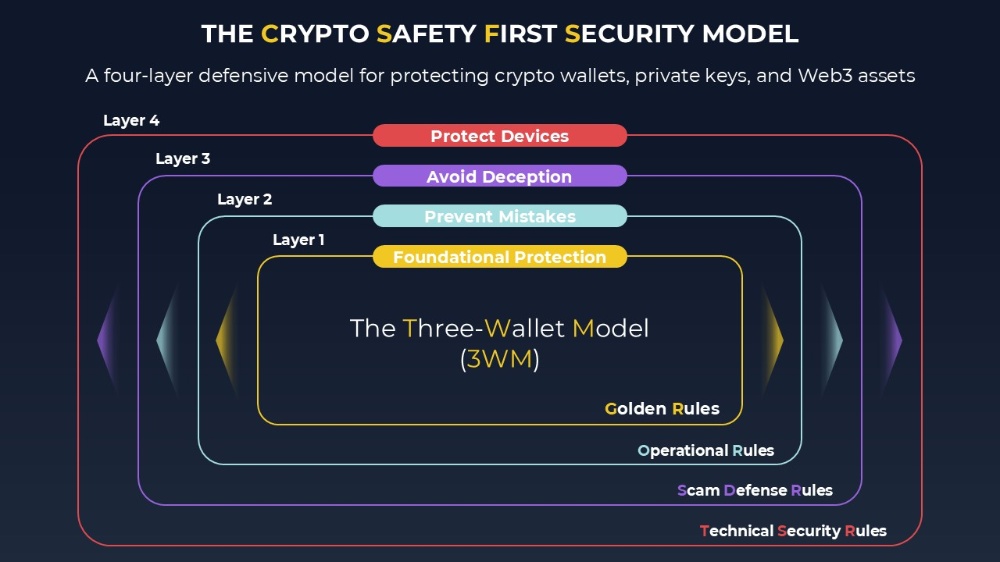
This article focuses on one wallet type. Learn how the Vault Wallet, Frequent Use Wallet, and Disposable Wallet work together as part of The Three-Wallet Model™ at CryptoSafetyFirst.com.