Top 10 Ways Real Estate Tokenization Will Transform Property Investment in 2026

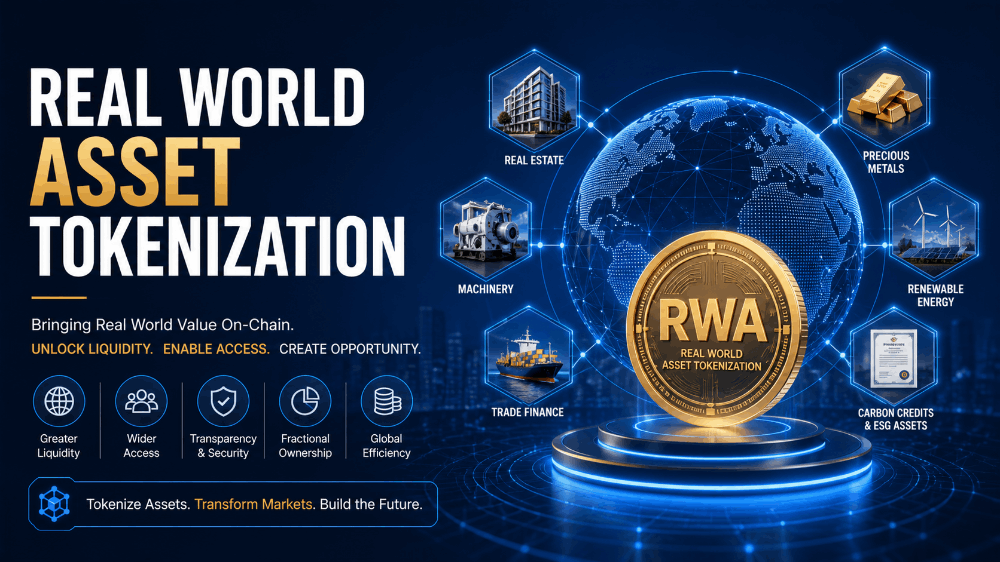
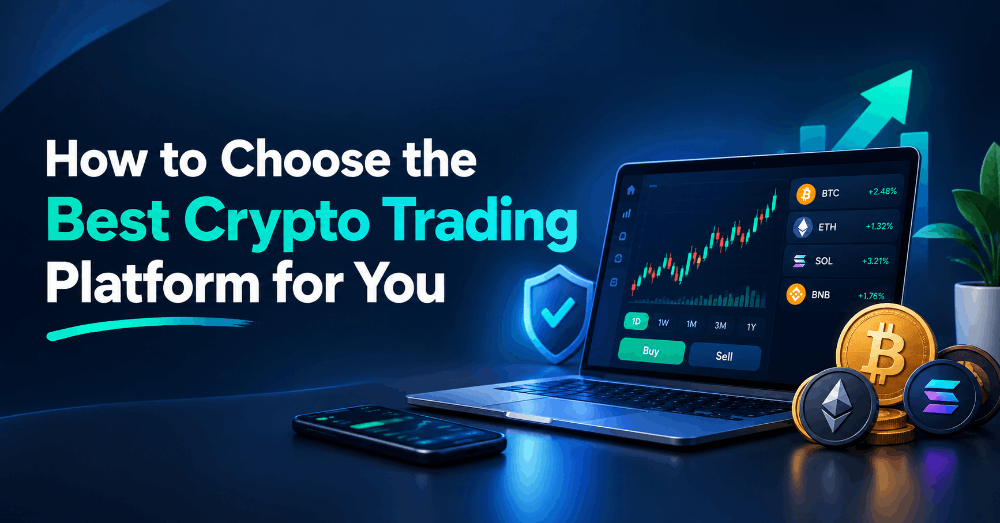
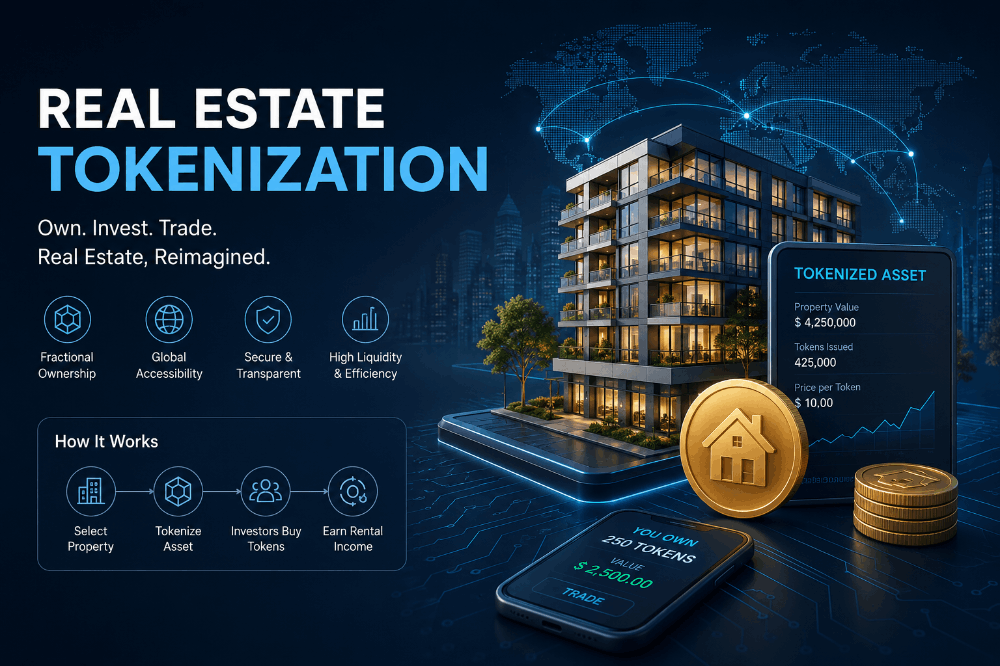
The real estate industry is undergoing a dramatic transformation. Traditionally, property investment has been associated with high capital requirements, slow transactions, and illiquid assets. For decades, investors have faced significant barriers when trying to enter or exit the market, often needing months of paperwork, legal compliance, and negotiations just to buy or sell a single property. However, real estate tokenization is revolutionizing the way investors access, manage, and profit from property assets. By leveraging blockchain technology and digital tokens, real estate investments are becoming fractional, liquid, and globally accessible.
As we approach 2026, tokenization is poised to become a mainstream tool for both retail and institutional investors. The following ten ways illustrate how tokenization will reshape property investment in the coming year and beyond.
1. Fractional Ownership Unlocking Investment Opportunities
One of the most transformative aspects of tokenization is fractional ownership. By converting properties into digital tokens, investors no longer need to purchase an entire building or a commercial complex. Instead, they can acquire small portions, making property investment accessible to a broader audience.
For instance, a commercial building valued at $10 million could be tokenized into 10,000 tokens worth $1,000 each. This opens the door for retail investors, small businesses, and even students or professionals to participate in high-value real estate markets previously reserved for wealthy individuals or large institutions. Fractional ownership allows investors to diversify their portfolios without committing massive amounts of capital to a single asset.
By 2026, fractional ownership will likely become standard in residential, commercial, and mixed-use developments. This approach not only democratizes access but also encourages participation from a global investor base, creating a more inclusive and dynamic property market.
2. Increased Liquidity for Traditionally Illiquid Assets
Liquidity has long been a challenge in real estate. Selling a property often involves months of legal formalities, broker negotiations, and transfer fees. Investors with urgent capital needs could find themselves trapped in illiquid assets. Tokenization solves this problem by enabling digital ownership of real estate stakes, which can be traded almost like stocks or bonds on specialized secondary marketplaces.
In practice, token holders can sell portions of their property stakes instantly, creating a highly liquid ecosystem. Real estate investments, which once required long-term commitment and patience, now offer flexibility and faster access to capital. By 2026, tokenized marketplaces may operate with the efficiency of stock exchanges, allowing investors to buy and sell property tokens with real-time pricing and minimal friction.
3. Access to Global Investment Markets
Real estate tokenization removes geographic barriers for investors. Anyone with an internet connection can participate in tokenized property markets, meaning international investors can access properties in cities and countries they may have never considered before.
For example, a European investor could purchase a fractional stake in a luxury apartment in New York or a commercial office in Singapore without the typical hurdles of cross-border property transactions, such as currency conversion, legal compliance, or property management concerns. In 2026, tokenized properties are expected to attract a diverse global investor base, increasing demand for prime real estate and enhancing property valuations.
4. Automation Through Smart Contracts
Smart contracts self-executing programs on blockchain networks are at the heart of real estate tokenization. They automate key processes, such as ownership transfers, rental income distribution, and dividend payments. For investors, this means faster, more reliable returns and less administrative hassle.
Imagine a tokenized rental property generating monthly income. Smart contracts can automatically calculate each token holder’s share and distribute it directly to their digital wallet. This eliminates delays, reduces human error, and ensures transparency in revenue allocation. By 2026, smart contract automation will become a standard feature of tokenized real estate platforms, enhancing investor confidence and operational efficiency.
5. Enhanced Transparency and Trust
Blockchain technology provides an immutable, decentralized ledger for all transactions. Every token transfer, revenue distribution, and ownership record is permanently recorded and publicly verifiable. This transparency increases trust among investors, who can independently verify property ownership, historical transactions, and rental income data.
For institutional investors, this level of transparency is particularly appealing. Audits, compliance reporting, and legal verification can be conducted seamlessly through the blockchain, reducing reliance on intermediaries and increasing confidence in the investment process. By 2026, transparent tokenized platforms will likely become the preferred investment medium for both retail and professional investors.
6. Lower Costs and Reduced Intermediaries
Traditional real estate transactions involve multiple intermediaries, including brokers, lawyers, and banks, each charging fees. Tokenization reduces these layers by automating ownership records, compliance checks, and payment distribution through blockchain.
Lower transaction costs benefit both investors and property owners. Investors can retain more of their returns, while developers and corporations can raise capital more efficiently. By 2026, reduced transactional friction will make property investment faster, cheaper, and more attractive, particularly for smaller investors or startups entering the real estate market.
7. Integration with Decentralized Finance (DeFi)
Tokenized real estate is increasingly intersecting with decentralized finance (DeFi), creating new opportunities for investors. Token holders can use their property stakes as collateral to secure loans, trade tokens in liquidity pools, or participate in DeFi-based yield generation.
For example, a commercial real estate token could be pledged to borrow capital for business expansion without selling the asset outright. This integration between DeFi and tokenized real estate will allow investors to maximize liquidity while maintaining exposure to valuable property assets. In 2026, the convergence of tokenization and DeFi will create a robust ecosystem where real estate functions not just as a static investment, but as a flexible financial instrument.
8. Greater Portfolio Diversification
Tokenization enables investors to diversify across multiple properties, sectors, and regions without committing excessive capital. An investor could simultaneously hold stakes in a luxury residential complex in Dubai, a commercial office in London, and an industrial warehouse in Texas.
This ability to diversify helps mitigate risk, optimize returns, and reduce dependency on a single property or market. By 2026, portfolio diversification through tokenized real estate will be a key strategy for both individual investors and institutional funds seeking to balance risk and exposure in volatile markets.
9. Support for Sustainable and ESG-Oriented Investments
Sustainable and socially responsible real estate projects are gaining momentum. Tokenization allows fractional ownership of eco-friendly buildings, renewable energy-integrated developments, and ESG-compliant projects. Investors can support green initiatives while generating financial returns.
For example, a tokenized green office complex could attract environmentally conscious investors globally, providing developers with faster capital access. By 2026, tokenized real estate is expected to play a major role in financing sustainable projects, enabling a new wave of socially responsible investment opportunities.
10. Accelerated Real Estate Development Funding
Tokenization provides developers with an innovative funding mechanism. By issuing tokens, developers can raise capital directly from global investors, bypassing traditional bank loans or real estate funds. This approach accelerates development timelines, reduces dependency on conventional financing, and democratizes access to early-stage property projects.
For instance, a mixed-use development could offer tokens representing fractional ownership in the project. Investors receive exposure to potential profits while developers secure funding more efficiently. By 2026, tokenized funding will likely become mainstream, supporting a new generation of real estate projects and fostering innovation in urban development.
Conclusion
Real estate tokenization is poised to transform property investment in 2026 by making it more accessible, liquid, and technologically advanced. From fractional ownership and global market access to integration with DeFi and support for sustainable projects, tokenization offers investors and developers unprecedented opportunities. Corporations, funds, and individual investors that embrace this innovation will gain strategic advantages in a rapidly evolving market.
As blockchain platforms mature and regulatory frameworks solidify, tokenized real estate will shift from a niche innovation to a standard investment practice, reshaping the way we buy, sell, and manage property. 2026 is set to be the year when tokenization not only democratizes real estate investment but also unlocks a new era of liquidity, efficiency, and global participation.