The 60-Day Geneva Illusion: How Iran and the US are Using the Crypto Market
Assalamu Alaikum. How is everyone? I hope you are doing well.
After seeing the title, you probably already understand what today’s discussion is about.
Today, 19 June, is a joyful day for the Muslim world. Because on this day, Iran showed that a nation with the spirit of jihad does not bow down to anyone. That is why, in Geneva, because of America’s strong interest, an Iran–America agreement became possible. As a result, Iran has gained a temporary victory.
However, it seems this agreement may not last for long. What is even more interesting is that if the agreement breaks, Iran may gain even more.
What, you do not understand the matter yet? Alright, then let’s go into the discussion in detail.
Some Main Agreements 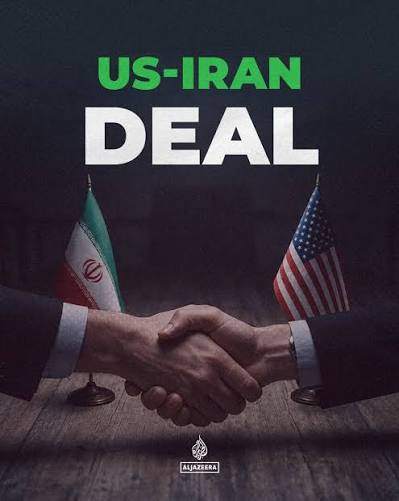
Let us take a quick look at the main and important points of the Iran–America agreement.
1) America will remove the international naval restriction from Iran’s waters.
As a result, Iran will again be able to start selling its oil.
2) The Strait of Hormuz will remain completely open for the next 60 days.
As a result, oil tankers will be able to travel without paying tolls during this period. This may help oil prices return to normal.
According to the Strait of Hormuz rules, toll collection will stay stopped for these 60 days.
3) International support worth 300 million dollars will be given to Iran for war-related damage.
4) Iran will not be able to store uranium without approval from the USA.
These are the main and most attention-grabbing parts of the bilateral agreement.
After seeing these agreements, you may think America has won. But according to this view, that is not the case.
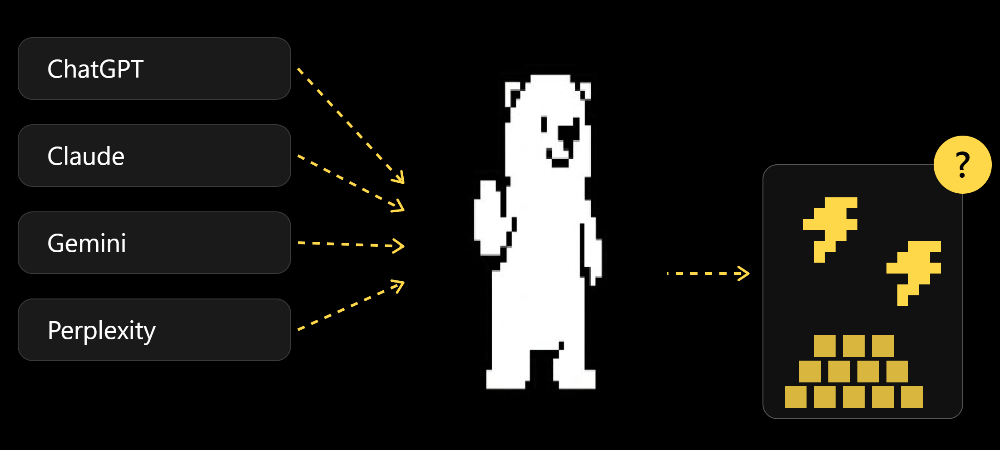
First, let’s talk about Bitcoin. Here, the agreement says for 60 days, which means it is not permanent. After 60 days, Iran may discuss with Oman and other Persian Gulf countries and again introduce BTC as an international toll payment.
Because not only Iran, but according to this view, many people believe the dollar is America’s strongest tool of influence. Iran, in this view, has already experienced that reality. Even if sanctions are removed for a short time and 300 million dollars of support is given, there are two points: first, money or the dollar loses value over time; second, Iran will never accept American control or Western ideology. Because of that, the writer believes America may again bring back sanctions in the future. So, from this perspective, Bitcoin becomes Iran’s main hope.
Another point is that this agreement has no Israeli signature, and there is also no agreement to stop Israel–Lebanon attacks. So according to this view, Israel may continue operations in Lebanon. And because Lebanon contains Iran’s strongest proxy force, Hezbollah, some analysts claim Iran may not stay committed to this agreement for long.
According to this idea, Iran may directly attack Israel again, which could pull America back into the conflict indirectly. As a result, naval restrictions may return.
So, from this point of view, Iran may have reasons to break the agreement and return to taking BTC as toll payment. Because the writer believes Iran wants to move toward Bitcoin in any way possible. The argument here is that Iran will never give up its ideals and accept American control, and that America also understands this.
That is why, according to the writer’s view, America warned before the agreement that if Iran attacks Israel, America may join the war and restore naval restrictions. Iran also warned that if attacks in Lebanon do not stop, Iran may attack Israel, and if America joins the war, Iran may break the agreement and respond strongly.
Now, you may ask: if both sides already know that neither side may fully follow the agreement and that it could break later, then why make the agreement at all?
Well, according to this argument, that is the real twist.
Do you think this is only an agreement?
No. According to this view, this is a temporary act where both Iran and America are trying to gain an advantage.
What kind of advantage?
First, Iran spent a large number of missiles during the war, and this pause may give them time to refill and rebuild their stock. Also, some analysts believe Iran could later break the agreement and secretly continue collecting uranium to strengthen its nuclear program. In other words, according to this view, Iran joined this 60-day ceasefire mainly to make its military power stronger than before.
Second, America may also have its own reason. According to this argument, Trump and the US government want temporary stability in oil prices and the market ahead of the next election period. Because of that, this agreement became necessary from their side as well.
Now do you understand why I said earlier that this agreement happened because America was eager to make it happen?
Temporary Pump and Dump of Bitcoin
Now, Iran stopped taking BTC for 60 days. So, do you think BTC will go down?
According to this opinion — not necessarily.
Some analysts claim that for the next 60 days, or around two months, BTC may move around the 60–70K zone. You may ask — why?
Look at it this way.
During these two months, if the global oil pressure becomes lower, oil prices may return closer to normal. According to the Geneva agreement, oil can again be bought more cheaply using dollars. Because of that, demand for dollars in the global market may increase.
According to this argument, that could put pressure on BTC prices.
Another point people discuss is interest rates.
If interest rates stay high, some investors may prefer holding cash or bank products instead of risk assets. The writer’s argument is that if borrowing remains expensive and returns from savings stay attractive, some large institutions and pension funds may move part of their money into cash positions.
For example:
Imagine I have 1 billion dollars and I buy some BTC.
Then I see that interest rates increase.
So, to get more predictable returns, I sell some BTC and keep that money in interest-paying financial products. Later, after earning returns, I may decide to buy BTC again.
According to this idea, when many large investors do similar things, BTC can temporarily fall or move sideways for some time.
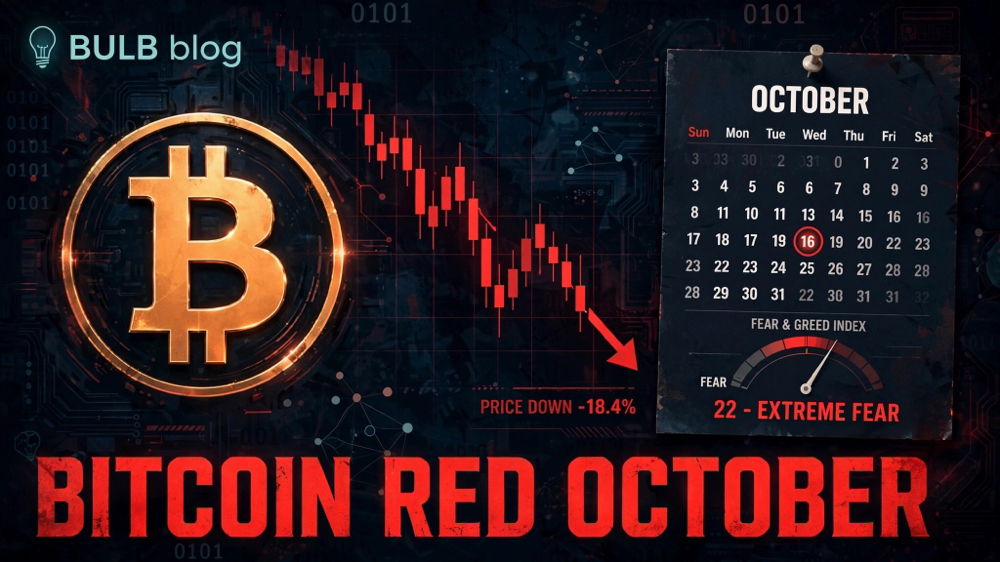
That is why, from this view, BTC may see a temporary dump or correction, not because Bitcoin itself becomes weak, but because market money temporarily moves toward cash and interest-based opportunities.
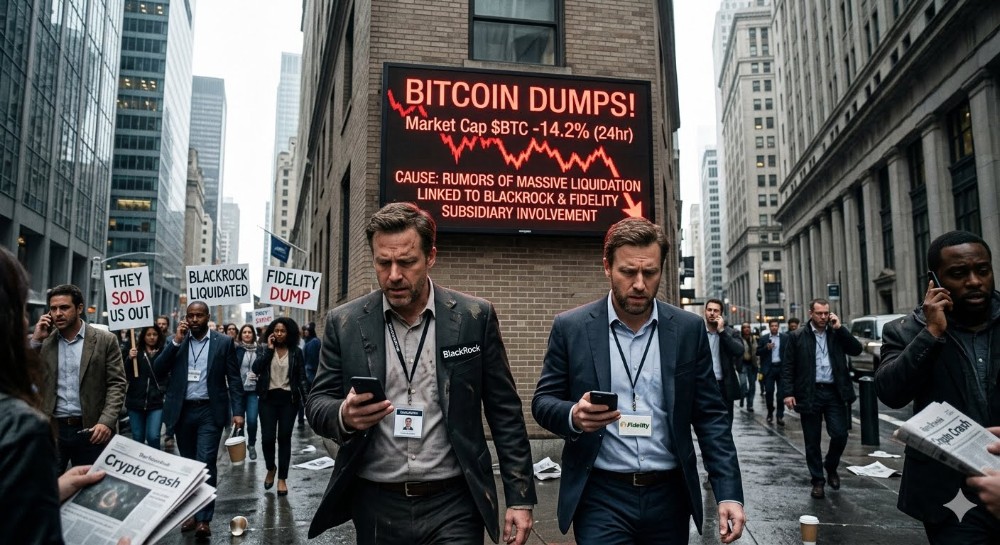
Quarterly Pressure / Performance
Big funds and institutions have another obligation here. But before understanding that, we first need to understand who the clients are.
You may be surprised to know that people like you and me — small investors, companies, and ordinary people — give their money to these big institutions to earn extra profit from it and receive interest. But in reality, that profit often does not help much.
Because when interest rates go up, prices of goods also go up. Then when people go to the market, the extra money they earned from interest does not help them much. In the end, they are the ones who suffer more.
But the large funds where clients deposited money usually do not suffer in the same way. Because they collect even a small percentage from many clients and manage huge amounts of money.
Now, when interest rates rise, clients start becoming nervous for different reasons.
For example:
- Daily living costs become higher.
- Money loses purchasing power.
- People become afraid that their savings will not help them later.
Because of this, many clients want to withdraw their money from those funds.
So, to stop clients from removing their money, and also to protect their business and performance, fund managers may become forced to sell assets and return money or maintain payouts.
According to this argument, one of those assets can be BTC.
Because if clients remove their money, the fund loses assets under management.
People may believe BTC could grow strongly over the next 10 years, but funds still have short-term pressure. They often need to show results every quarter (every three months). If BTC suddenly drops 30% during that time, they still have obligations to clients.
That is why, according to this view, some institutions temporarily sell BTC.
Of course, they could also sell land, shares, or other assets. But those usually take more time. BTC can often be converted into cash much faster.
And according to this idea, this is one of the reasons BTC sometimes crashes.
Margin Call
This is another major pressure.
One thing to remember is that large institutions do not always buy BTC only with their own money.
When interest rates are low, many institutions borrow money and use leverage.
So when interest rates rise, stock markets and other markets can become weaker.
At that point, banks may ask them to repay loans faster or increase collateral. This is commonly known as a margin call.
Then those institutions or wealthy investors may become forced to sell BTC, convert it into cash, and repay their loans and interest.
According to this view, this is another reason behind temporary BTC dumping.
BTC Pump
So far, we talked about some of the big reasons why BTC goes down. Now let’s talk about why BTC goes up.
One of the main reasons behind a BTC pump is ETF buying and spot holding by large whales. You may be surprised to know that many of the same big players who sometimes create market crashes also buy BTC again quietly through their firms and companies.
One example people often talk about is BlackRock’s ETF. According to this view, some large institutions may sell BTC for short-term profit or because of business pressure, and later buy again when the price becomes cheaper. You can think of it like moving money from one pocket to another.
At the same time, many retail traders panic sell because they fear the market will keep falling. That gives large buyers a chance to collect more BTC and move it into their cold storage. ETFs also make it easier for institutions to increase their BTC exposure.Because of this, sometimes the market starts moving up again from certain price zones.
Some analysts think the 60K zone can act as a strong support area because of buying pressure from ETFs and companies. They believe BTC may move between 60K–70K for a period if market conditions stay similar.
In this view, if future geopolitical tension increases and investors become more worried about traditional markets, some institutions may move part of their money back into assets they see as safer or more independent, including BTC. Others believe lower interest rates could also support demand for risk assets like crypto.

In Short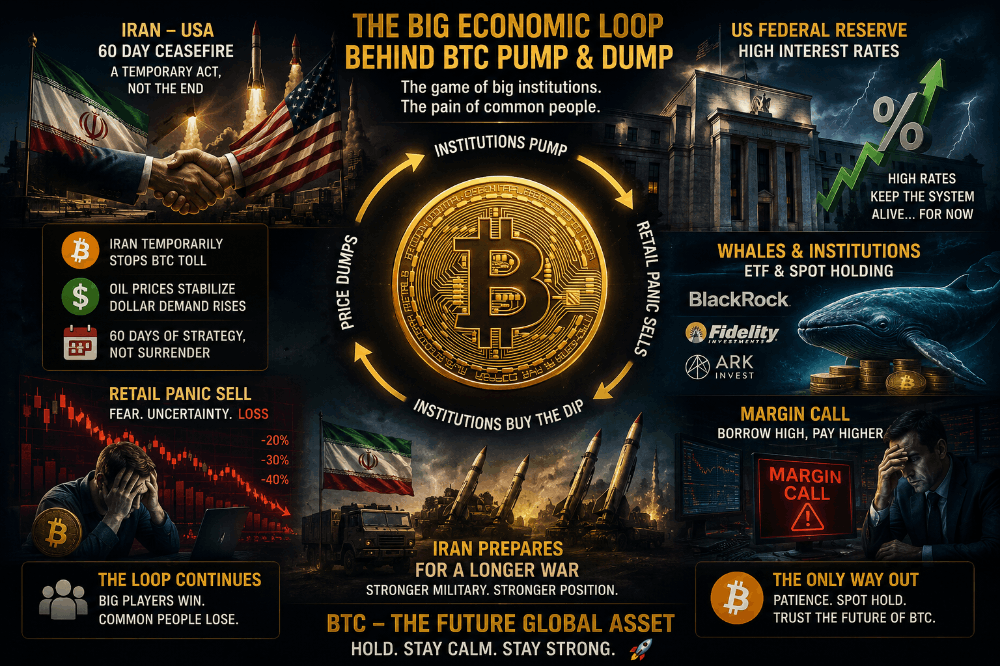
All of this works like a loop.
In this economic cycle, according to this view, large companies and institutions keep moving money in different ways, and ordinary people often feel the pressure the most.
That is why, in this view, the only way to stay outside this cycle is to stay patient and hold in spot for the long term.
One thing to remember is that many Bitcoin supporters believe BTC may become an important global asset in the future.
According to this analysis, the temporary pause in conflict is being used as a way to keep economic activity stable during a period of higher interest rates from the US Federal Reserve.
Another point of view is that recent market corrections were also influenced by interest rate decisions and changing money flow in global markets.
From this perspective, some people believe these agreements may temporarily increase demand for the dollar and help support the financial system through higher interest income.
At the same time, the writer believes Iran may use this period to strengthen its military position.
Supporters of this idea also believe Iran and some others want to reduce dependence on the US dollar and increase the role of alternatives such as BTC in global finance, so that large institutions cannot depend only on government bonds and interest-based systems.
They believe this could create a different financial future.
In this view, countries make agreements not only for politics, but also to protect their economic interests and long-term position.
There may still be many questions in your mind — such as why the USA uses interest rates to manage the economy, why large companies earn from interest, why they do not keep everything only in BTC, or why reserve assets like oil affect the dollar. We can discuss those topics in more detail in the next part.
Take care everyone.
Assalamu Alaikum.