The Musk Inc.

The Dawn of the First Trillionaire and the Age of Abundance
On Friday, June 12, 2026, a massive shockwave ripped through the financial and tech worlds. The initial public offering (IPO) of SpaceX (listed on Nasdaq under the ticker SPCX) raised a record-breaking $86 billion from the market, skyrocketing the company's valuation to an astronomical $2.4 trillion in just two days. Elon Musk officially became the first trillionaire in history. However, this story is about far more than just money. Before our very eyes, an integrated technological empire is emerging-"Musk Incorporated"-whose ultimate goal is to build the infrastructure for an entirely new model of human civilization.
For years, Elon Musk developed independent companies. Today, however, in mid-2026, he is beginning to execute a plan for the operational and structural consolidation of his businesses. The AI-focused venture xAI acquired the X platform, and was subsequently absorbed by SpaceX to form the SpaceX AI brand. Furthermore, immediately following the IPO, the newly formed giant finalized a $60 billion acquisition of the AI-powered coding platform Cursor AI, gaining instant entry into the modern SaaS market.
Behind closed doors, there is talk of a merger with Tesla and the full integration of Neuralink and The Boring Company. Elon Musk himself has secured a staggering 82% of the voting rights in the new conglomerate, granting him absolute, almost dictatorial control over the developmental trajectory of this technology. The intended result is the realization of a utopian vision the billionaire calls "Amazing Abundance"-a world characterized by universal, cheap energy, autonomous transport, voluntary labor, and technological synergy.
Here is how the individual pieces of this puzzle are set to forge the civilization of tomorrow.
Orbital Conquest and Space-Based Data Centers (SpaceX)
SpaceX utterly dominates the aerospace sector-accounting for nearly 90% of the total mass launched into orbit in 2025, while its Starlink constellation now boasts close to 10,000 satellites. The upcoming deployment of Starship V3 is expected to drastically slash launch costs.
The immediate future of SpaceX hinges on two groundbreaking projects:
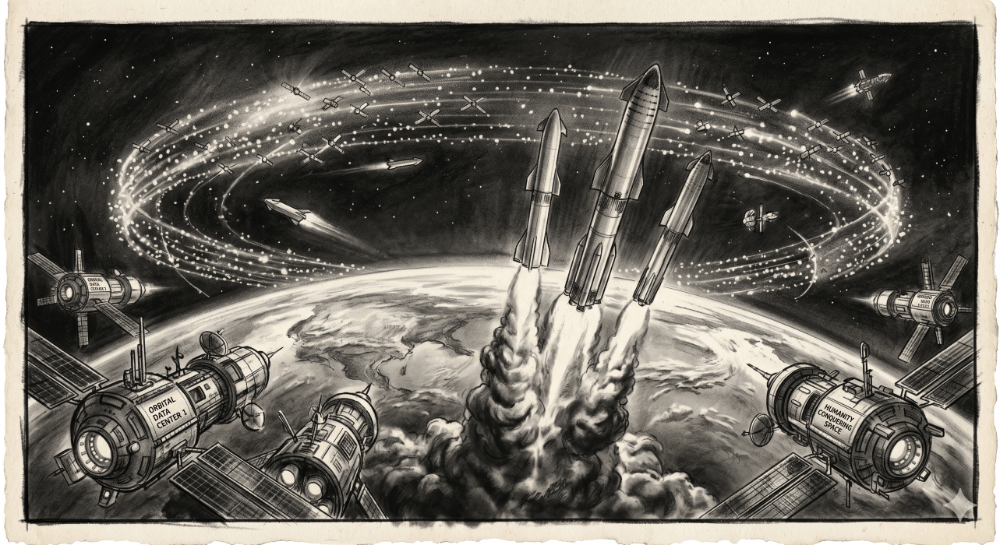
- Starlink Mobile: By acquiring telecommunications spectrum, the company aims to become a global mobile network operator, offering 5G-quality satellite connectivity directly to standard smartphones, posing a direct threat to the $3 trillion traditional telecom market.
- Space Data Centers: SpaceX plans to deploy one million satellites to serve as orbital AI servers. Tech giants like Google and Anthropic (the creators of Claude AI) have already expressed eager interest, signing massive computing contracts that guarantee a steady stream of revenue for these celestial servers.
In the long term, the Starship Human Landing System (HLS) remains the linchpin for America's return to the Moon, with uncrewed test missions to Mars slated as early as the 2028 orbital window. Another looming revolution is the mass production of proprietary spacesuits, engineered to be manufactured at a rate of thousands of units per year.
The Hardware War: Project Terafab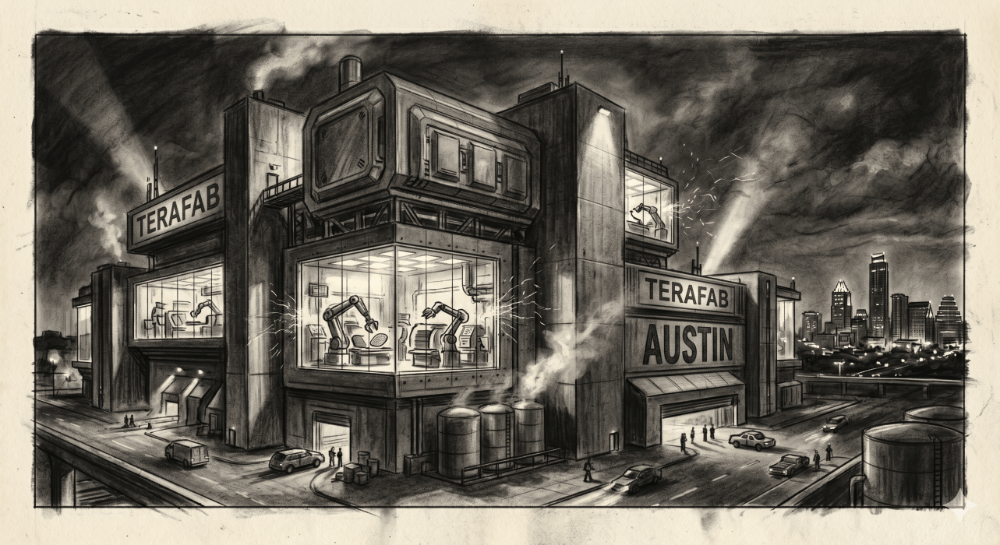
The facility aims to eventually produce 200 billion chips annually, consolidating all manufacturing stages (including advanced packaging) under a single roof. The project discards traditional, multi-million dollar "clean lab" facilities in favor of ultra-sealed, miniature production modules, completely redefining the manufacturing processes perfected by industry titans like ASML.
Earth Under the Banner of Autonomy and New Energy (Tesla)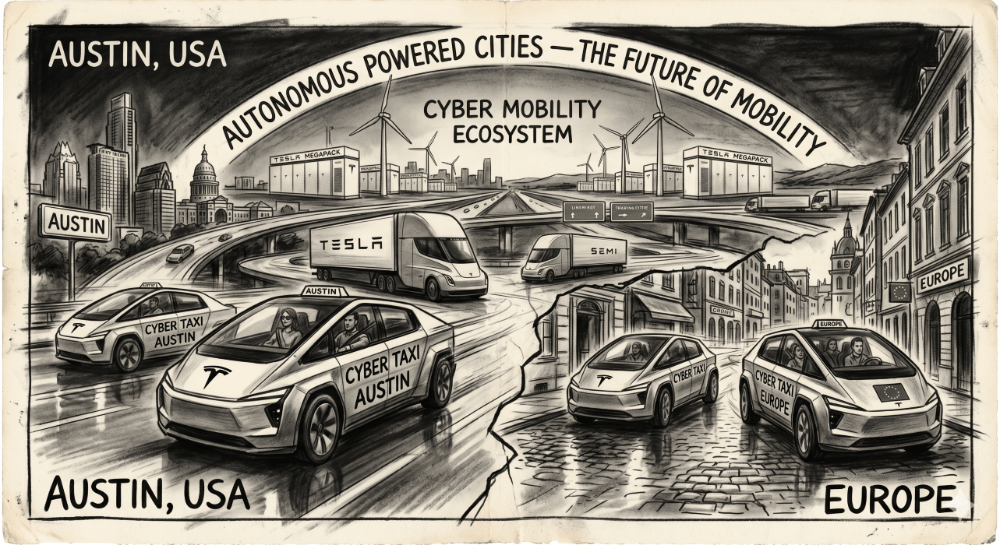
- Full Self-Driving (FSD): After logging over 15 billion kilometers in supervised mode, Tesla is deploying complete autonomy. In cities like Austin and Houston, driverless "Cyber" taxis-two-seater vehicles built without steering wheels or mirrors-are already operational. This service is steadily expanding into Europe; following the Netherlands and Lithuania, other Baltic and Scandinavian countries are greenlighting FSD testing.
- Tesla Semi and Energy: Mass production is spinning up for the all-electric, autonomous Semi truck, which aims to revolutionize the freight logistics market. Concurrently, Tesla’s energy division is experiencing exponential growth, driven by its large-scale industrial energy storage systems (Megapacks) and the construction of solar panel Gigafactories across the US.
The Humanoid Labor Revolution: Tesla Optimus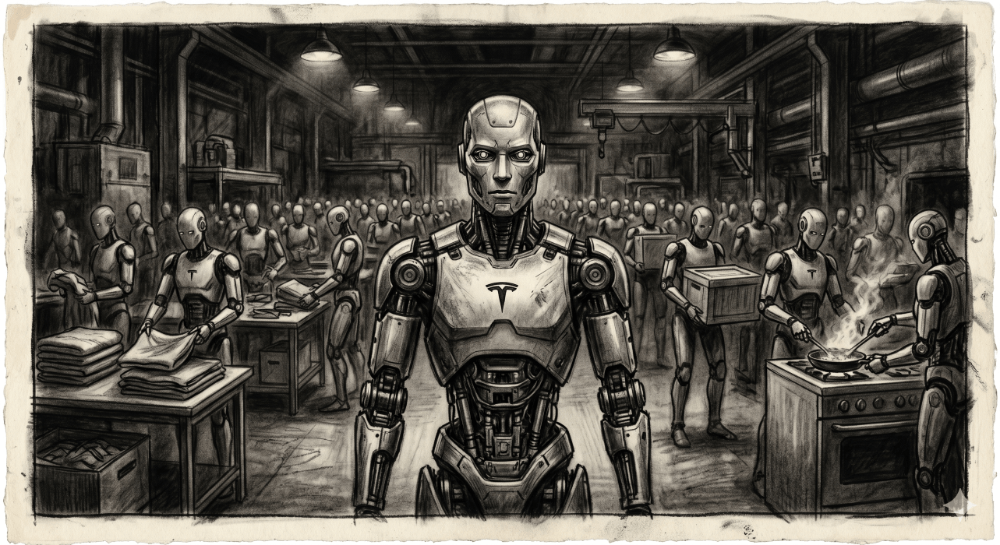
A factory capable of producing 10 million Optimus units annually is currently under construction in Texas, with a targeted mass-market price tag of roughly $20,000. This robot is positioned as the ultimate antidote to the global demographic crisis, intended to entirely relieve humanity of grueling or repetitive physical labor.
Digital Corporations and Mind-Machine Integration (xAI, Neuralink, Boring Co.)
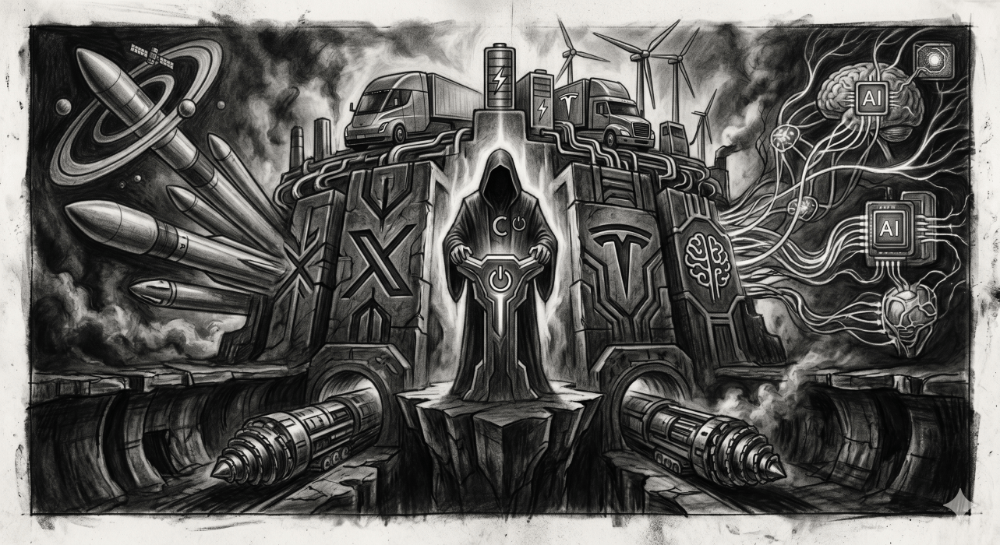
- Artificial Intelligence and Cursor AI: The connective tissue binding this entire ecosystem together is AI. The flagship Grok model is being trained in the colossal Colossus 1 and Colossus 2 data centers. Meanwhile, the acquisition of Cursor AI injects the empire directly into commercial software development. A new initiative called Macro Hard (an autonomous software corporation) envisions eventually replacing human programmers with "digital Optimus units" that will autonomously design, write, and test code.
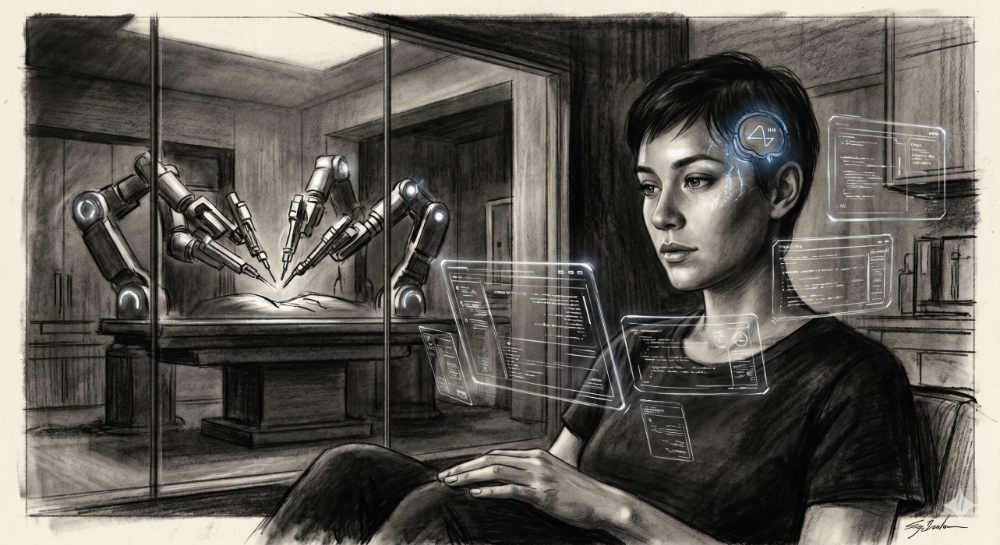
- Neuralink: The biomedical firm is successfully conducting human clinical trials for its brain implants, with more than 20 patients already controlling computers using purely their thoughts. Implants aimed at restoring vision are scheduled for the near future. Thanks to surgeries performed by autonomous robotic surgeons, the total cost of the chip and the procedure is projected to be just around $1,000, making it a true mass-market product.
- The Boring Company: The tunneling venture continues to scale its Vegas Loop project, which is designed to eventually span 110 kilometers and transport 90,000 passengers per hour using Tesla vehicles. This tunneling technology is also earmarked for constructing subterranean bases on the Moon and Mars.
The Ultimate Gamble in Human History and New Challenges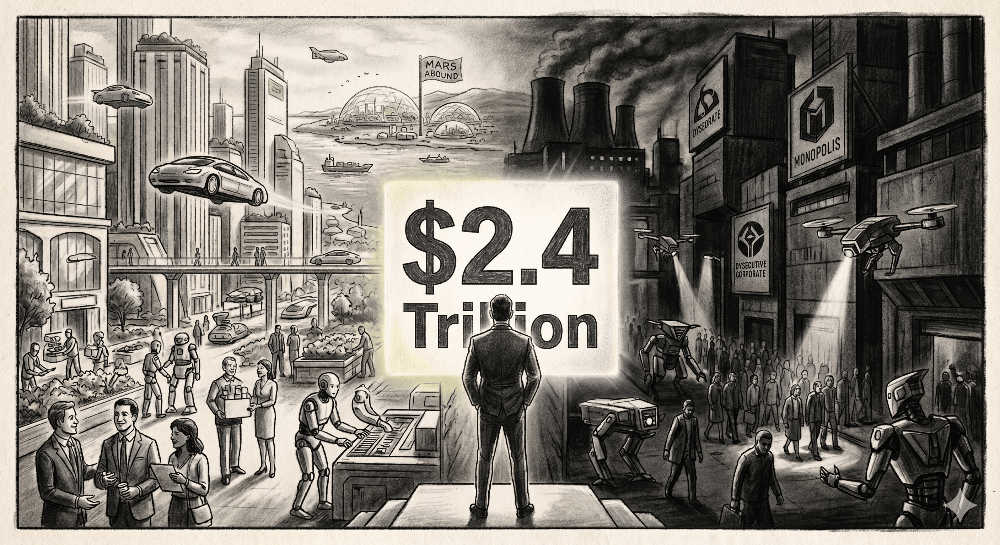
Yet, whether Elon Musk inspires admiration or dread, one thing remains indisputable: Wall Street and Nasdaq investors are not buying shares in his companies based on current earnings or traditional market metrics. They are buying them because they believe that "Musk Incorporated" is designing and manufacturing the fundamental operating layers for the future of the human species. We are all eyewitnesses to-and participants in-the greatest technological and civilizational wager in human history.
Resources:
https://www.valuethemarkets.com/cryptocurrency/news/spacexs-record-breaking-ipo-an-analysis-of-its-impact-and-future-in-ai
https://www.theguardian.com/technology/2026/jun/16/elon-musk-techscape
https://en.wikipedia.org/wiki/Initial_public_offering_of_SpaceX
https://www.bnnbloomberg.ca/investing/2026/06/15/spacex-set-to-extend-rally-after-record-wall-street-debut/
https://www.youtube.com/watch?v=0LQTSipZl1o