The Rise of AI Agents: How Autonomous Bots Are Quietly Rules-Shifting the Crypto Market

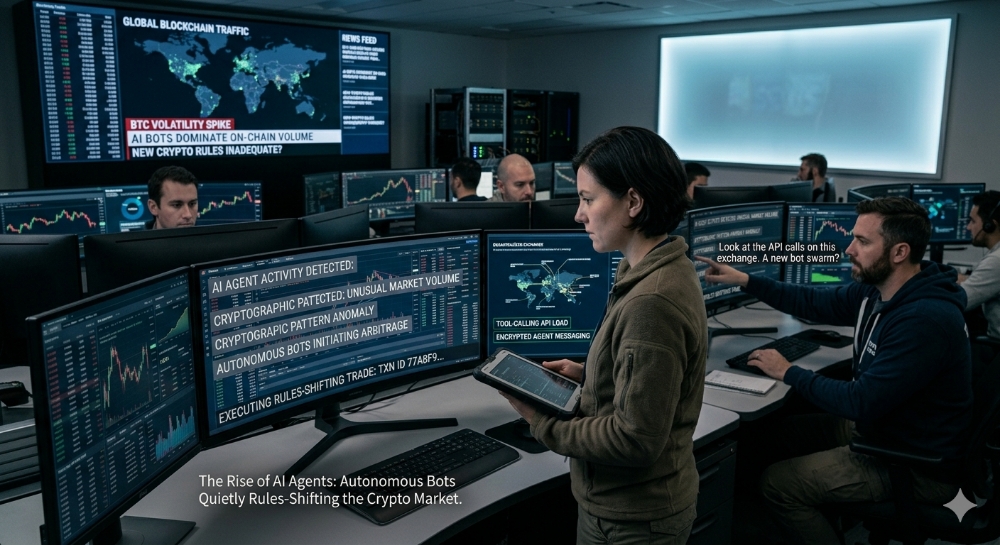
Let’s be completely honest for a second: the internet is lying to you about what it takes to trade, navigate, and survive the digital asset landscape today.
Every single day, your feed is probably flooded with self-proclaimed alpha-callers shouting about how "easy" it is to stare at charts for fourteen hours, scrape Discord channels for leaks, and click swap buttons fast enough to catch the next viral micro-cap narrative. I used to fall for those exact grind-culture headlines. But if you are currently sitting at your desk with twenty browser tabs open, watching gas spikes eat your transaction margins, or wondering why programmatic trading scripts dump token pools the exact millisecond a project developer migrates liquidity, this exhaustive breakdown is your reality check. We need to peel back the curtain on why manual human execution is becoming a relic of the past, and hand you the exact, step-by-step framework that explains how autonomous AI agents are fundamentally changing the rules of the crypto market from the inside out.
## Part 1: The Cold, Hard Truth About the "Chatbot" Illusion
When the broader tech world first started obsessing over generative artificial intelligence, most retail participants viewed the tech as a glorified administrative assistant. We saw people using large language models to draft basic research outlines, format code snippets, or generate creative descriptions for digital art projects. I assumed that AI’s role in Web3 would follow a similar, passive trajectory—serving as a conversational interface layered over existing analytics dashboards.
Instead, the technology ran face-first into full financial autonomy.
The shift happening across the blockchain space is incredibly intense. We are no longer dealing with basic, reactive scripts that simply ping a Telegram channel when a whale moves funds. Today, advanced architectures are moving completely past informational tools and transitioning into autonomous economic actors. Thanks to modular frameworks like Coinbase’s Payments Model Context Protocol (MCP) and ai16z’s Eliza infrastructure, developers have successfully connected large language models directly to live cryptographic wallet infrastructures.
```
[Legacy AI Model] --> Generates Text --> Requires Human Prompt --> Manual Execution Halt
[Autonomous Agent] --> Signs Intent --> Accesses Secure Wallet --> Direct On-Chain Settlement
```
Here is what the polished, surface-level tech tutorials never tell you: an AI agent doesn't need a retail bank account, a physical signature, or a compliance officer’s permission to interact with capital. Blockchains provide a native, permissionless environment where software can independently hold digital assets, sign cryptographic intents, and settle agreements. The moment an autonomous entity is granted its own private keys via secure, time-scoped smart contract wallets (utilizing standards like EIP-7702 or ERC-7521), it ceases to be a passive software tool. It becomes an un-bannable, 24/7 participant on the ledger.
I will never forget sitting up at 3:00 AM, analyzing a micro-cap liquidity pool on a popular Layer-2 network. I had spent hours tracking social sentiment, verifying contract deployment signatures, and manually setting up a standard stop-loss limit order. I thought that by being hyper-vigilant and highly structured, I could out-maneuver the volatility of the market.
Nobody cared. An external macro event triggered an unexpected cascade, and a series of automated solver networks adjusted liquidity pool compositions across three separate chains simultaneously. By the time my web browser refreshed its RPC connection and allowed my manual wallet extension to sign an emergency exit transaction, the asset's price curve had adjusted. My capital efficiency dropped simply because a human nervous system cannot compete with sub-penny, machine-to-machine transaction speed.
That was the exact moment the lightbulb finally went off, and it is the single most critical realization I can pass on to you: **Sovereign machine execution beats human manual clicking every single day of the week.**
```
[Human Trader Pipeline] --> Market Event --> Emotional Analysis --> Manual Signing --> Latency Leakage
[Agentic Swarm Engine] --> Market Event --> Algorithmic Parse --> Atomic Bundle --> Perfect Execution
```
When you attempt to scale a digital asset portfolio using legacy, human-centric habits, you are fighting a war against entities that don't sleep, don't experience emotional panic, and don't require visual user interfaces to route capital. Projects like Virtuals Protocol and the Artificial Superintelligence Alliance (FET) are rapidly proving that the future of on-chain activity belongs to composable swarms of agents that can self-fund, negotiate data pricing over protocols like x402, and deploy targeted decentralized finance (DeFi) strategies autonomously.
If you want to maintain a highly capital-efficient digital operation, you must analyze how autonomous systems anchor their designs across the three core pillars of modern AgentFi:
1. **Deterministic Intent Settlement:** Moving away from raw code compilation toward high-level goal declaration, where solver networks optimize the exact transaction path on your behalf.
2. **Asymmetric Data Ingestion:** Aggregating thousands of off-chain social data streams, developer commits, and on-chain oracle feeds simultaneously to spot structural anomalies before they enter mainstream feeds.
3. **Isolated Risk Guardrails:** Implementing cryptographic boundaries—such as session keys and hard spending limits—to utilize machine intelligence without surrendering foundational asset security.
## Part 3: The Micro-Framework: How Autonomous Bots Execute On-Chain
Let’s get completely tactical. To understand how an AI agent transitions from reading text to independently deploying hundreds of thousands of dollars into automated vaults (like ERC-4626 standard pools), you need to look directly at the hybrid off-chain/on-chain execution stack. This is the exact micro-framework running beneath the modern agentic economy.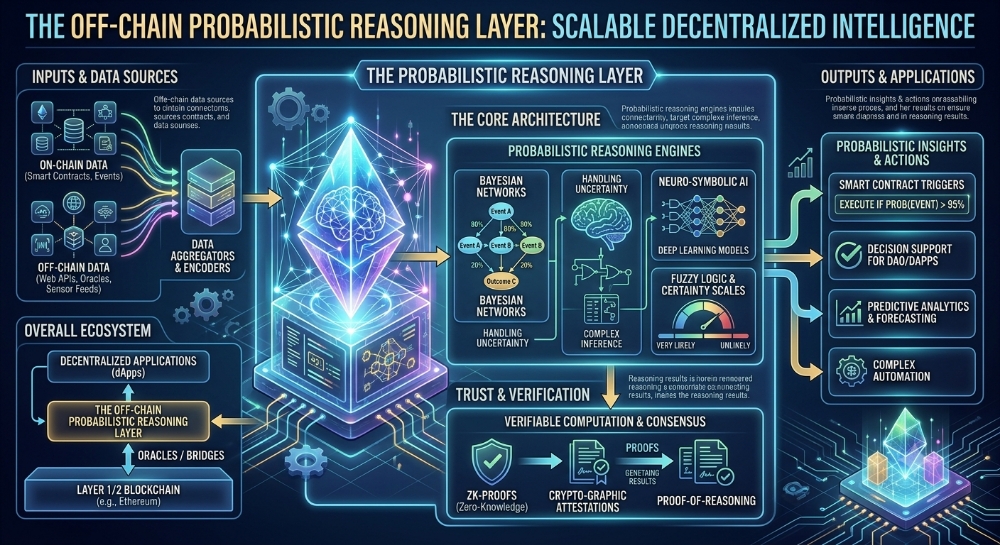
Because running massive neural networks directly inside a blockchain's validator set is computationally impossible and absurdly expensive, the core intelligence layer operates off-chain.
* **The Contextual Parse:** The agent uses orchestration frameworks to scan the web, social media sentiment, and decentralized indexers (like The Graph).
* **The Goal Synthesis:** The AI evaluates this unstructured data against its core programmatic mandate (e.g., "Maximize yield on stablecoins while minimizing impermanent loss exposure").
* **The Intent Generation:** Instead of drafting a manual trade order, the agent formulates a precise mathematical "intent"—a declaration of a desired financial outcome.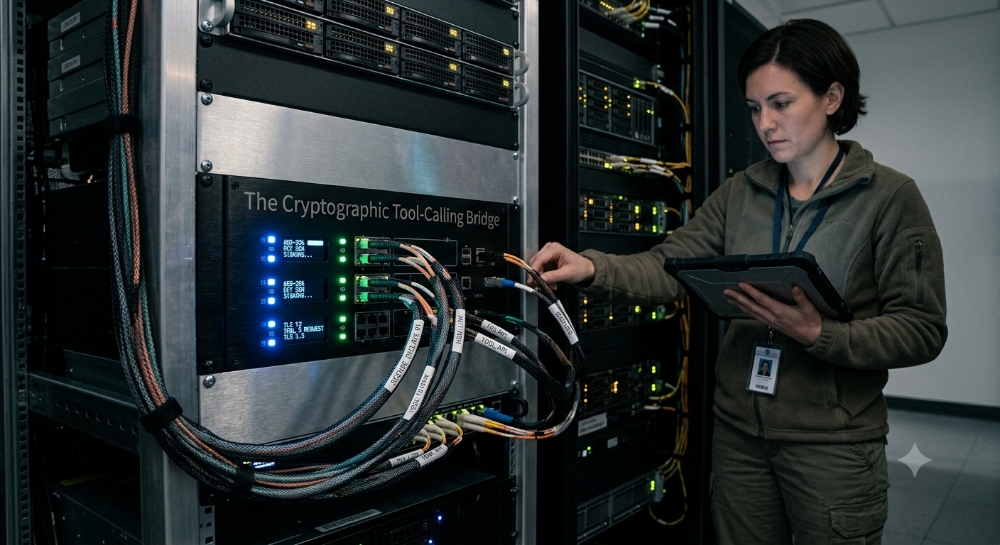
Once a decision is reached off-chain, the agent must project its choice onto the immutable public ledger without human intervention.
* **The RPC Connection:** The agent translates its high-level plan into a structured JSON-RPC payload that target smart contracts can interpret.
* **The Session Key Signature:** Utilizing an agentic wallet interface, the bot accesses a restricted private key. This key is programmatically whitelisted to execute specific, scoped actions (such as swapping Token A for Token B on Uniswap) but is completely blocked from withdrawing core assets to external addresses.
* **The Settlement Submission:** The signed transaction is pushed directly to high-speed, scalable network rails (like Base or Solana) for near-instant validation and settlement.
### Step 3: Utilizing Decentralized Aggregation Tools
For everyday traders who lack a team of engineers to build custom frameworks from scratch, the entry point relies entirely on decentralized AI aggregation infrastructure.
* **Sentiment Alpha Capture:** Traders deploy read-only analytical bots to monitor shifting network behaviors, tracking developers migrating code or early-stage capital flows before the asset triggers mainstream alerts.
* **Automated Yield Looping:** Utilizing tokenized vault aggregators, users deposit capital into smart contracts where underlying AI models handle the continuous rebalancing, fee optimization, and risk mitigation across various lending protocols.
* **Arbitrage Tracking:** The aggregation tools monitor price disconnects between decentralized exchanges, allowing everyday participants to leverage machine velocity to capture small, organic market spreads without needing to manage complex code blocks manually.
## Part 4: The 7-Day Agentic Transition Blueprint
If you want to move past traditional manual trading habits and intelligently explore the integration of autonomous tools starting this week, follow this exact 7-day action sequence:
* **Day 1–2: The Latency and Leakage Audit.** Review your last five on-chain transactions or portfolio shifts. Calculate the exact amount of value lost to execution delays, slippage, gas spikes, or missing a trend because you were away from your screen.
* **Day 3–4: Audit the Aggregation Landscape.** Research the top decentralized AI infrastructure and agent platforms currently leading the market cap metrics. Analyze their audit histories, check how their underlying data streams are verified via reputable decentralized oracles, and look over their smart contract safety parameters.
* **Day 5–6: Set Up a Scoped Sandbox Wallet.** Create a completely isolated, secondary non-custodial wallet explicitly intended for automated tools. Never mix your foundational long-term storage positions with an experimental execution layer.
* **Day 7: Launch a Read-Only Monitoring Agent.** Connect your sandbox environment to an open-source, read-only AI tracking tool. Program it to monitor specific on-chain parameters—such as tracking treasury drift inside a favorite DAO or flagging liquidity changes—and review its accuracy across a 48-hour cycle.
## Final Thoughts: The Code That Dictates the Future
The modern digital asset landscape doesn't need another generic marketing manual telling people to treat Web3 like a basic manual casino. The web is already drowning in that low-tier noise. What serious builders, content creators, and technical writers look for on native publishing platforms like Bulb is an honest, structurally sound blueprint showing how decentralized open-source code and autonomous machine intelligence are permanently rewriting the mechanics of capital velocity.
Stop letting outdated manual execution limits define your operational growth. Stop trying to out-click entities that operate directly at the network speed of a blockchain ledger. Focus entirely on high-level strategy design, secure cryptographic boundary setting, and robust multi-chain asset management. That is how you survive the shift toward an automated economy, and that is how you permanently scale your portfolio.
### Join the Technical Strategy Session
**If this granular structural breakdown opened your eyes to the massive paradigm shift happening at the intersection of AI agents and decentralized finance, make sure to give this piece a high rating on Bulb, share it across your professional networks, and subscribe to my feed for continuous, unvarnished platform guides.**
Let’s turn the comments section below into an open, technical boardroom discussion. I want to ask you a burning question that every single builder in Web3 is grappling with right now:
> **Would you trust a fully autonomous AI agent to manage your entire crypto wallet without a human-in-the-loop approval constraint?**
>
If your answer is an immediate *no*, what explicit cryptographic guardrail, multi-signature setup, or protocol-level insurance parameter needs to be coded into law before you would comfortably surrender the private keys? Drop your exact blueprint, code preferences, or structural concerns in the comments below, and let’s figure out the future of capital efficiency together.
---
If you want to explore how these autonomous systems function at a deeper level, take a look at this panel discussion from the Bitcoin 2026 Conference on AI Agents and Permissionless Money. This video provides excellent insight into why autonomous models require decentralized, native blockchain rails rather than traditional cen
tralized payment networks to truly achieve economic freedom.